Moroccan rugs and Persian rugs represent two of the world's greatest textile traditions, but they could hardly be more different. While both are handmade and highly valued, their aesthetics, cultural origins, and construction methods diverge in nearly every way.
> Comparison at a glance: Moroccan rugs (Berber) are bold, abstract, and geometric with thick wool pile. Persian rugs are intricate, floral, and curvilinear with fine, dense knotting. A Moroccan rug can be completed in 2-4 months; a fine Persian rug can take 12-24 months. Prices for authentic antique Persian rugs often start 5-10x higher than comparable Moroccan rugs.
What Are Moroccan Rugs?
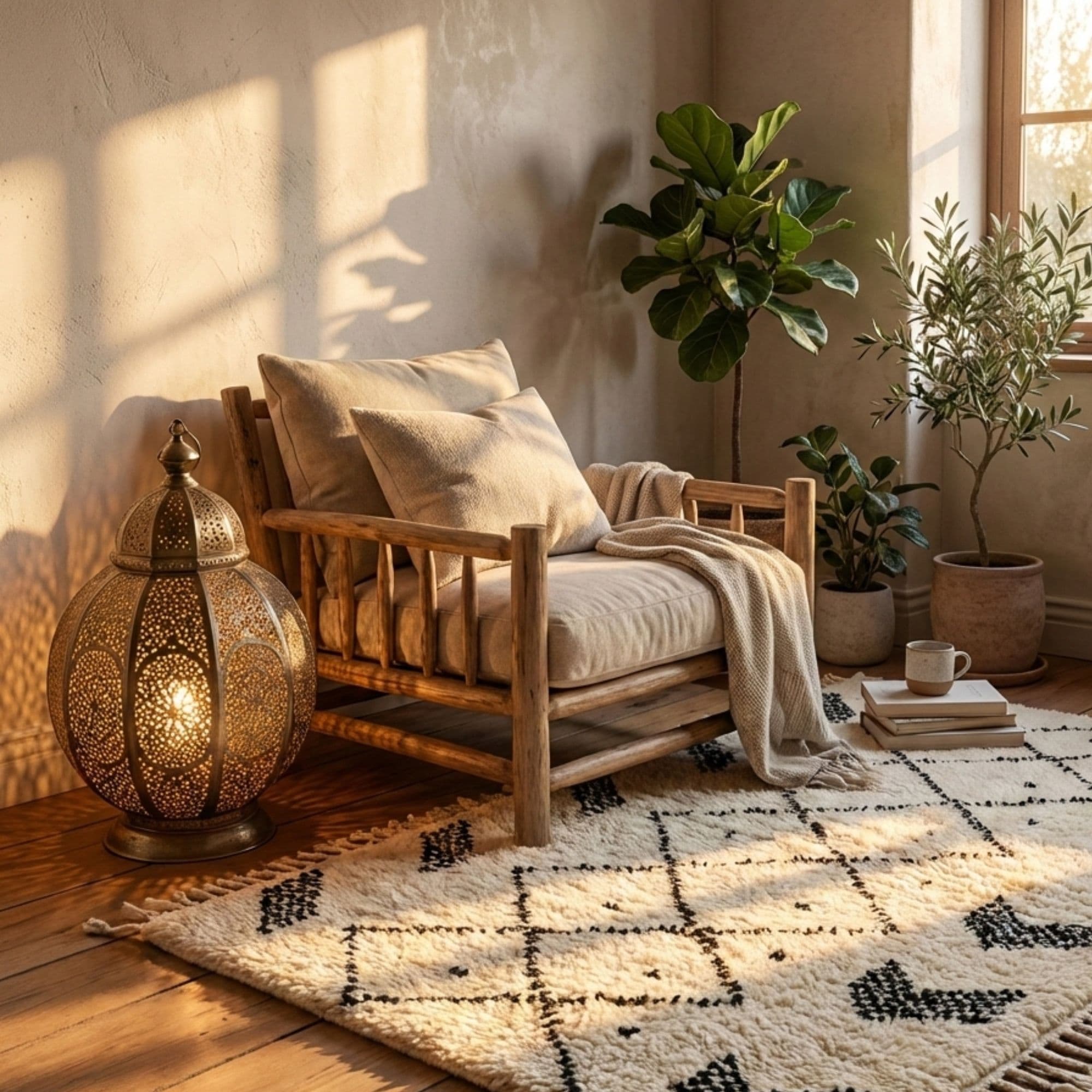
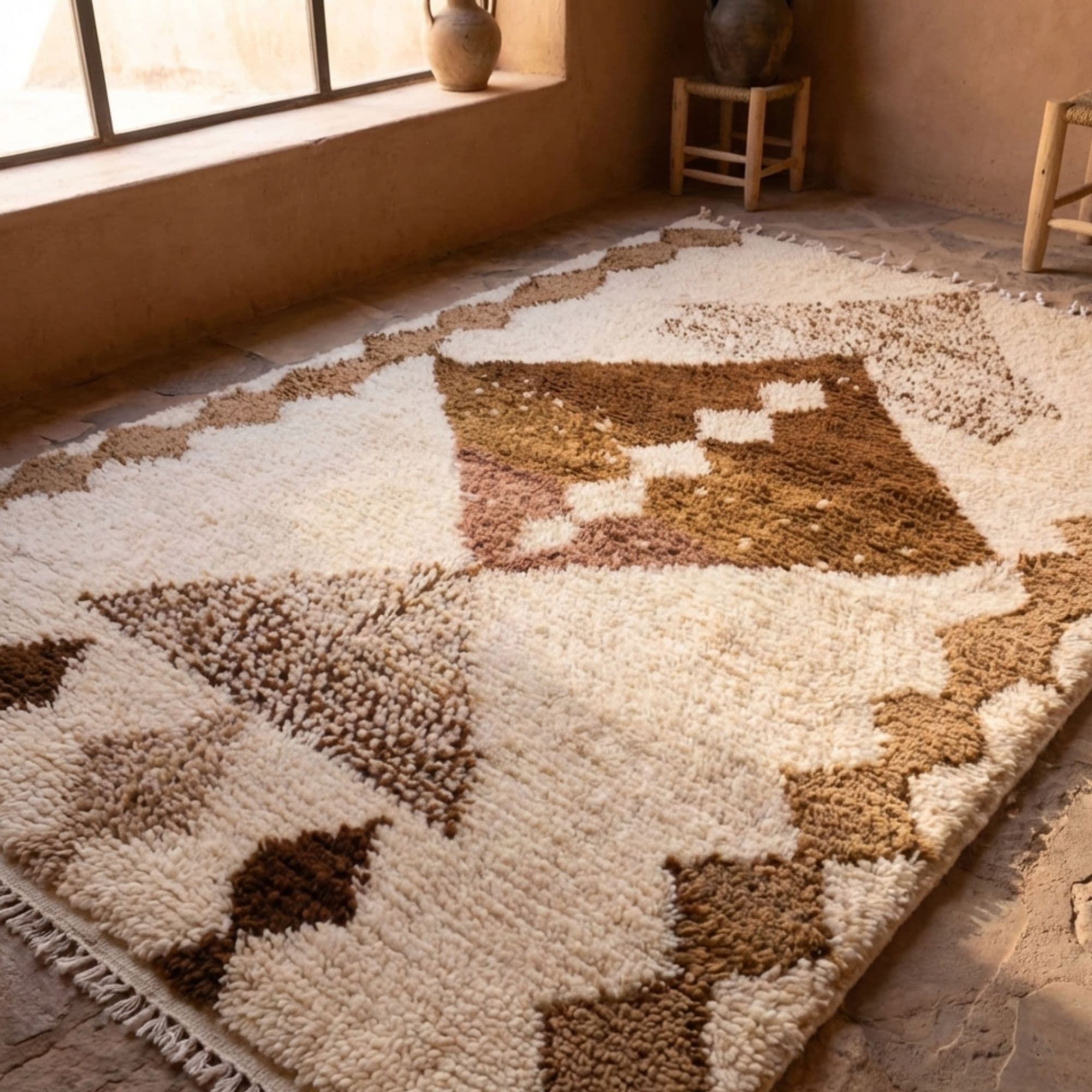
Moroccan rugs are hand-knotted by Amazigh (Berber) women in the Atlas Mountains of Morocco. They are characterized by geometric abstract designs, thick wool pile, and a limited color palette (Beni Ourain) or bold, vibrant symbol-rich patterns (Boujaad, Azilal). Each rug is completely unique — weavers work without cartoons or blueprints, creating intuitive designs that reflect their environment and personal symbolism. An ivory Berber rug with charcoal geometric style exemplifies this approach.
The weaving tradition in Morocco dates back over 8,000 years to the Neolithic period. All authentic Moroccan rugs use 100% natural materials: highland sheep wool and plant-based dyes. A typical large rug contains 150,000-300,000 hand-tied knots per square meter and takes 2-6 months to complete. Every rug in our collection starts at $145 USD and prices scale with size.
Moroccan rugs work best in modern, minimalist, boho, and Scandinavian interiors where their abstract patterns provide textural contrast against clean lines. A teal Berber rug with geometric modern style demonstrates this contemporary versatility.
What Are Persian Rugs?
Persian rugs (also called Iranian rugs) originate from Iran and represent one of the most refined textile traditions in human history. They are characterized by elaborate floral and curvilinear patterns, medallion centerpieces, and highly dense knotting using wool on a silk or cotton foundation. Unlike Moroccan rugs, Persian rug designs are typically symmetrical and follow established patterns passed down through workshops.
The Persian rug industry is highly commercialized with centuries-old workshops, named master designers, and regional styles (Tabriz, Isfahan, Kashan, Heriz). Knot densities on fine Persian rugs can reach 500,000-1,000,000+ knots per square meter — 3-5x denser than Moroccan rugs. A single high-quality Persian rug can take 12-24 months to complete and costs $2,000-$30,000+ depending on quality and age.
Authentic Persian rugs use wool on silk or cotton foundations, with natural dyes. They suit traditional, formal, classic, and transitional interiors.
Moroccan vs Persian: Key Differences
Design: Moroccan rugs are abstract and geometric. Persian rugs are floral and curvilinear with central medallions. For a deeper dive into how construction affects quality, read our handmade vs machine-made comparison.
Knot density: Moroccan averages 150,000-300,000 knots/m². Persian averages 500,000-1,000,000+ knots/m².
Production time: Moroccan 2-6 months per rug. Persian 6-24 months per rug.
Price: Moroccan from $145 USD, scaling with size. Persian $500-$30,000+ USD.
Materials: Moroccan uses 100% highland wool. Persian uses wool on silk or cotton foundations.
Design origin: Moroccan designs are intuitive and unique to each weaver. Persian designs follow established workshop patterns.
Interior style: Moroccan suits modern, boho, minimalist. Persian suits traditional, classic, formal.
Investment value: Fine Persian rugs often appreciate significantly. Authentic Moroccan rugs hold value well but appreciate more slowly.
Which Should You Buy?
Choose a Moroccan rug if you want a one-of-a-kind abstract textile art piece at an accessible price point, and your interior style leans modern, bohemian, or minimalist. Moroccan rugs bring warmth, texture, and authenticity to contemporary spaces.
Choose a Persian rug if you prefer traditional, ornate design with floral patterns, need a formal dining room or living room piece, and have a higher budget for a long-term investment piece.
Browse our collection of authentic Moroccan rugs and discover why designers worldwide are choosing Berber rugs for modern interiors.
.jpg&w=2560&q=75)
-(1).jpg&w=2560&q=75)