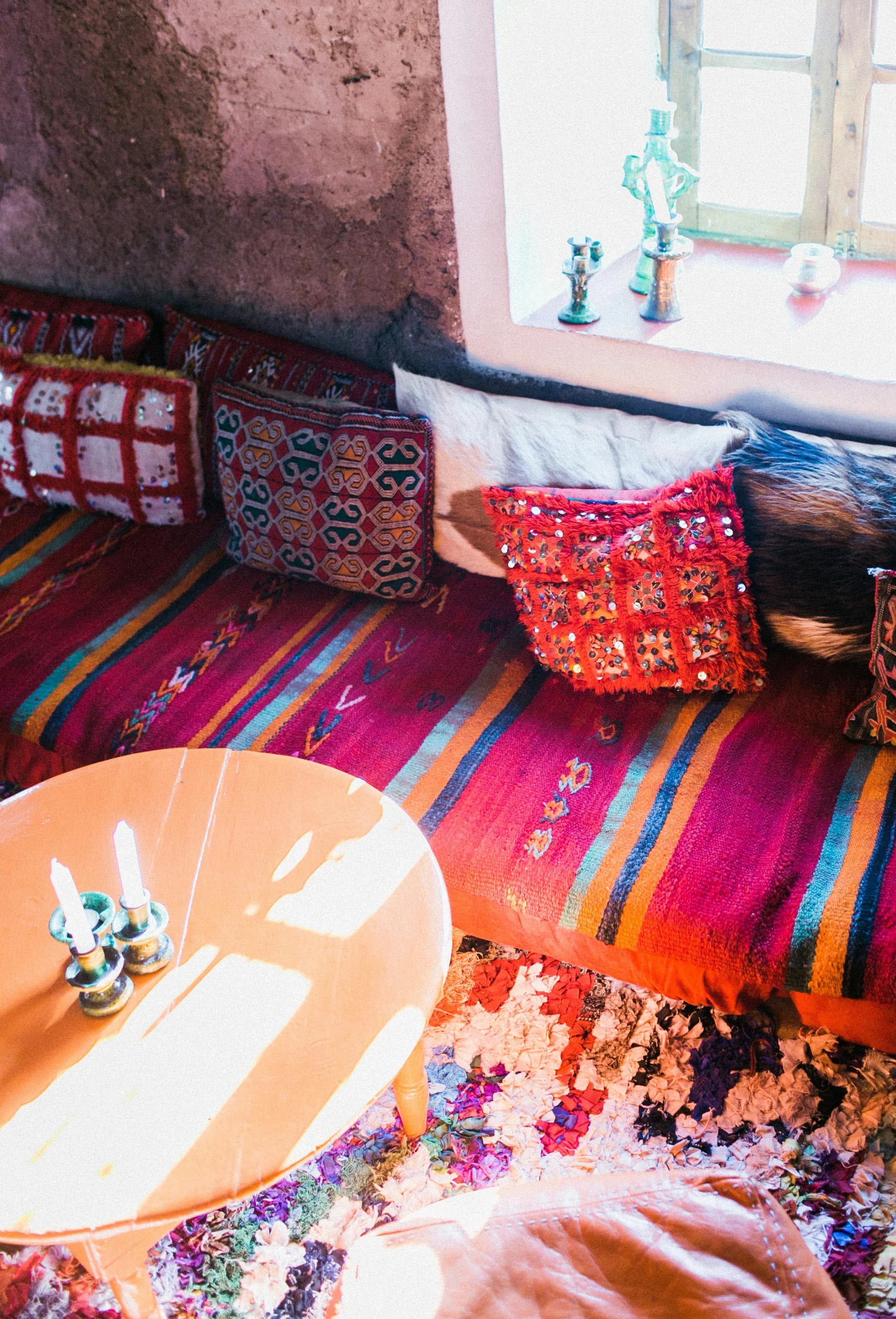
There is a distinct magic that happens when opposing forces collide in a beautifully designed room. In the world of high-end interior design, few pairings are as legendary—or as visually arresting—as the marriage of Mid-Century Modern architecture and authentic Moroccan tribal rugs.
Walk into the carefully curated homes of top architects, look through the archival photos of 1950s modernist masterpieces, or flip through the pages of today’s leading architectural magazines. You will notice a recurring theme: beneath the sleek silhouettes of chrome, glass, and bentwood, there almost always lies the heavy, textured, asymmetrical wool of a Moroccan carpet.
At Nomadinas, we are endlessly fascinated by this aesthetic phenomenon. How did textiles woven by nomadic Amazigh women in the remote, freezing peaks of the Atlas Mountains become the ultimate muse for the pioneers of modern, Western architecture? The answer lies in a shared pursuit of pure, unadulterated form.
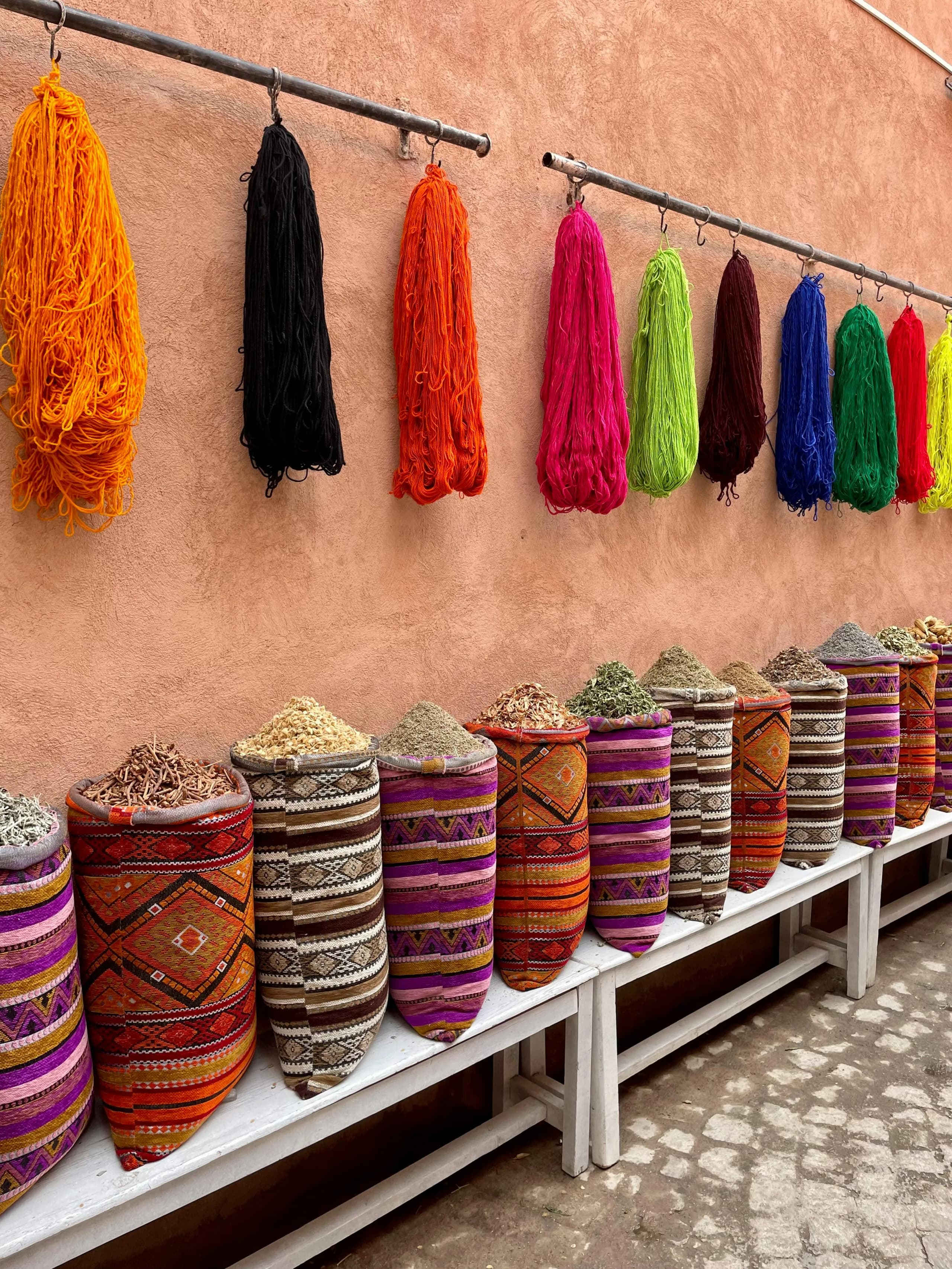
The Rebellion Against the Ornate
To understand the connection, we must look at the birth of the modernist movement. In the early to mid-20th century, architects and designers like Le Corbusier, Alvar Aalto, and Marcel Breuer were leading a rebellion against the heavy, ornate, and overly decorated styles of the Victorian era. They championed functionalism, clean lines, and the honest use of materials like steel, concrete, and glass.
However, these visionary architects quickly realized a vital truth: spaces composed entirely of hard surfaces and right angles run the risk of feeling sterile, cold, and uninviting. They needed a counterweight. They needed something that could introduce warmth and humanity without reverting to the fussy floral patterns of traditional Persian or European carpets.
They found their perfect foil in the tribal rugs of Morocco.
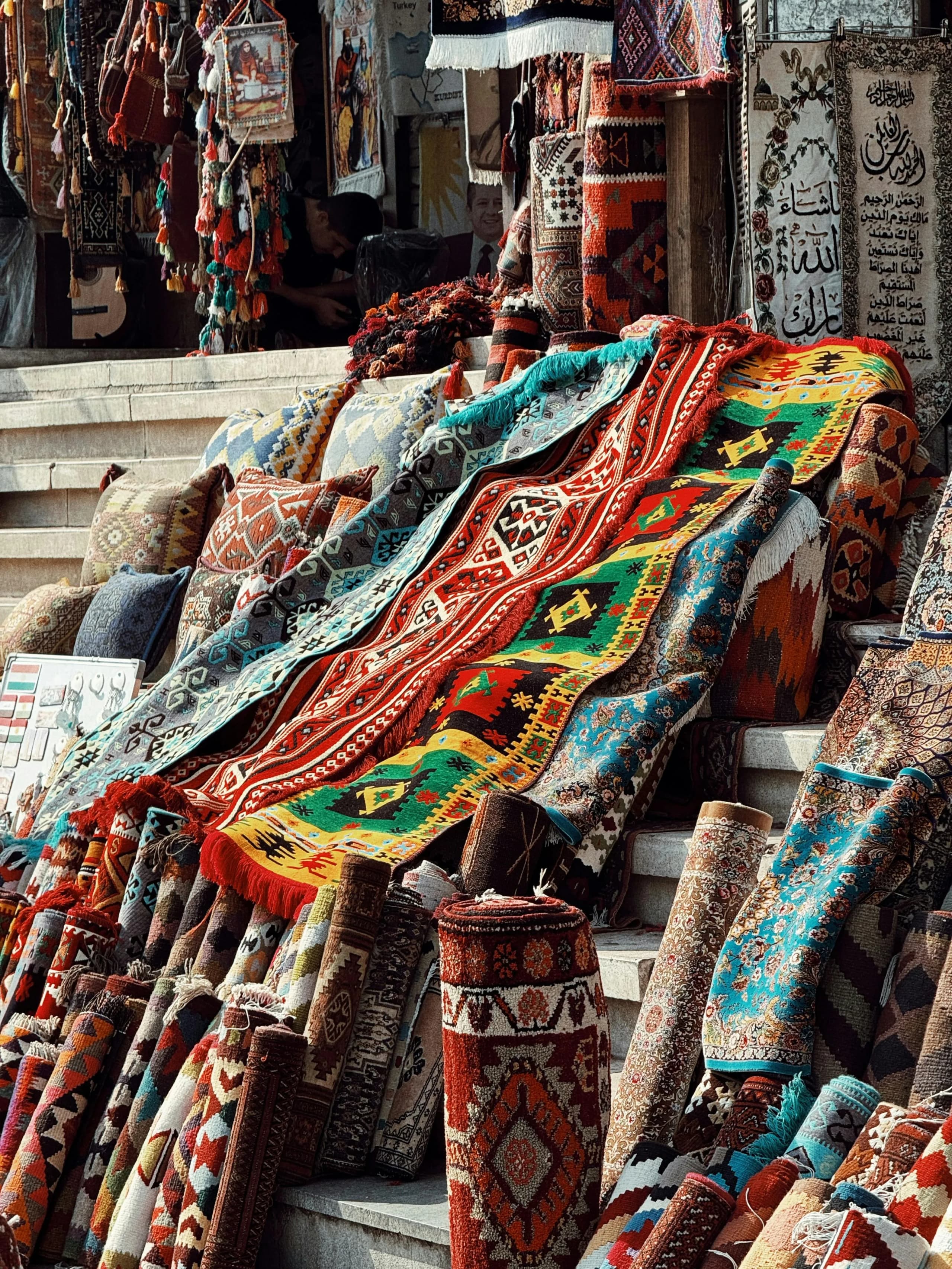
The Avant-Garde of the Atlas Mountains
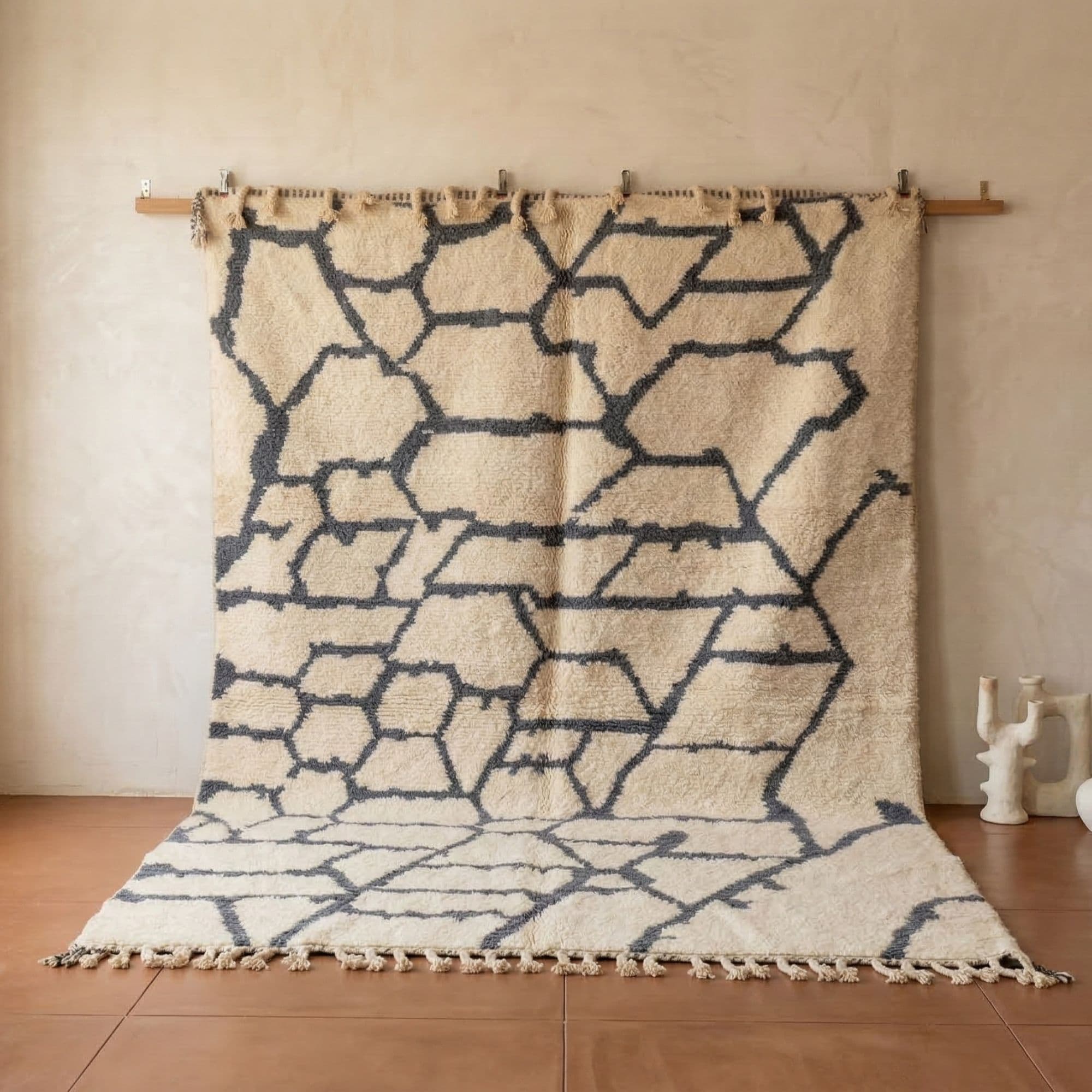
When modernists first encountered rugs woven by the Beni Ouarain, Azilal, and Boujad tribes, they were looking at textiles that completely defied Western expectations of carpet design.
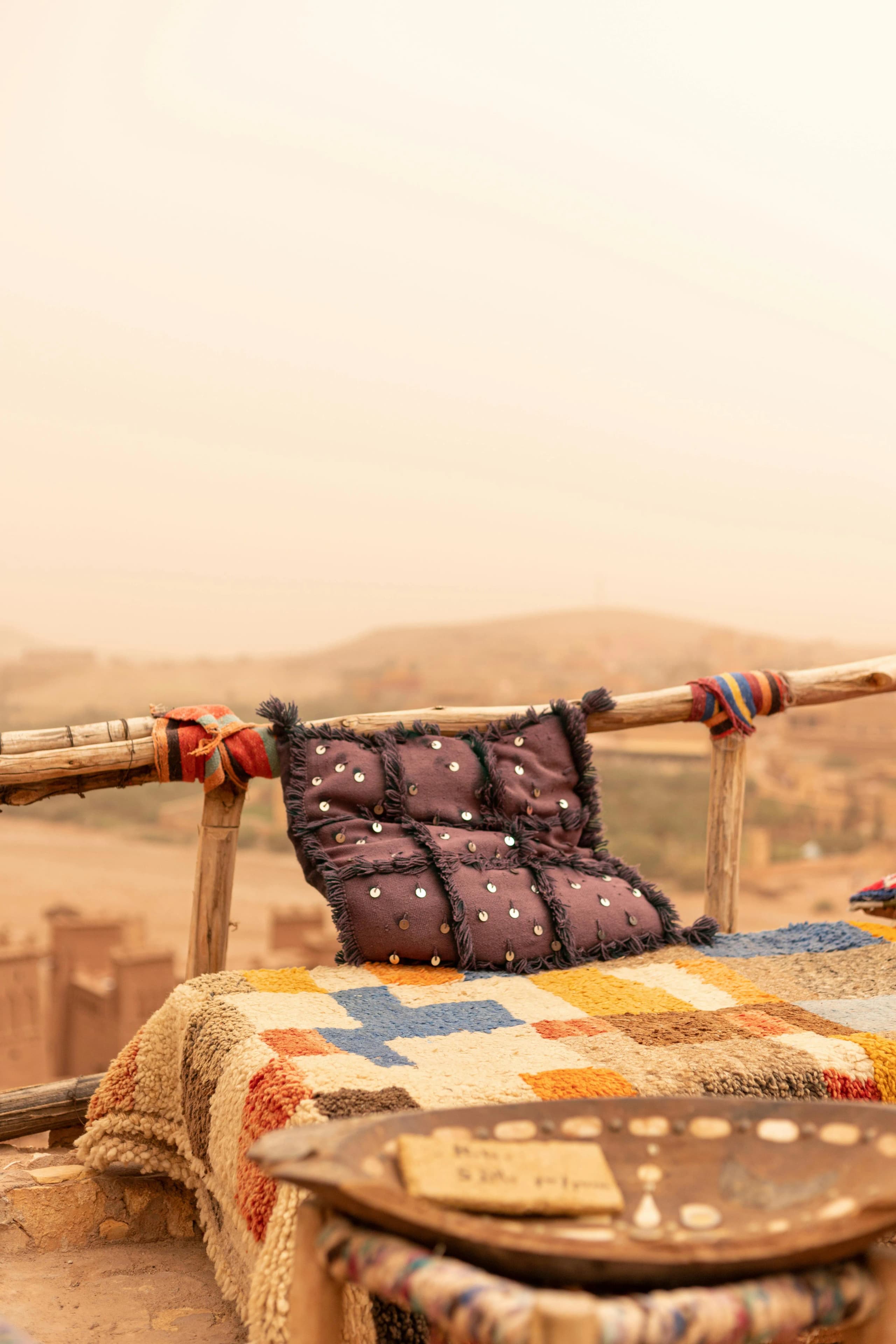
Unlike the highly formalized, perfectly symmetrical rugs produced in urban commercial centers, rural Amazigh weaving was deeply intuitive and startlingly abstract. The women of the Atlas Mountains were not following rigid blueprints. They were expressing their environment, their beliefs, and their ancestral history through bold geometric forms, floating fields of negative space, and fearless color blocking.
Decades before abstract expressionist painters like Mark Rothko, Paul Klee, or Jackson Pollock began experimenting with non-representational art, Amazigh women were weaving these very concepts into their winter bedding. The architects of the 1930s and 1950s recognized this instantly. They saw that these Moroccan rugs possessed a “primitive modernism”—a raw, graphic power that felt entirely contemporary.
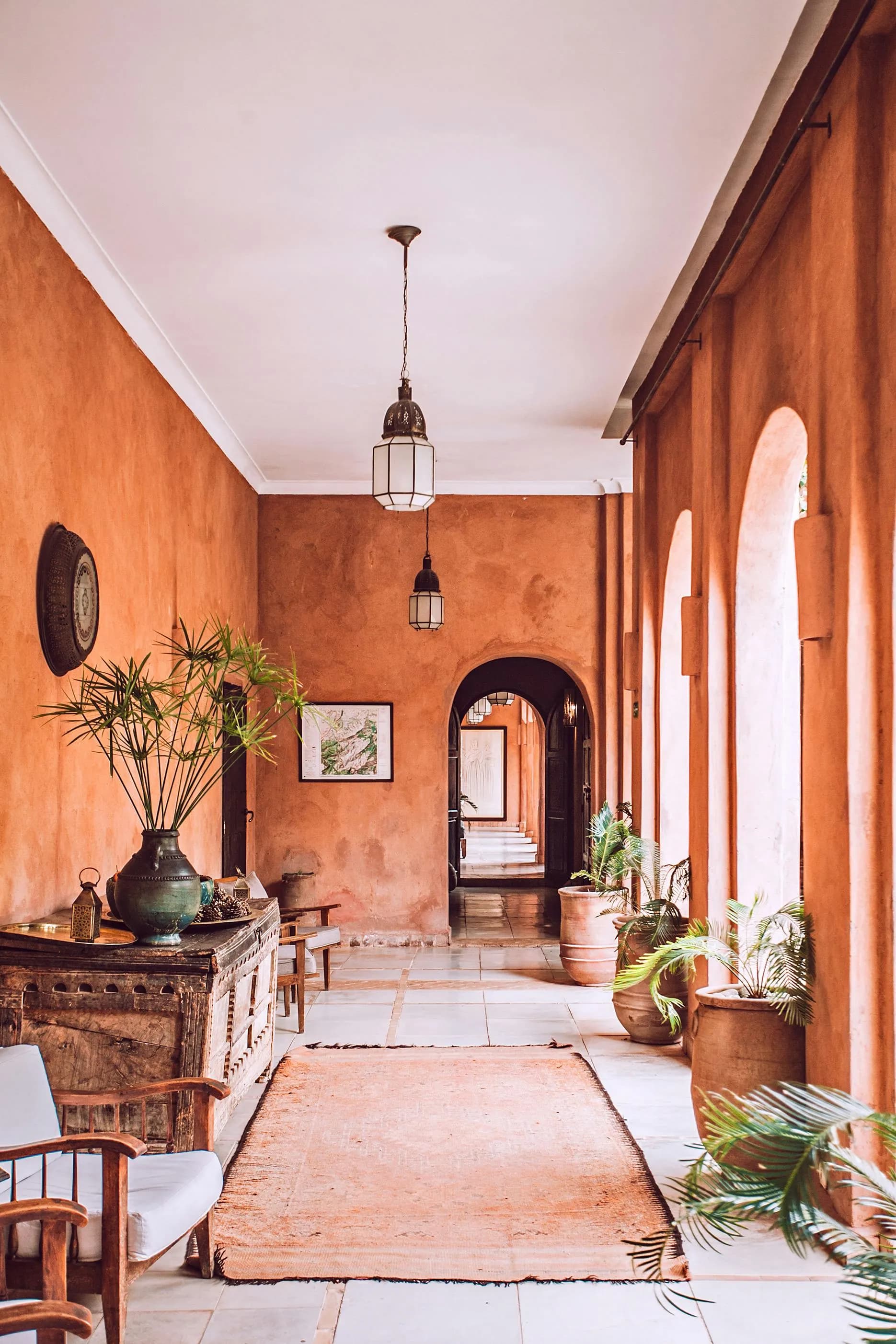
A Masterclass in Texture and Tension
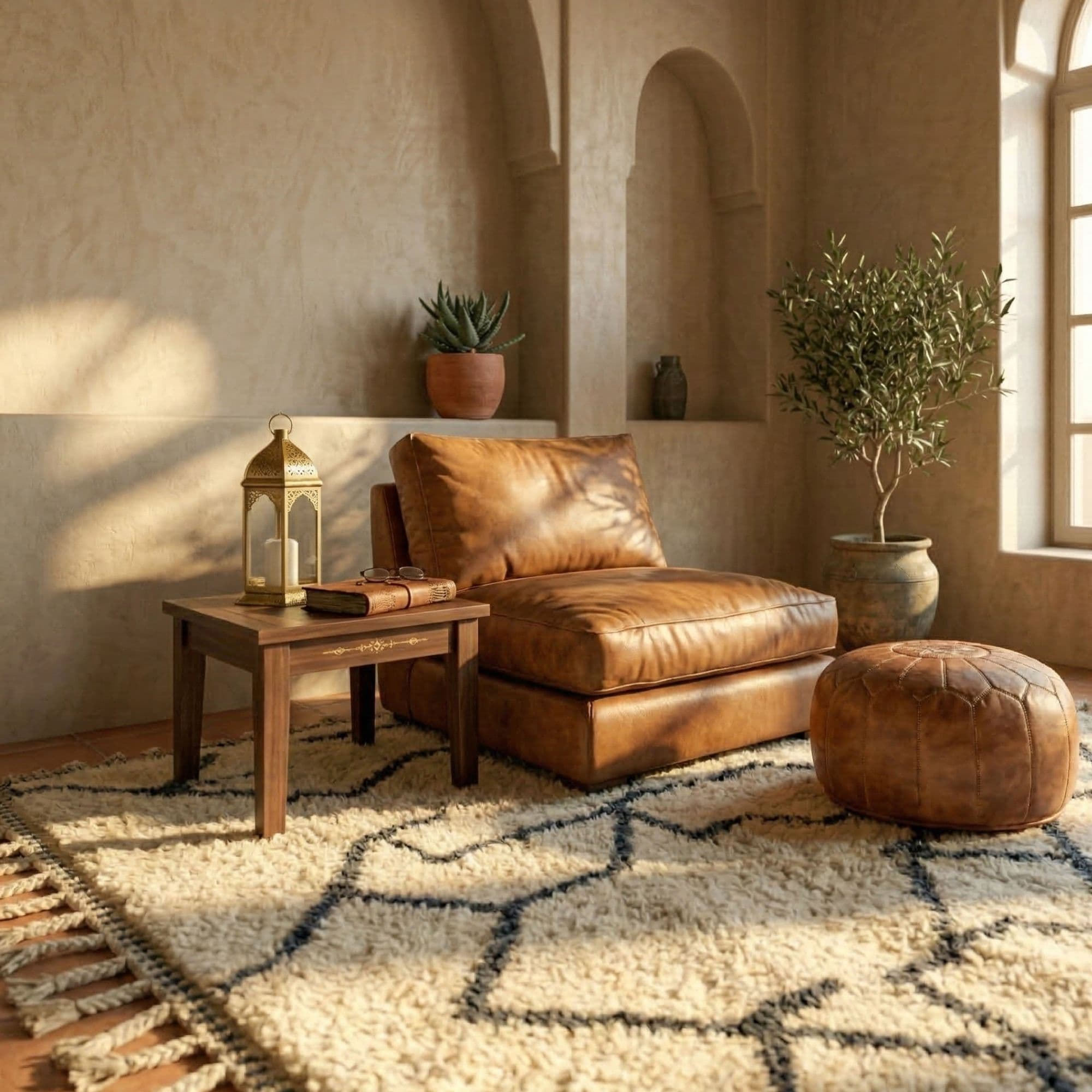
The brilliance of pairing a Moroccan rug with mid-century or contemporary minimalist furniture lies in the concept of textural tension.
Consider a classic Pierre Jeanneret teak chair or a sleek modular sofa by Florence Knoll. These pieces are celebrated for their sharp, intentional geometry and smooth finishes. When placed upon the thick, undyed, heavy pile of a Beni Ouarain rug, the contrast is electric. The organic, slightly irregular lines of the rug’s diamond motifs soften the strict geometry of the furniture, while the furniture elevates the rug from a functional object into a piece of fine art.
The rug acts as the grounding soul of the room. It absorbs sound, diffuses harsh light, and introduces a tactile richness that concrete and glass simply cannot provide. It reminds the inhabitant that while we may live in a hyper-modern world, we still crave the comfort of the handmade.
Curation Over Decoration
Today, the integration of Moroccan rugs into modern spaces is not a passing trend; it is a fundamental pillar of luxury interior design. However, as the aesthetic has grown in popularity, the market has been flooded with machine-made reproductions that lack the spirit and structural integrity of the originals.
True luxury lies in authenticity. A mass-produced rug with printed geometric lines will never provide the same gravitational pull as a piece hand-knotted from live wool, infused with the natural lanolin and the distinct, human touch of its weaver.
At Nomadinas, our collections are curated for the design purist. Whether you are anchoring a stark, concrete-clad loft or a warm, wood-paneled mid-century home, an authentic Moroccan rug offers a bridge between the ancient and the avant-garde. It is more than decor; it is a piece of architectural history, ready to breathe life into your space.