The difference between a handmade and a machine-made rug goes far beyond price. It affects durability, appearance, environmental impact, investment value, and the story behind the piece in your home. Here is how to tell them apart and which is right for you.
> Comparison at a glance: A handmade rug contains 150,000-300,000 individually tied knots woven by hand over 2-6 months. A machine-made rug is produced in hours using automated looms. Handmade rugs can last 50-100+ years with proper care; machine-made rugs typically last 5-20 years. A handmade wool rug is fully biodegradable; a synthetic machine-made rug takes 500+ years to decompose.
What Is a Handmade Rug?
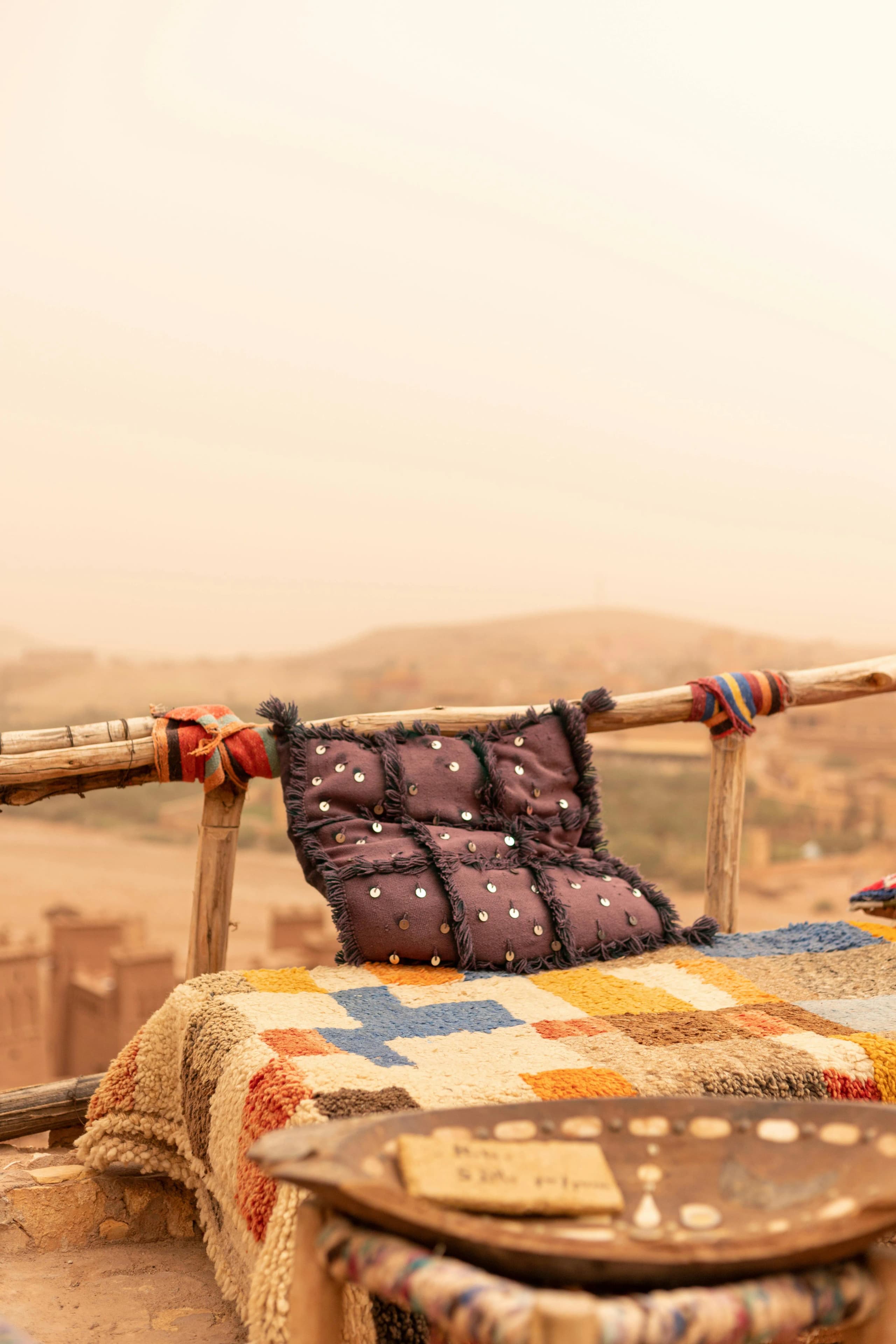
A handmade rug is created entirely by hand on a traditional loom. Each individual knot is tied by a weaver — no machines touch the textile after the wool is spun. In Morocco, Berber women have been hand-knotting rugs for over 8,000 years using techniques passed down through generations.
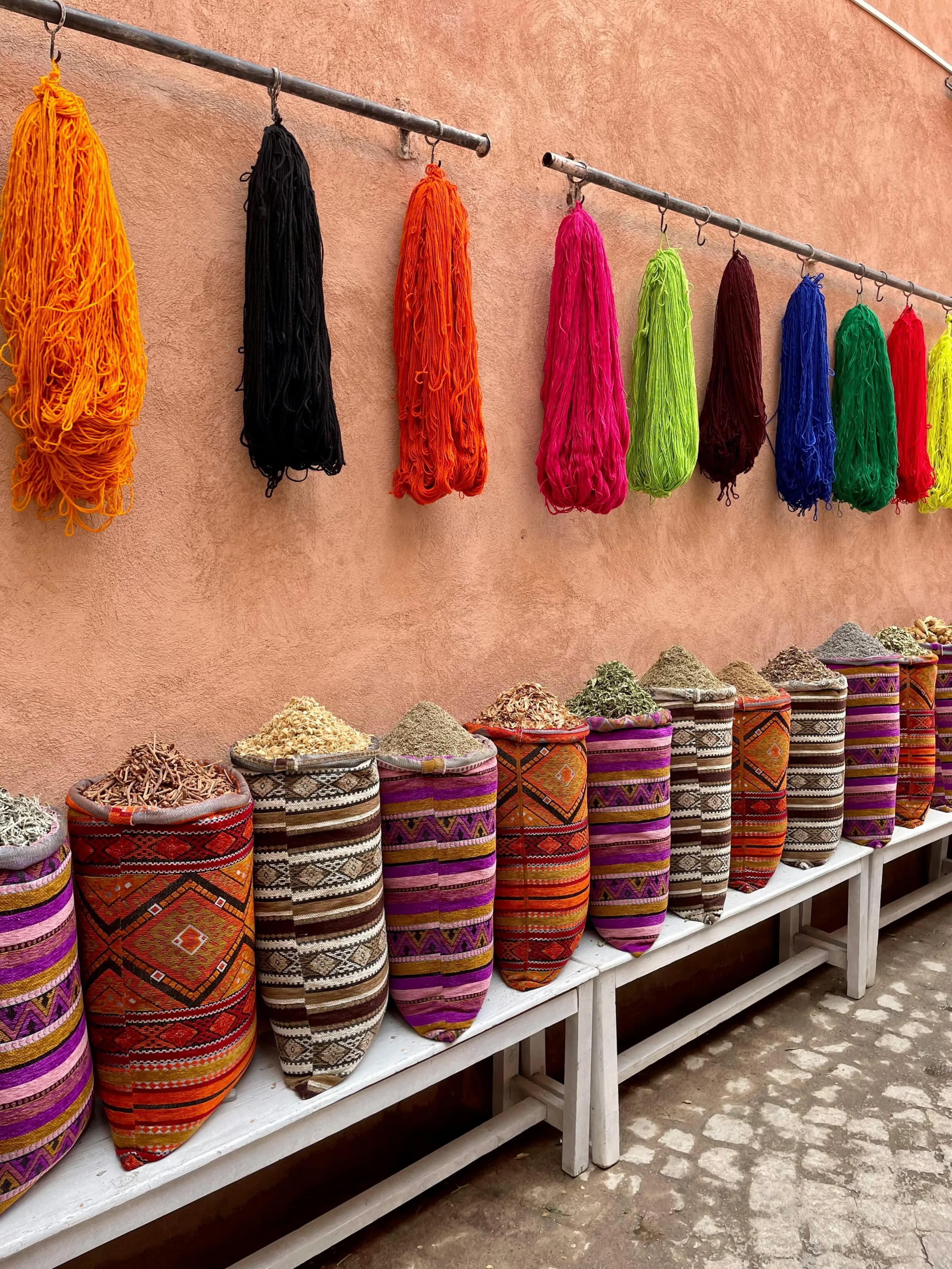
Authentic handmade Moroccan rugs use 100% natural materials: highland sheep wool sheared in spring, hand-spun on a drop spindle, and dyed with plant-based ingredients like madder root, indigo, and saffron. A single 8x10 rug requires 8-12 kg of raw wool and contains 150,000-300,000 hand-tied knots per square meter. Production takes 2-6 months from start to finish.
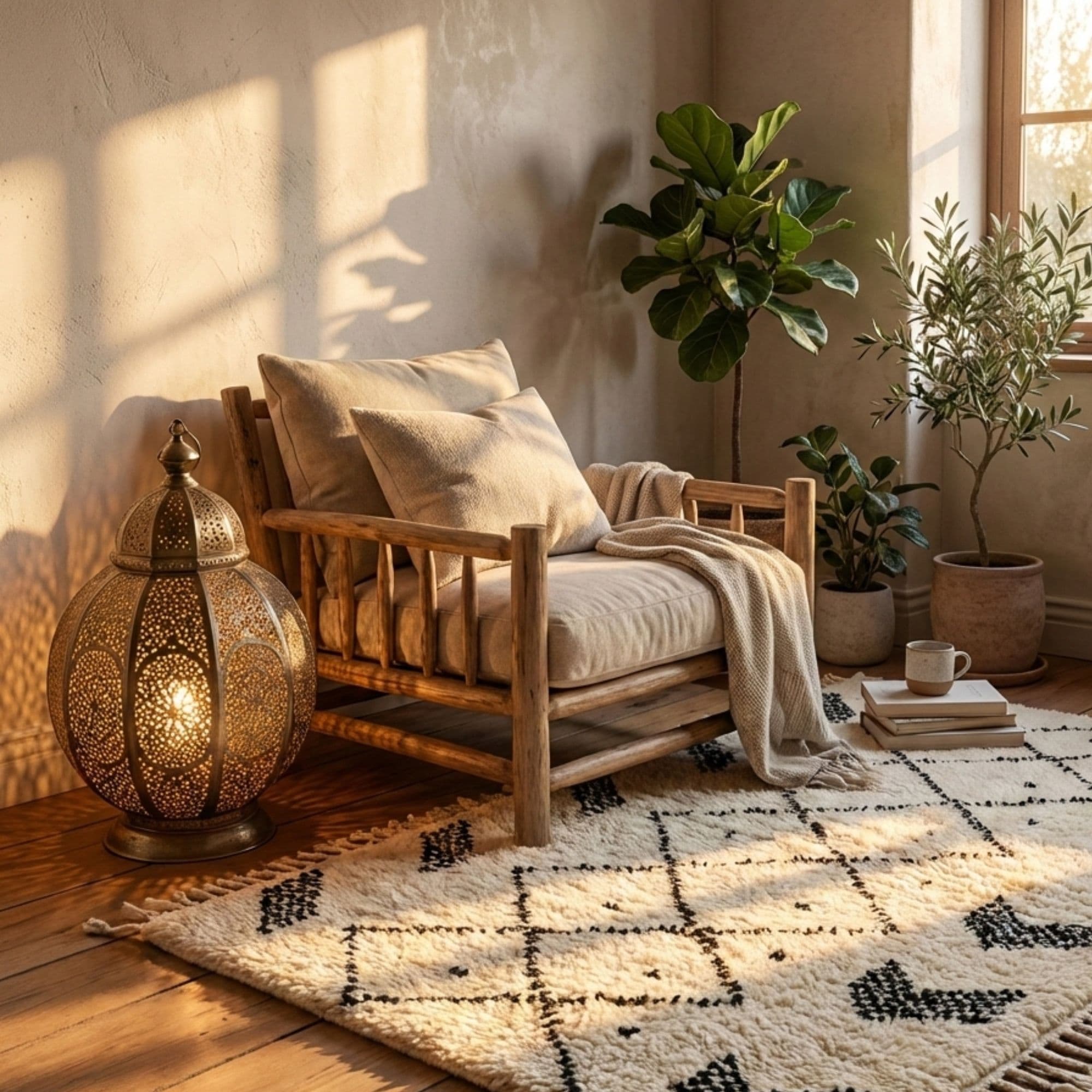
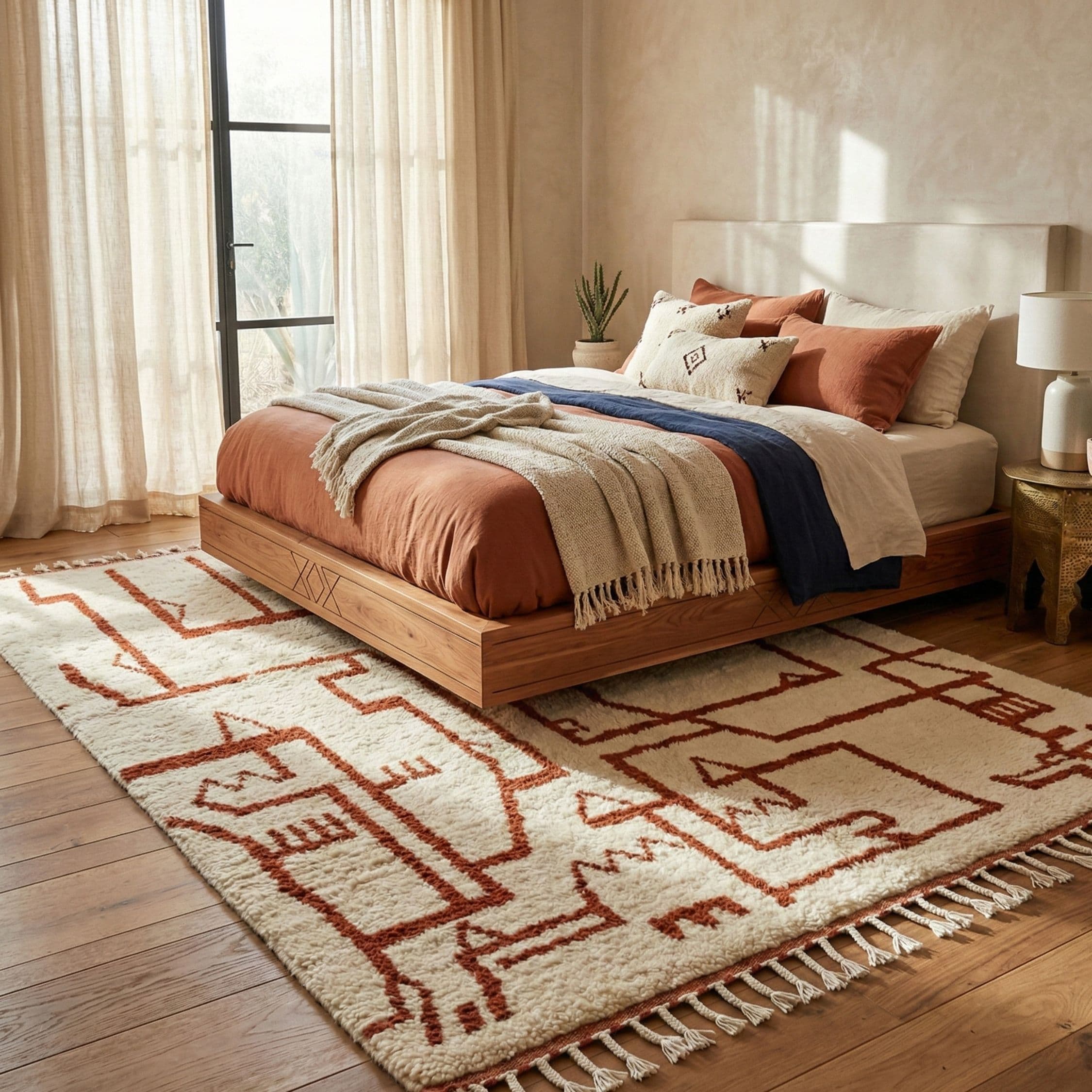
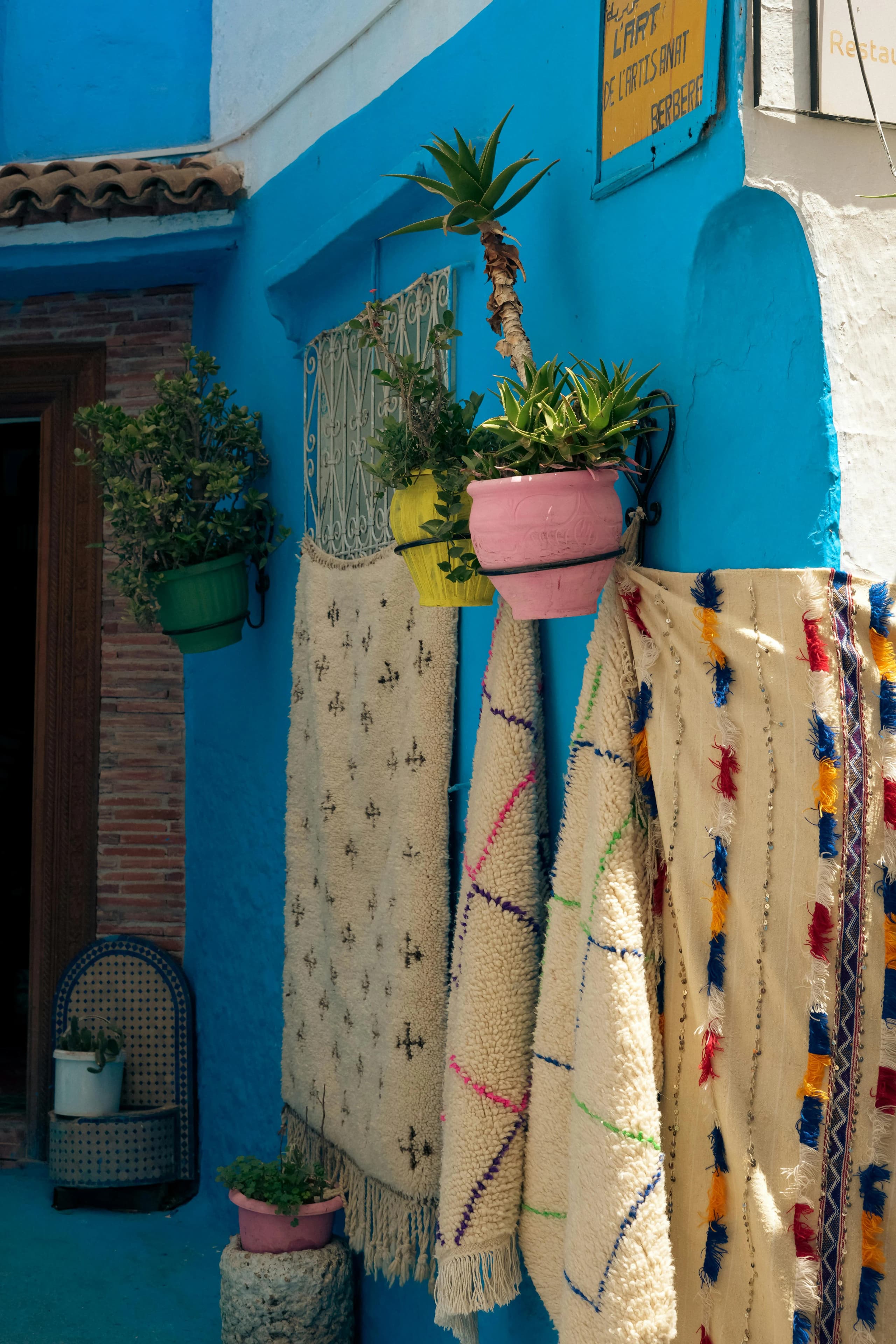
Every handmade rug is unique — slight irregularities in pattern and texture are signs of authenticity, not defects. An ivory Berber rug with charcoal geometric style showcases these unmistakable marks of human craft. A well-cared-for handmade wool rug can last 50-100 years or more.
What Is a Machine-Made Rug?
A machine-made rug is produced on an automated power loom in a factory. A single machine can produce a rug in 4-8 hours that would take a weaver 2-4 months to complete by hand. Most machine-made rugs use synthetic materials like polypropylene, nylon, or polyester, with chemical dyes.
Machine-made rugs account for approximately 95% of the global rug market. They are uniform, perfectly symmetrical, and inexpensive — but they lack the durability, character, and environmental benefits of handmade rugs. A synthetic machine-made rug typically lasts 5-20 years before showing significant wear. At end of life, it will take 500+ years to decompose in a landfill, releasing microplastics throughout.
Handmade vs Machine-Made: 7 Ways to Tell
1. Examine the knots: Turn the rug over. A handmade rug will show individual, slightly irregular knots. A machine-made rug has a uniform, glued-on backing or perfectly even rows.
2. Check the fringe: In handmade rugs, the fringe is the warp threads extending from the body of the rug. In machine-made rugs, the fringe is often stitched or glued on separately.
3. Look at the pattern: Handmade rugs have slight variations in pattern — the same motif may vary slightly in size or shape. Machine-made rugs are perfectly uniform.
4. Feel the wool: Natural wool feels soft, warm, and substantial. Synthetic fibers feel slick, plastic-like, or overly uniform.
5. Test the color: Natural plant-based dyes produce subtle variations (abrash) when viewed from different angles. Synthetic dyes produce flat, uniform color.
6. Check the weight: Handmade wool rugs are heavier than synthetic rugs of the same size, sometimes 2-3x heavier. Feel the substantial weight of an ivory Berber rug with minimalist grid style and you'll immediately understand the difference.
7. Bend the rug: A handmade wool rug folds naturally. Machine-made synthetic rugs often resist bending due to latex or glue backing.
Which Should You Choose?
Choose a handmade rug if you value authenticity, durability, environmental sustainability, and owning a one-of-a-kind piece of functional art. To learn more about identifying genuine pieces, explore our complete guide to authentic Berber rugs. A handmade wool rug is an investment that can be passed down through generations.
Choose a machine-made rug if you need an inexpensive temporary solution, have a very tight budget, or need a rug for a high-traffic rental property where damage is likely.
Browse our collection of authentic handmade Moroccan rugs — each one hand-knotted by Berber artisans in the Atlas Mountains using 100% natural materials.
.jpg&w=2560&q=75)
-(1).jpg&w=2560&q=75)