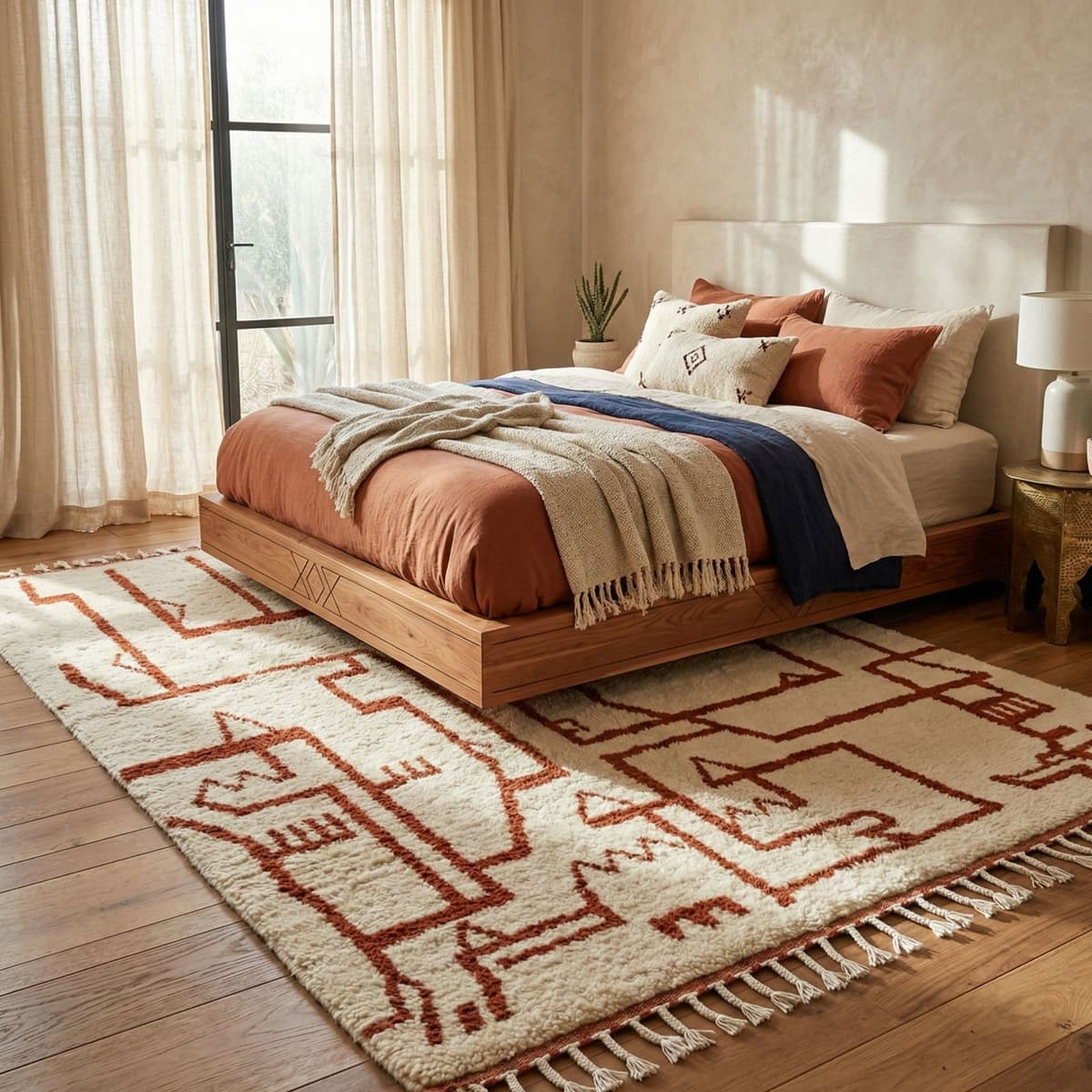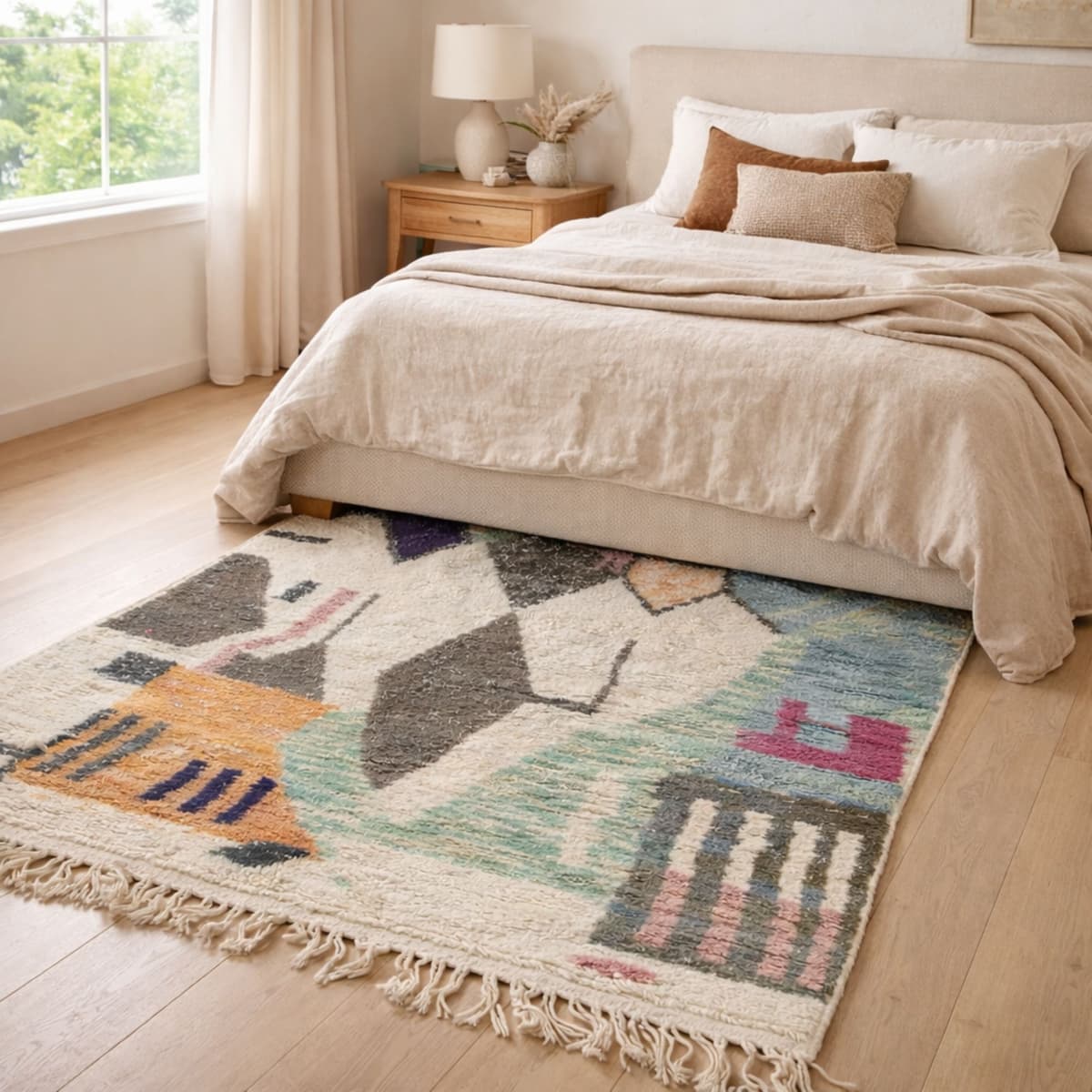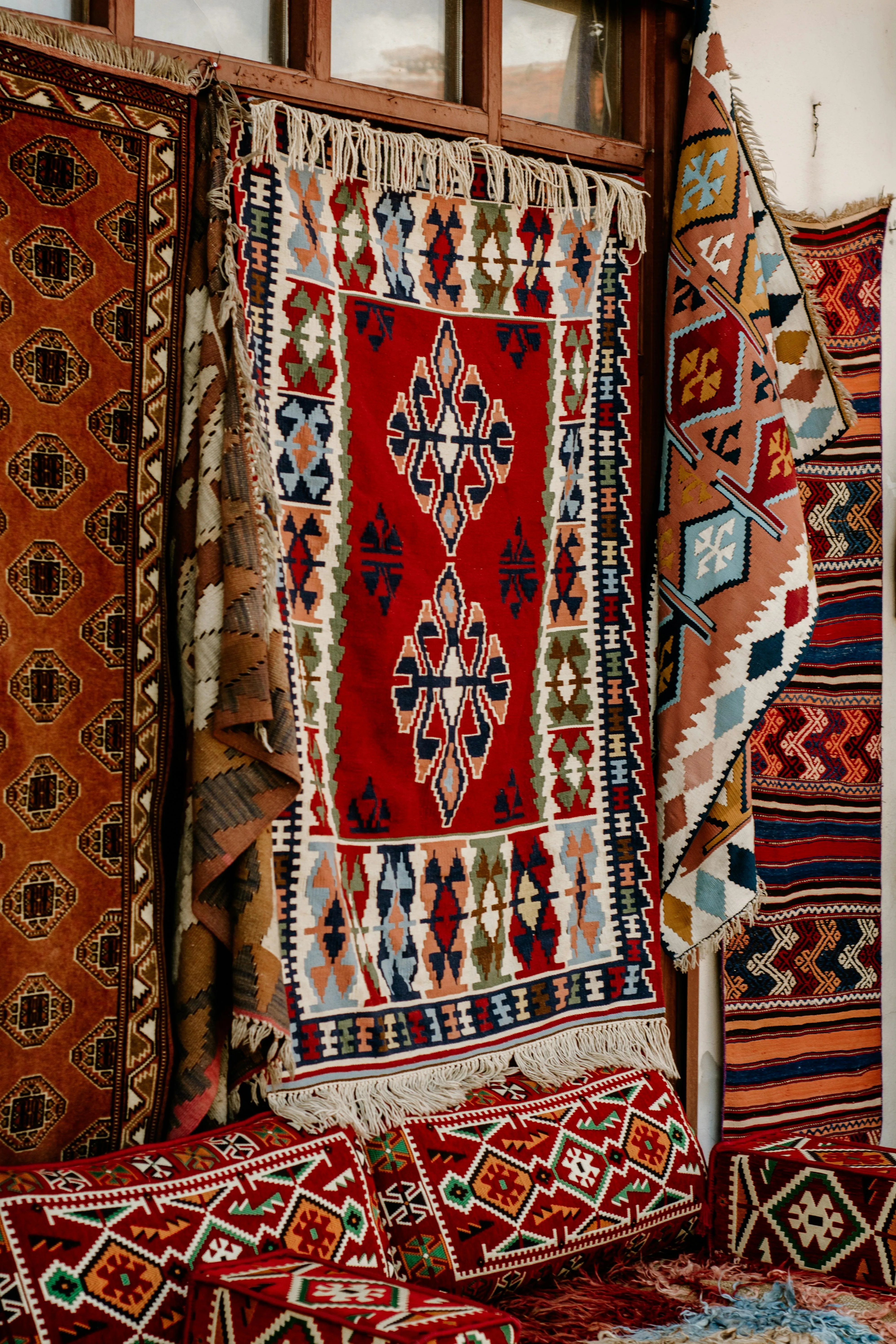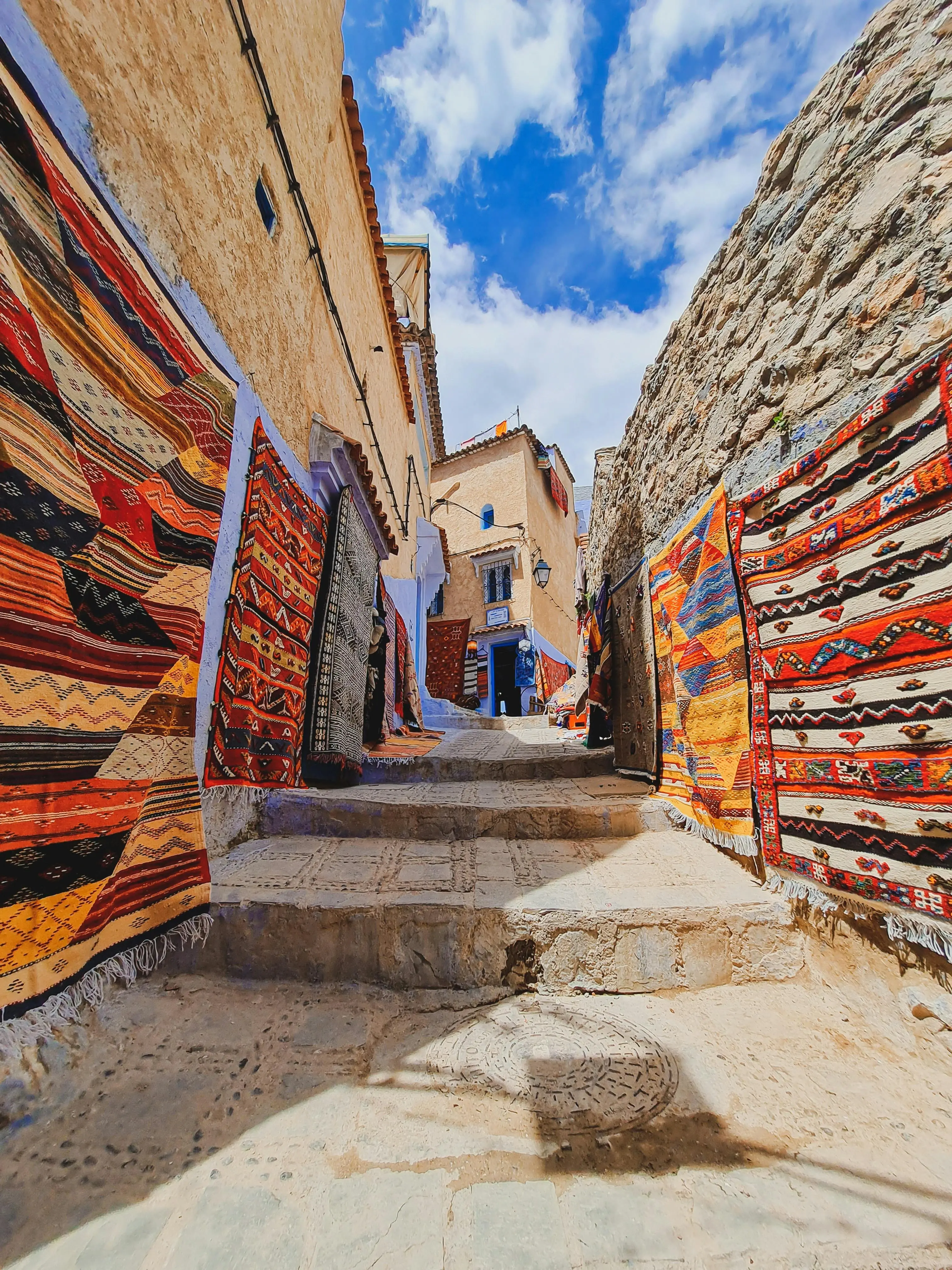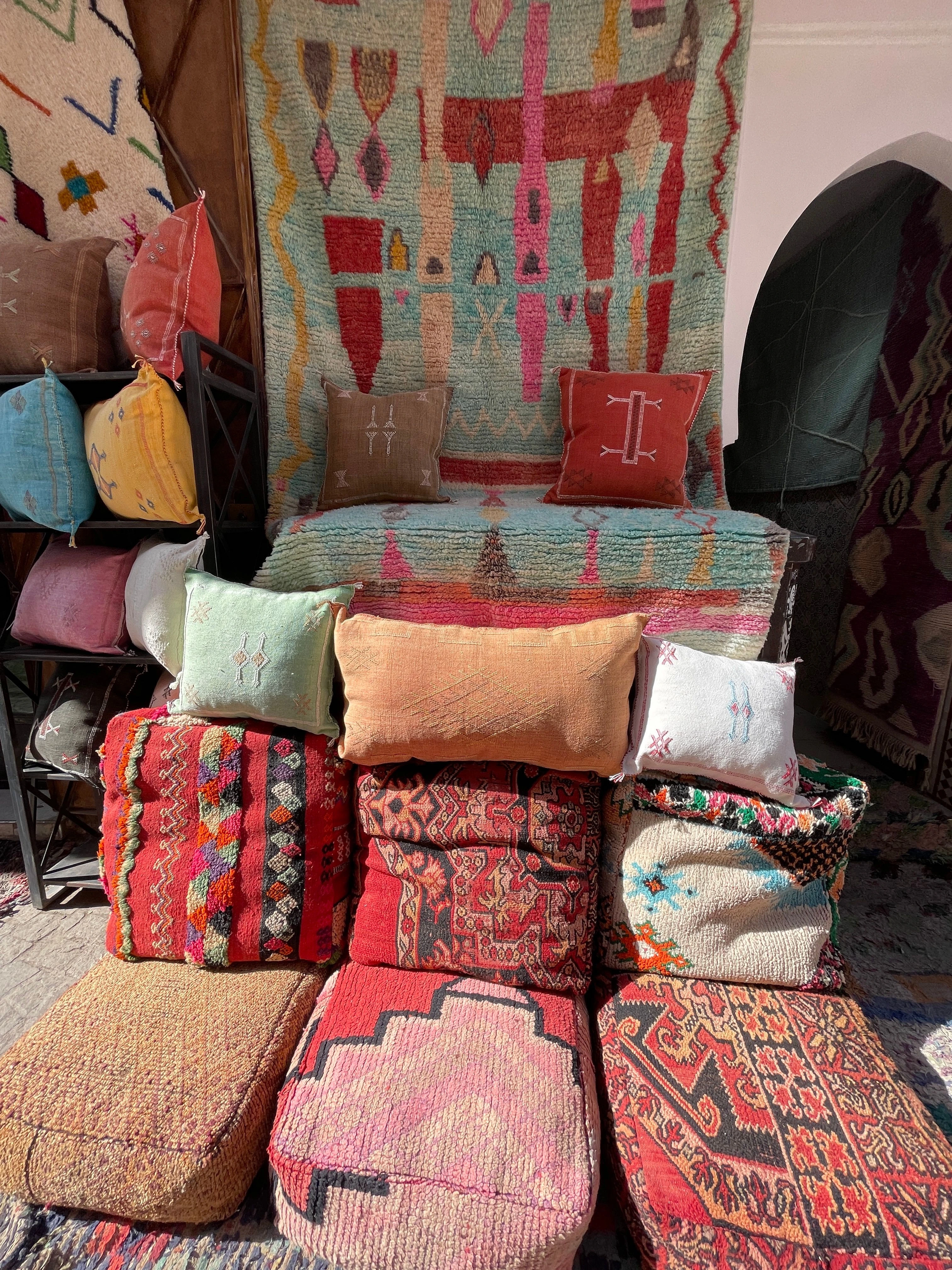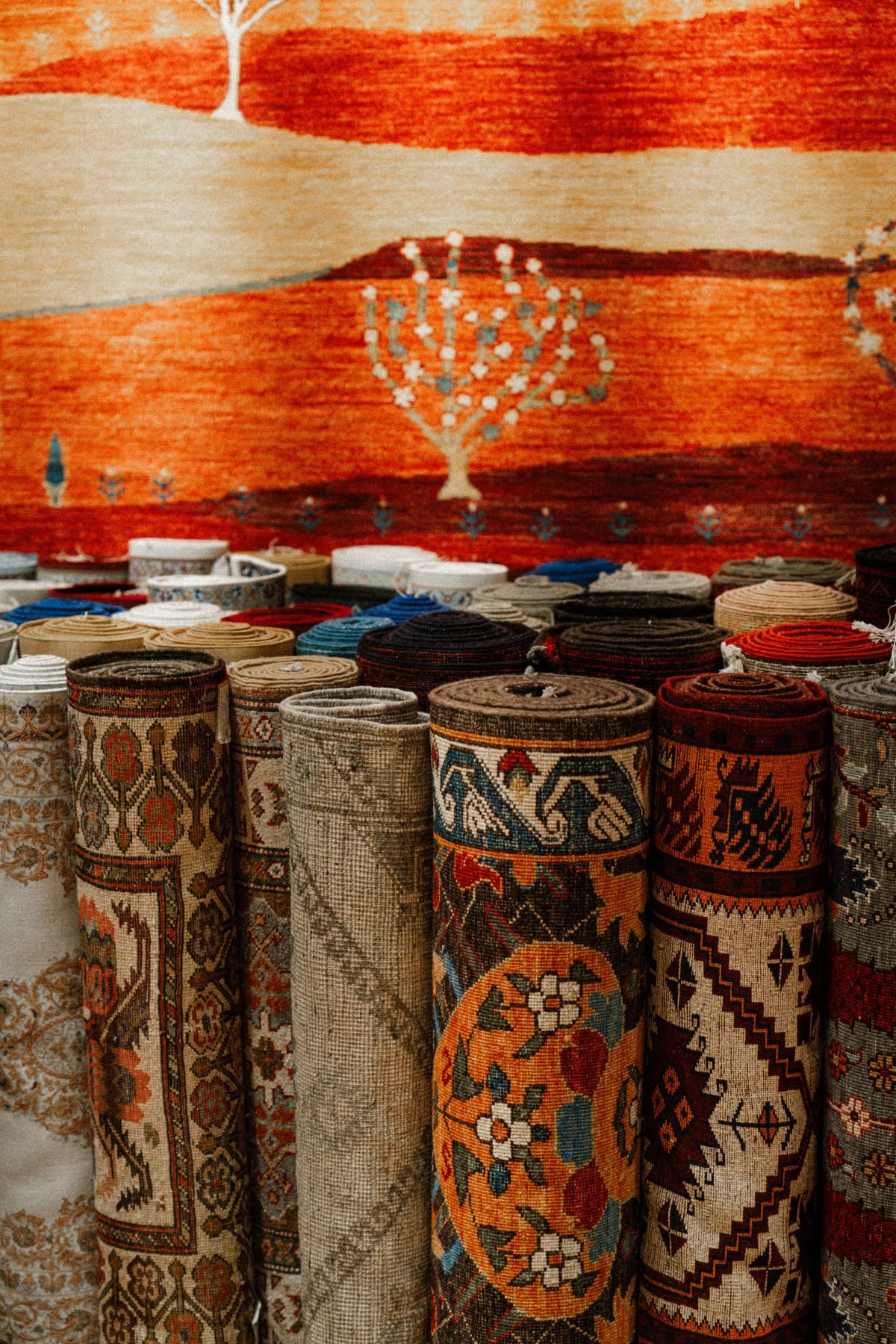
In the realm of modern interior design, we are trained to evaluate a rug by its physical attributes: the density of its pile, the vividness of its dyes, and the symmetry of its geometric patterns. We measure it, place it beneath sleek contemporary furniture, and admire the warmth it brings to a room.
But to view an authentic Moroccan carpet merely as a decorative object is to miss its most profound dimension. For the Amazigh (Berber) women of the Atlas Mountains and the Saharan plains, the rug is not just a textile; it is a living entity.
At Nomadinas, our curation goes beyond the visual. We seek out textiles that carry the profound, unseen weight of their creation. In rural Moroccan culture, the vertical wooden loom is a sacred space, and the act of weaving is a deeply spiritual journey defined by divine blessings, invisible spirits, and protective magic. It is time to unveil the secret life of the loom.
The Gift of Baraka: Wool as a Divine Substance
To understand the spirituality of the Amazigh weaver, one must first understand her reverence for her raw materials. The foundation of this reverence is baraka, a fundamental Islamic and indigenous concept translating to "divine blessing" or positive spiritual energy.
To the nomadic and semi-nomadic tribes, wool is not simply an agricultural byproduct; it is a direct gift from God. The divine cycle is clear: God sends the rare desert rain, the rain grows the grass, the sheep eat the grass, and the sheep provide the wool. Because of this sacred lineage, wool is believed to be inherently infused with baraka.
This respect permeates daily life. Among the Aït Khabbash tribe, wool is treated with the exact same reverence as bread. If a small piece of wool is dropped on the earth, it must be picked up immediately, as desecrating God's gift is considered deeply shameful. The women who work this holy material are highly respected within their communities, and the spiritual stakes of their craft are immense. According to an ancient Moroccan proverb, a woman who weaves forty carpets during her lifetime receives the ultimate baraka—her passage to heaven is absolutely guaranteed.
The Birth of a Soul
Because the raw material is holy, the process of assembling the loom is heavily ritualized. The creation of a Moroccan rug parallels the human lifecycle, moving through birth, youth, maturity, and eventually, death.
The spirituality of the loom begins before it is even fully constructed. As the warp threads are being prepared and strung, the loom is considered highly potent. It is believed that if a person steps over the unattached warp threads, they will be cursed with severe bad luck: a student will fail to learn, a woman may become barren, or an unmarried person will never find a spouse. To reverse the curse, the person must immediately step back over the threads in the opposite direction.
When the warp threads are finally mounted and lashed to the vertical wooden beams, a magical transformation occurs. The textile is said to be metaphorically born, imbued with its very own ruh, or "soul". By giving birth to the textile, the weaver's actions echo her own reproductive power, reinforcing her vital role in propagating the survival and identity of her people.
Guarding Against the Unseen: Salt and the Jnoun
Because the weaving of a rug is treated as a major lifecycle event, it attracts the attention of the unseen world. In Moroccan cosmology, the jnoun (spirits) are temperamental, supernatural beings made of intensely hot fire. They are unpredictable—helpful one moment, and deeply harmful the next.
The jnoun are drawn to metaphorical and physical passages, preying on humans during vulnerable life transitions such as childbirth, marriage, and circumcision. Because the weaving of a carpet is considered a birth, the weaver sitting at her loom is left incredibly vulnerable to spiritual attacks.
To defend her mind, her body, and her art, the weaver must create a fortress of protection. Before she mounts the warp threads to begin her work, she performs a quiet, vital ritual: she sprinkles the ground surrounding the loom with salt. In Amazigh culture, salt is a potent spiritual repellant. The jnoun are often referred to in the Tamazight language as wida tsentel tisent, which beautifully translates to "those who are hidden by salt". Safely enclosed within her ring of salt, the woman is free to weave her masterpiece.
The Loom and the Maiden: Magic and Matriarchy
The sacred power of the loom extends beyond the rug itself; it is actually used to cast protective magic over the women of the tribe.
In traditional Amazigh society, the purity and honor of the family line are of paramount importance. Female virginity prior to marriage is fiercely guarded to protect the family from social disgrace and to ensure the ethnic purity of the bloodline. To protect her daughter, a mother will literally use the architecture of the loom to cast a spell of containment.
Before a completed carpet is cut from the upper beam of the loom, a mother will create a small opening between the taut warp threads. She will then have her unmarried daughter physically squeeze her body through the threads.
This highly specific ritual is a form of thiqaf—a protective binding magic. By passing through the womb of the loom, the young girl is spiritually "closed" and protected until her wedding day. When the time finally comes for her to be married, the bride must once again squeeze through the loom to be "opened up," allowing her to safely transition into her new role as a wife and mother. The loom, therefore, is not just a tool for making decor; it is an instrument of matriarchal power and fierce maternal protection.
The Final Cut: A Passage to Heaven
A Moroccan rug takes months, sometimes over a year, to complete. The weaver pours her time, her physical energy, and her quiet prayers into the tightly packed knots. But all things that are born must eventually pass.
When the weaving is complete and the final rows are sealed, the time comes to remove the rug from the wooden frame. Because the textile was born and possessed a soul, the cutting of the warp threads is viewed as the metaphorical death of the rug.
This moment is treated with profound tenderness and respect. Just as Muslims ritually wash a body before burial, the weaver splashes the newly cut textile with water. As the water hits the fresh wool, she recites a final, beautiful blessing over her creation: "Drink, loom. You will drink tomorrow in heaven".
The Living Artifact
When we strip away the rituals, the salt, and the prayers, it is easy to view a rug as a simple commodity. But the global obsession with authentic Moroccan textiles proves that we instinctively sense the unseen. We are drawn to these pieces because they vibrate with a frequency that machine-made, factory-loomed carpets can never replicate.
At Nomadinas, we curate living artifacts. When you lay a vintage Amazigh rug on the floor of your home, you are anchoring your space with a textile that was born with a soul, guarded against spirits, and blessed with the promise of heaven. You are not just decorating a room; you are laying down a woven blessing.