> Did you know? A machine-made synthetic rug produces approximately 4x more CO₂ per square meter than a hand-knotted wool rug, and takes 500+ years to decompose in a landfill. In contrast, a natural wool Berber rug — made from 100% biodegradable highland wool with plant-based dyes — has a near-zero environmental footprint. The average hand-knotted wool rug offsets its production carbon within 2 years of use, while synthetic rugs continue emitting microplastics for centuries. At Nomadinas, every rug is made entirely from natural materials with no synthetic fibers, no chemical dyes, and no machine processing.
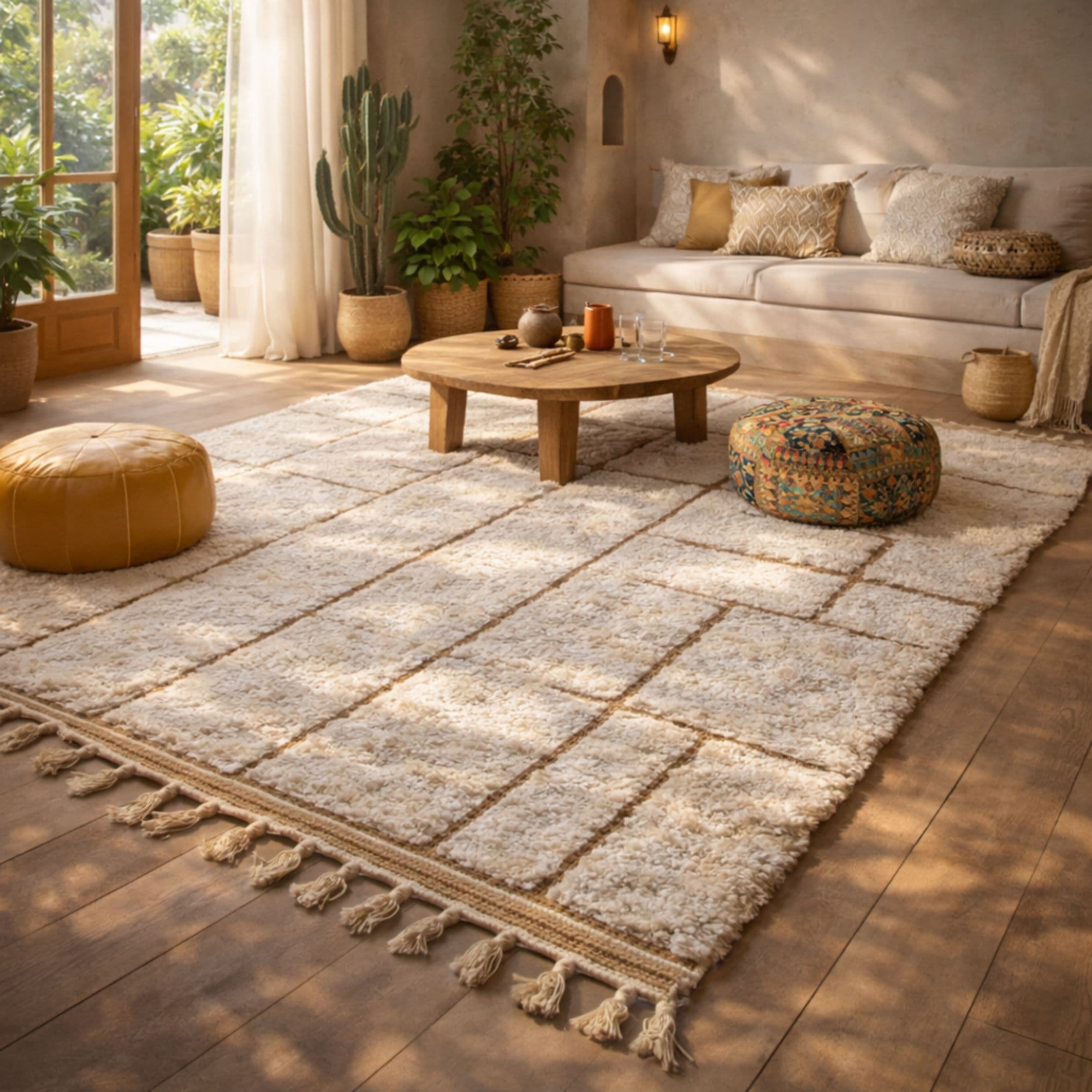
We live in a culture of immediacy. With a single click, a machine-made, synthetic rug can be manufactured on the other side of the world, shipped in plastic, and unrolled in your living room within forty-eight hours. But in this relentless pursuit of convenience, modern interior design has lost something vital. We have sacrificed the soul of the home at the altar of "fast decor." Explore our ivory minimalist and cream neutral collections to experience the quiet power of slow, intentional design.
As we collectively awaken to the environmental and spiritual costs of mass production, the most visionary architects and luxury homeowners are turning back the clock. They are seeking out the "Slow Design" movement—a philosophy that champions intention, environmental harmony, and the irreplaceable human touch.
There is perhaps no greater embodiment of Slow Design than the authentic, hand-knotted Moroccan rug. At Nomadinas, we believe that true luxury cannot be rushed. It is measured not in hours, but in seasons. It is time to explore the slow, sacred art of Amazigh (Berber) weaving, and why bringing one of these masterpieces into your home is the ultimate rebellion against the synthetic age.
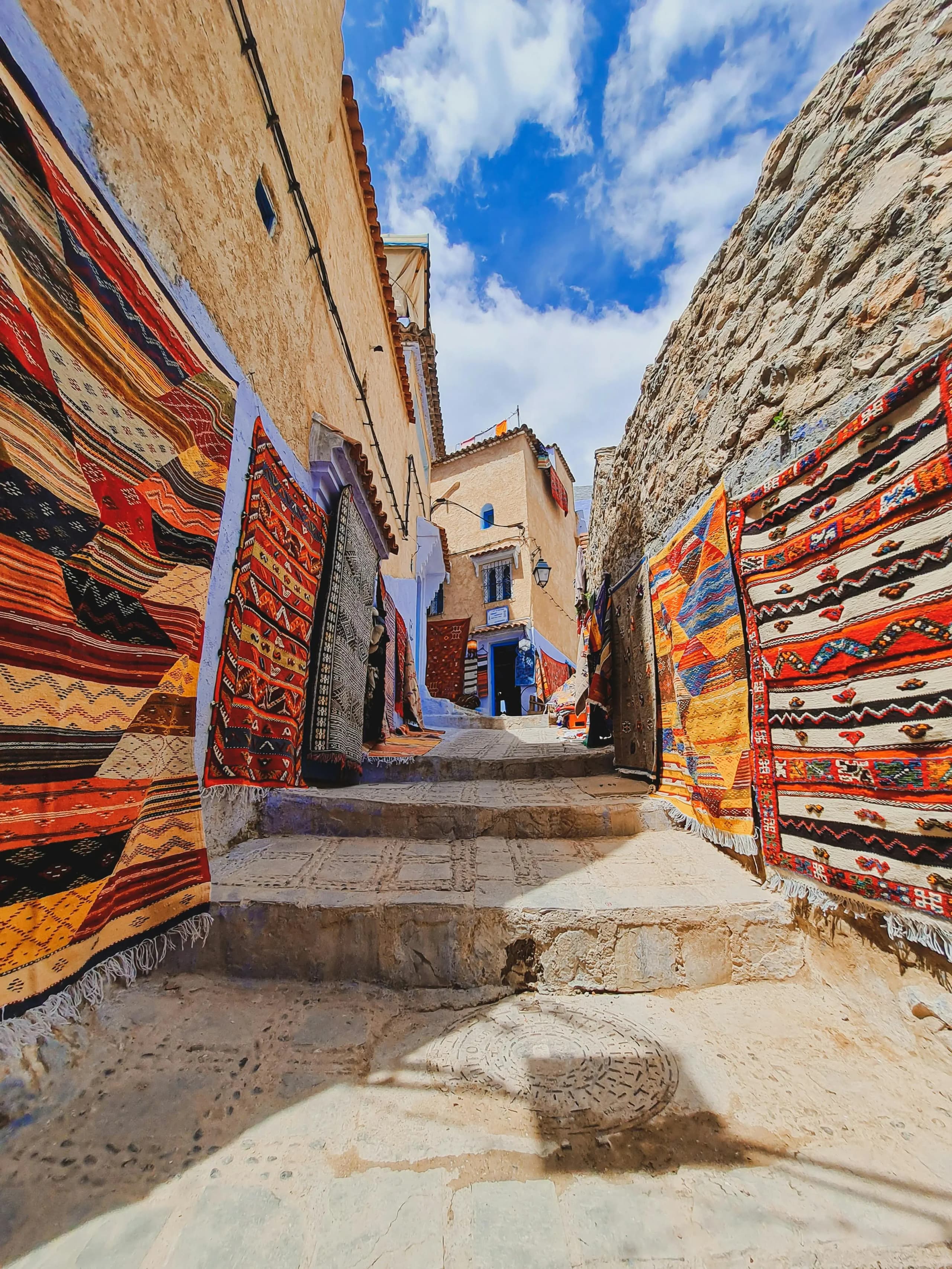
Dictated by the Seasons, Not the Factory
The timeline of a mass-produced carpet is dictated by supply chains and factory quotas. The timeline of an authentic Moroccan tribal rug is dictated by the earth itself.
The process begins high in the snow-capped peaks of the Middle and High Atlas mountains, where semi-nomadic families have historically raised ancient breeds of sheep. The wool yielded by these flocks is extraordinary—thick, heavily insulated, and rich in natural lanolin. But this wool cannot simply be ordered on demand. It must be harvested in harmony with the natural rhythms of the nomadic lifestyle, often gathered during the transition between the bitter mountain winters and the brief, vibrant summers.
Once sheared, the wool undergoes a painstakingly slow transformation. It is washed by hand in mountain streams, dried under the North African sun, and meticulously carded to align the fibers. The warp of the classic Beni Ouarain carpets is always Z-spun white wool, crafted entirely by hand using a traditional drop spindle. This spinning process alone can take weeks of continuous, rhythmic labor before a single knot is even tied.
The Alchemy of the Earth
If the wool is the body of the rug, the dye is its spirit. In the fast decor industry, synthetic aniline dyes are used to achieve absolute, uniform perfection in a matter of minutes. But the chemical runoff from these dyes has devastating effects on global water supplies, and the resulting colors lack depth, feeling flat and artificial under natural light.
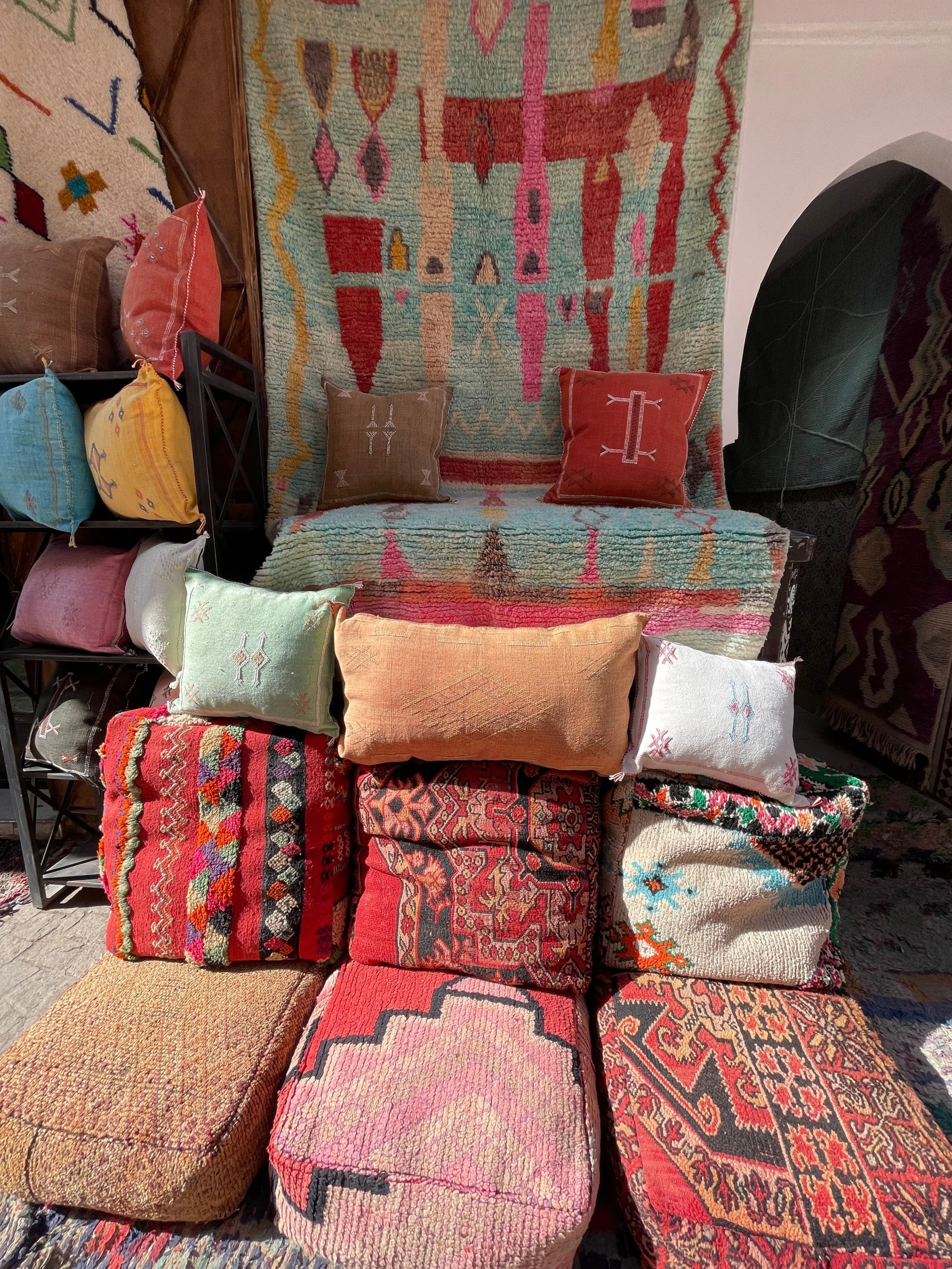
The Amazigh weavers are master botanists who practice an ancient, sustainable alchemy. They extract their colors directly from the surrounding landscape. The brilliant reds are born from the harvested roots of the madder plant. The golden yellows are coaxed from wild saffron, pomegranate skins, and almond leaves. The deep, infinite blues are the result of dry indigo, historically traded across the Saharan routes and pounded into the fibers.
This natural dyeing process is notoriously slow. It requires gathering the botanicals, preparing the boiling vats over open fires, and allowing the wool to steep and oxidize naturally. The result is a color palette that is impossible to replicate in a laboratory—a living, breathing spectrum of hues that features abrash (natural color variations) and will age gracefully, softening into exquisite pastels over decades.
A Woven Diary of the Weaver
When the wool is finally spun and dyed, the weaving begins. The traditional vertical loom is a sacred space within the Amazigh home. The creation of a large pile rug or a highly detailed flatweave shawl (such as the tabrdouhte) is not a full-time job executed in an eight-hour shift; it is a labor of love woven between the demands of child-rearing, agriculture, and daily survival.
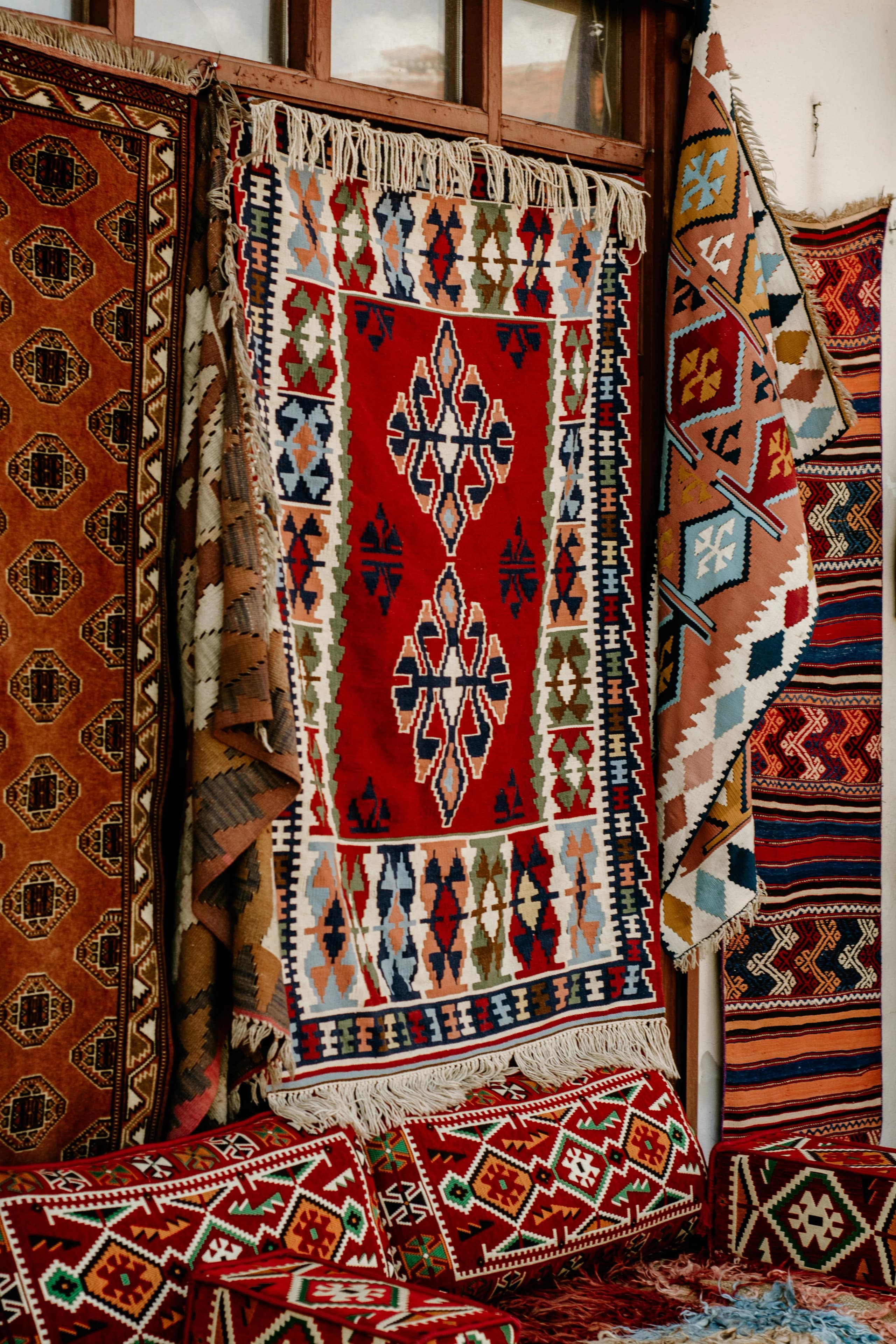
The traditional Berber knot, tied over three distinct warp threads, is the foundational building block of this architecture. Because the weavers do not use commercial blueprints, they pull the geometric patterns—the protective diamonds, the zigzagging rivers, the ancestral tattoos—directly from memory and intuition. A single rug can take six months to well over a year to complete.
The resulting textile is essentially a woven diary of that year. The slight shifts in the asymmetrical pattern, the changes in tension, and the subtle color variations all tell the story of the woman who made it. It is an object imbued with Baraka (divine blessing) and profound human energy.
The Luxury of Patience
When you purchase a machine-made, synthetic rug, its value begins to depreciate the moment it crosses your threshold. It is designed to be replaced when the next trend arrives.
An authentic Moroccan rug operates on the opposite principle. It is an heirloom. Because it is crafted from live, lanolin-rich wool and dyed with natural botanicals, it is incredibly resilient. It absorbs the acoustics of your room, softens the harsh lines of modern architecture, and actually grows more beautiful—and more valuable—with time and use.
At Nomadinas, we are deeply committed to the principles of Slow Design. We reject the commodification of culture and the environmental degradation of fast decor. By curating authentic, ethically sourced Moroccan rugs, we support the preservation of ancient Amazigh craftsmanship and offer our clients the opportunity to anchor their homes with textiles of profound, enduring integrity.
True luxury is sustainable. It is intentional. And it is beautifully, perfectly slow.