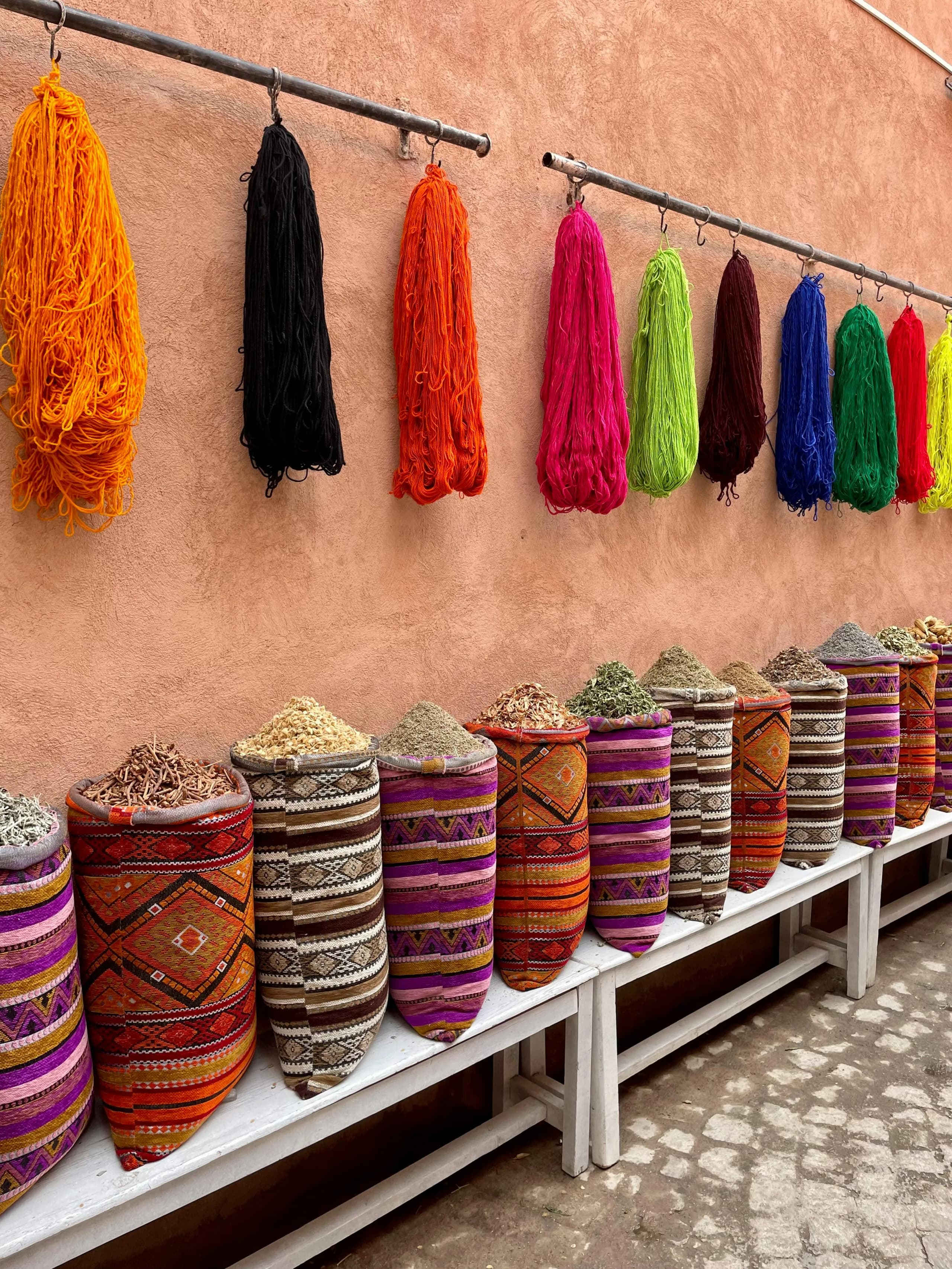
> Did you know? The use of natural plant dyes in Moroccan rug weaving dates back over 3,000 years. Madder root (Rubia tinctorum) — the source of the iconic Berber reds and pinks — was already being cultivated for textile dyeing in North Africa by 1500 BCE. Each color requires a specific process: madder needs 2-3 hours of simmering, indigo requires oxidation in open air, and saffron must be harvested by hand — it takes 75,000 saffron crocuses to produce just one pound of dried saffron threads. At Nomadinas, every rug is still dyed using these traditional plant-based methods with zero synthetic chemicals.
Before a single knot is tied, before the rhythmic thud of the loom begins to echo through the mountain valleys, the true magic of a Moroccan rug is born in the dye pot.
In a modern world saturated with synthetic, chemically derived colors, the vibrant, enduring hues of an authentic, vintage Amazigh (Berber) rug stand as a testament to an ancient alchemy. For generations, the women of the Atlas Mountains have acted as master botanists, extracting the lifeblood of their surrounding environment to color their woven masterpieces.
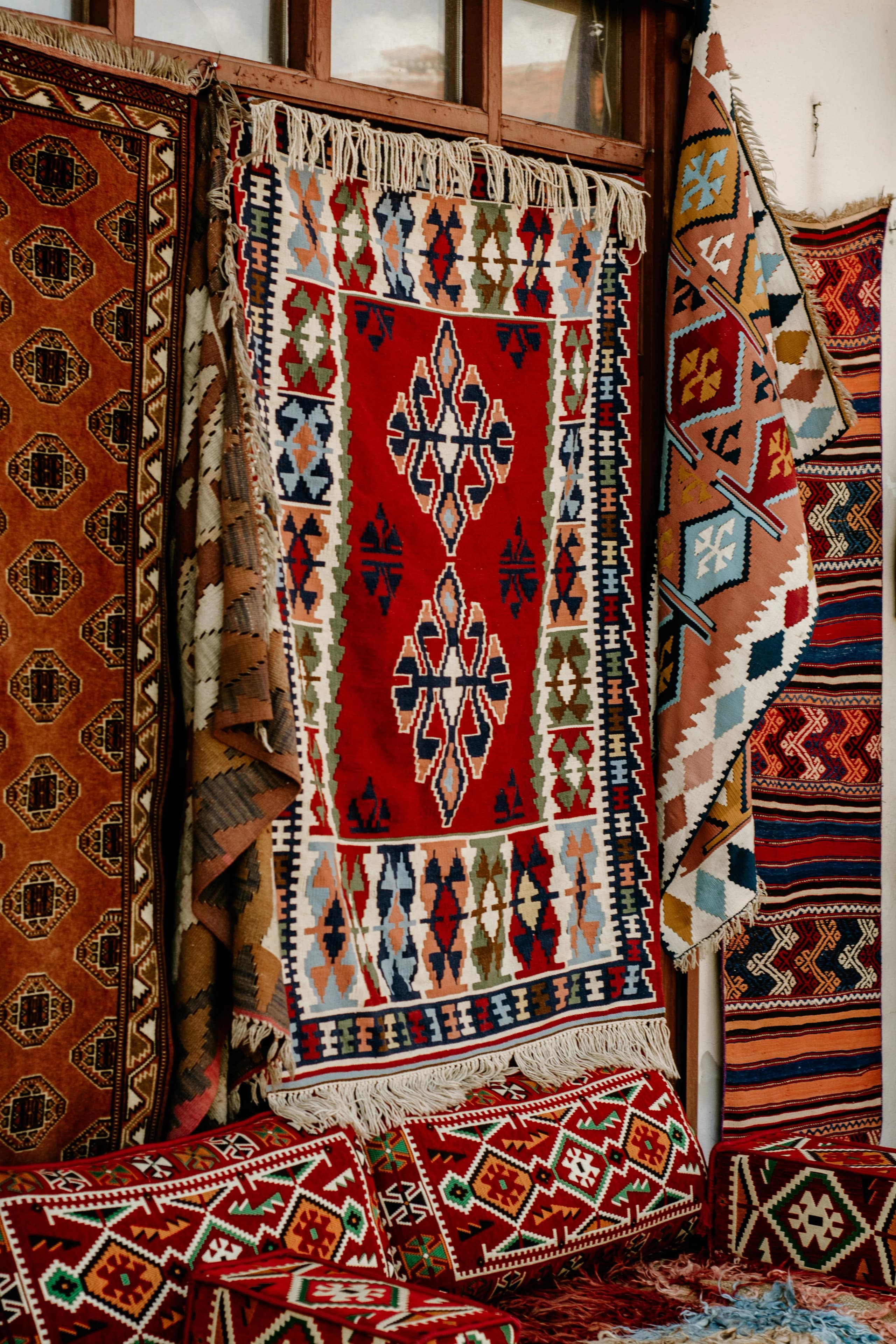
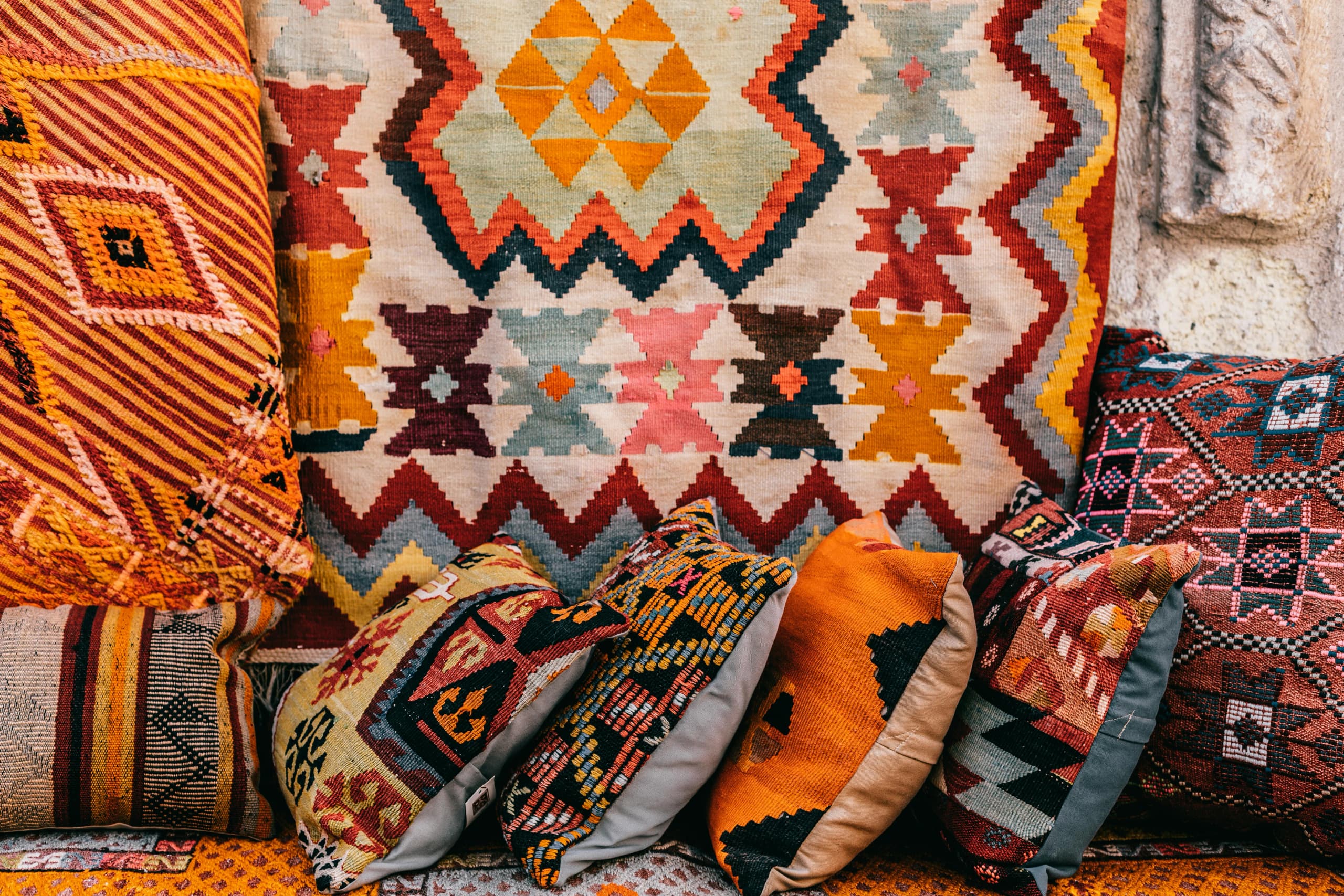
At Nomadinas, we revere the vivid pinks of a Boujad, the fiery reds of a vintage hanbel, and the deep, soulful blacks of a Beni Ouarain. To understand these colors is to understand the landscape of Morocco itself.
The Harvest of Hues
The process of natural dyeing is labor-intensive and completely dependent on the rhythms of the earth. The color palette available to a weaver is dictated by her region, the season, and the specific flora that thrives in the local soil. It is an intuitive science passed down from mother to daughter.
The Madder Root: Fiery Reds and Sunset Pinks
The most iconic color in the Moroccan weaving lexicon is red, and its source is the humble madder root (Rubia tinctorum). Harvested from the earth, the roots are dried, ground into a coarse powder, and boiled. Depending on the age of the root, the mineral content of the local water, and the temperature of the vat, madder can yield a breathtaking spectrum of colors—from the palest, faded blush-pinks found in sun-bleached Boujad rugs to deep, arterial reds and burnt terracottas.
Saffron, Henna, and Pomegranate: The Desert Golds
To capture the warmth of the North African sun, weavers turn to an array of local botanicals. Wild saffron and almond leaves produce brilliant, luminous yellows. Pomegranate skins are boiled down to create soft, earthy mustards and warm ochres. Henna, renowned for its use in traditional skin tattoos and hair care, is also utilized to dye wool, resulting in rich, nuanced oranges and warm, brownish-red tones that ground the more vibrant colors in the rug.
Indigo: The Deep Blue of the Sahara
While the mountains provide the reds and yellows, the striking, infinite blues found in traditional Moroccan weaving are the gift of the trans-Saharan trade. Indigo, derived from the Indigofera plant, is perhaps the most magical of all natural dyes. The dye vat itself appears yellowish-green; it is only when the wool is pulled from the liquid and oxidized in the air that it miraculously turns a deep, profound blue. This is the same dye that gives the legendary Tuareg textiles their recognizable, protective hue.
Iron and Walnut: The Shadows
To create the stark, contrasting lines that define the geometric patterns of tribal art—such as the iconic diamond lattice of the Beni Ouarain—weavers do not simply use “black.” Often, they utilize the natural, un-dyed dark brown wool of specific sheep. When a true, dyed black is required, they turn to walnut husks or an iron-rich mud process, which deepens the wool into a sharp, defining charcoal.
The Beauty of Abrash
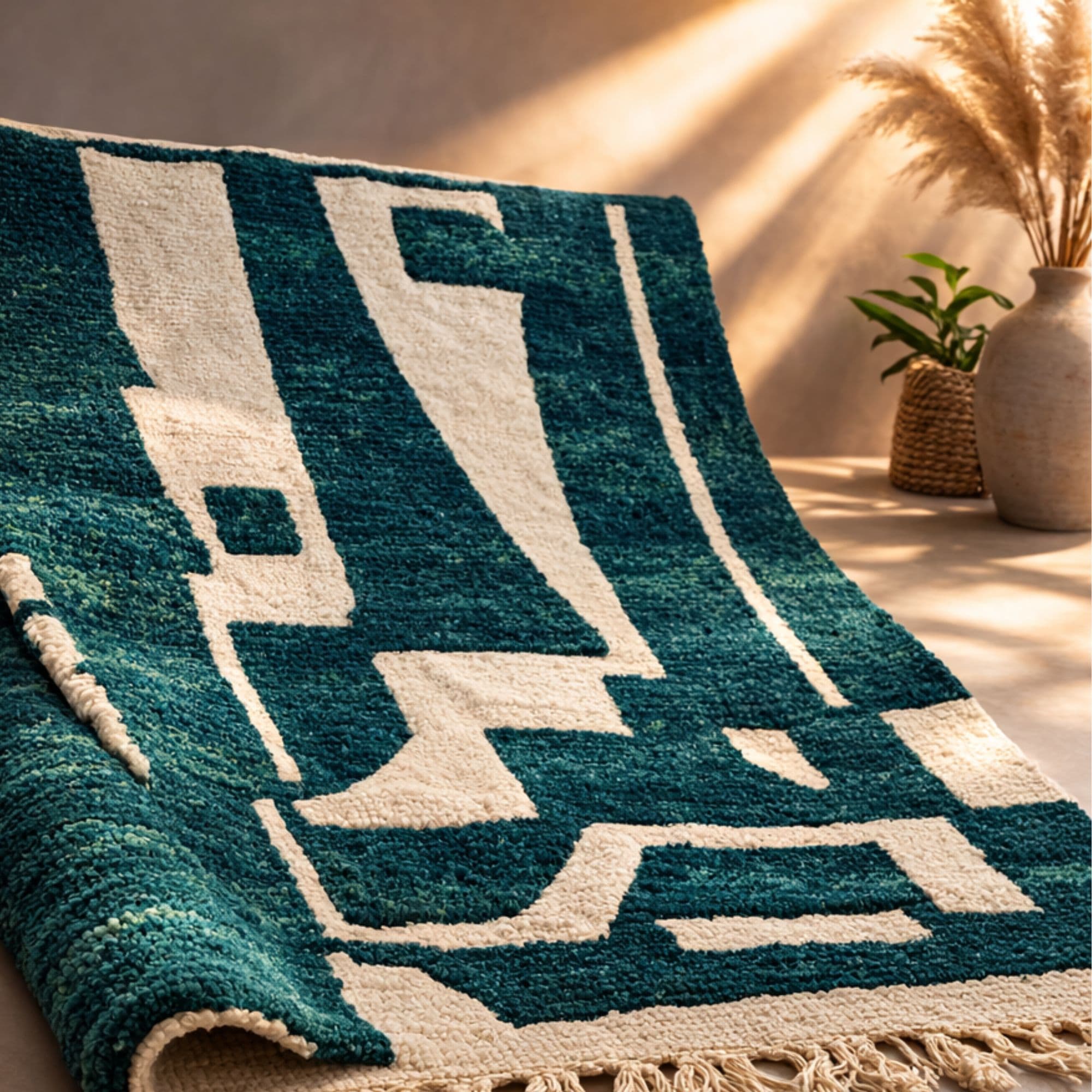
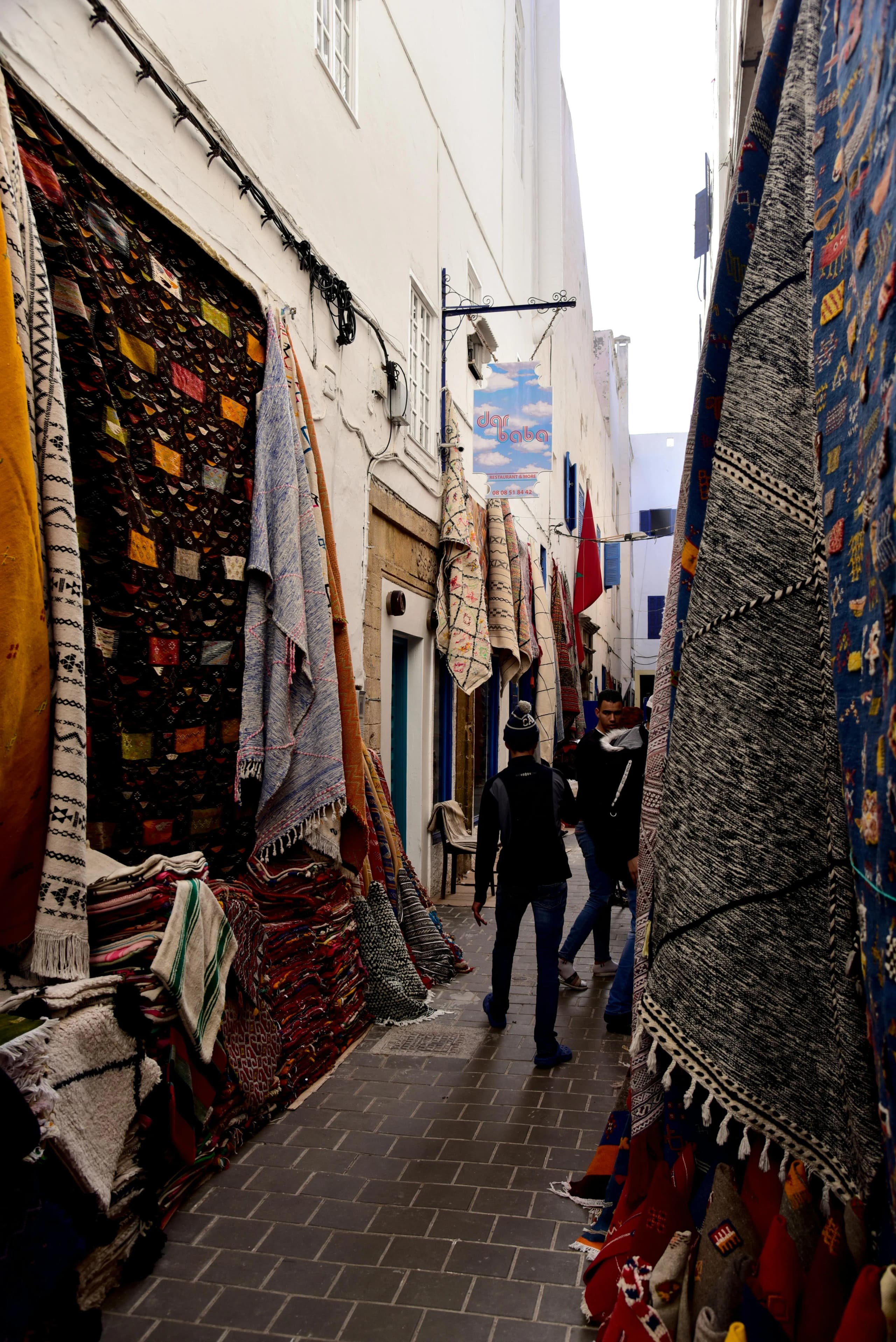
When you look closely at a naturally dyed Moroccan rug, you will rarely see a perfectly uniform block of color. Instead, the color will shift, creating a mesmerizing, watercolor-like effect across the surface of the wool.
This beautiful imperfection is known as abrash. It occurs because hand-spun wool absorbs dye unevenly, and because a large rug requires wool dyed in several different small-batch vats, each with slight variations in temperature and botanical concentration.
In commercial, machine-made rugs, absolute uniformity is the goal. In the world of high-end authentic textiles, abrash is the ultimate marker of luxury and humanity. It provides the rug with visual depth, movement, and a soul that simply cannot be replicated by a machine.
Preserving the Botanical Legacy
The art of natural dyeing is delicate. The rise of cheap, synthetic aniline dyes in the mid-20th century threatened to erase this botanical knowledge. Synthetics are faster, easier, and cheaper, but they lack the rich, multidimensional luster and the graceful aging process of natural dyes.
A rug dyed with madder root will fade beautifully over decades, softening into a chic, muted pastel. A synthetically dyed rug will simply look worn out.
By investing in an authentic, naturally dyed Moroccan rug from Nomadinas, you are supporting the continuation of this ancient, earth-born alchemy. You are bringing the raw, unadulterated colors of the Atlas Mountains, the desert sun, and the Saharan trade routes directly into the heart of your home.