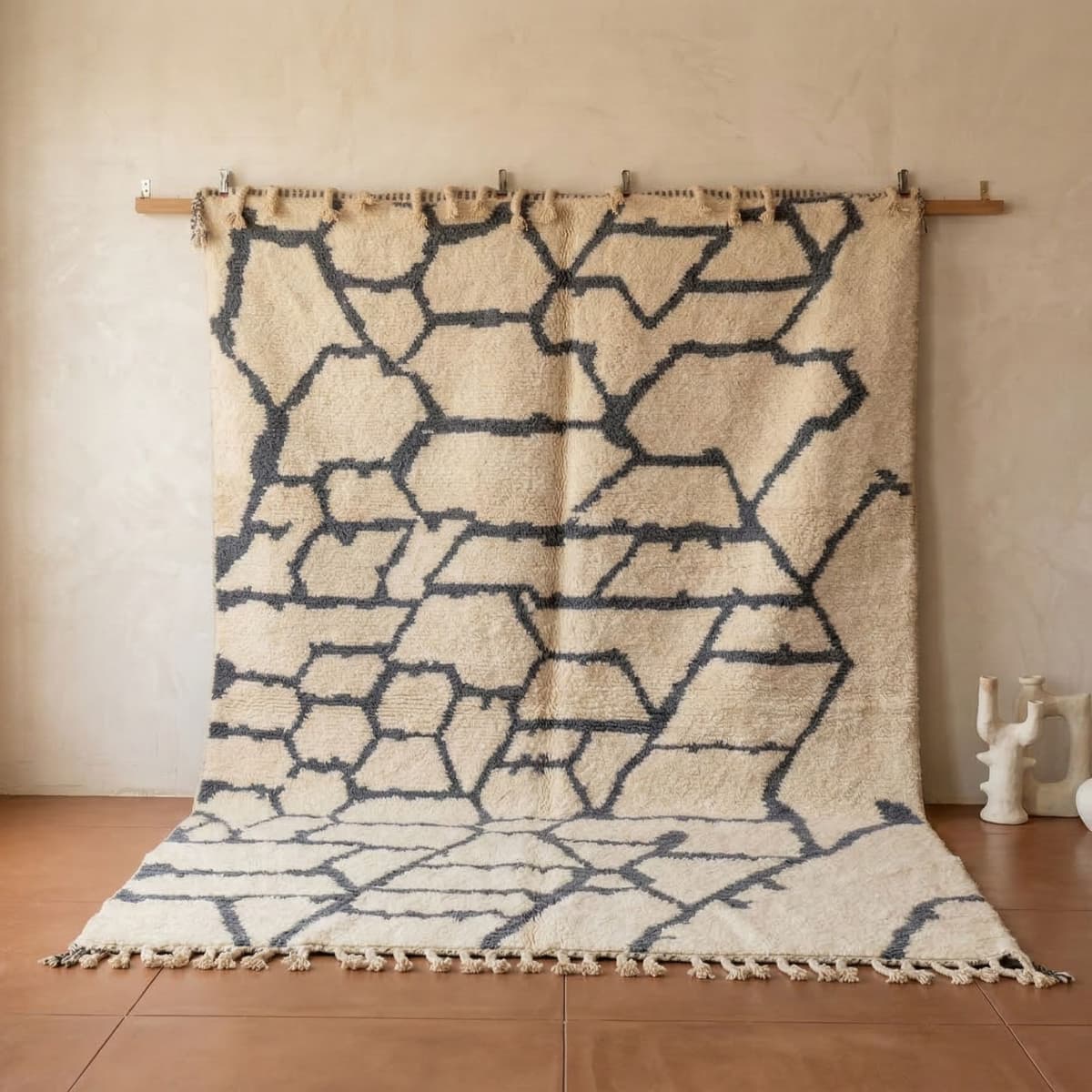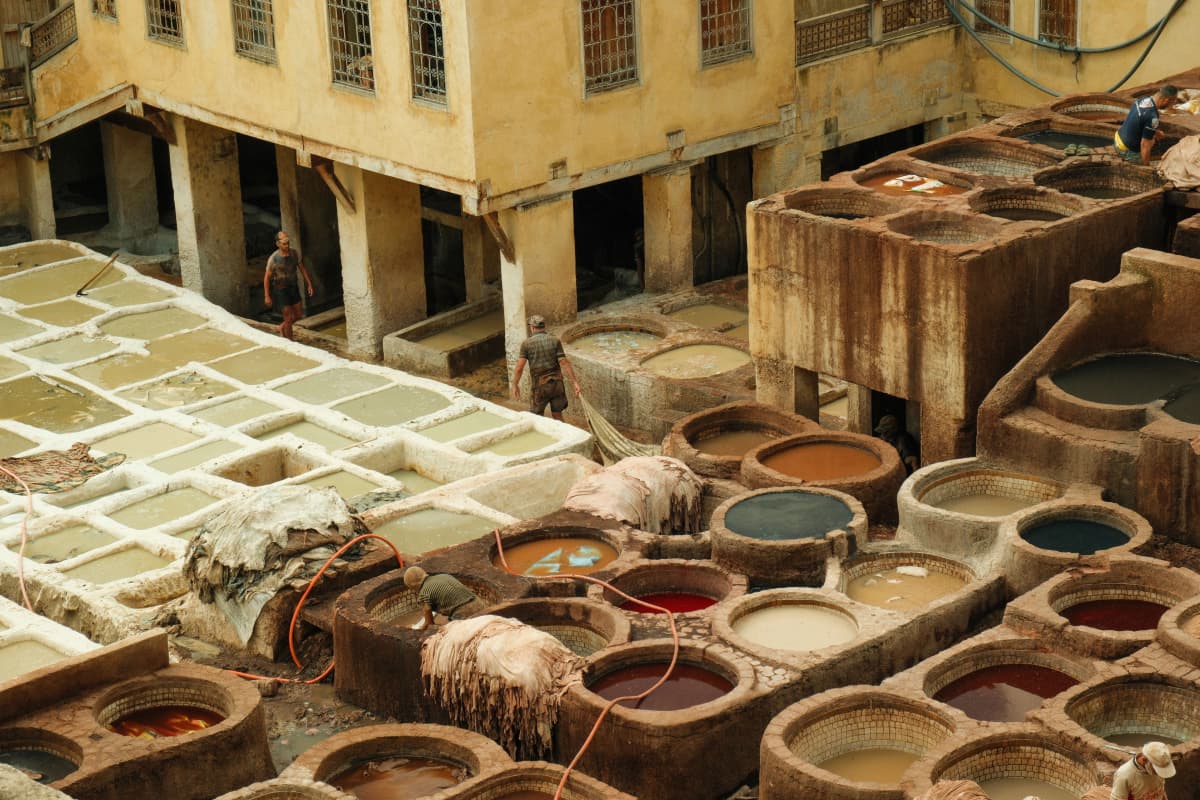
To step inside a Bauhaus-designed space from the 1920s is to experience an atmosphere of calculated, intellectual precision. The eye is met with structural geometry, clean lines, and an absolute elimination of historical ornament. Yet, if you look down at the floors of these pioneering European spaces, you will frequently find something that completely disrupts this mechanical perfection: the loose, colorfully graphic, and deeply unpredictable lines of a Moroccan tribal rug.
Throughout the 20th century, visual artists, architects, and musicians regularly visited the Maghreb. Masters of classic modernism—including Paul Klee, August Macke, Le Corbusier, and later abstract expressionists like Brice Marden—regularly crossed the Mediterranean to study, think, and absorb the visual language of North Africa.
At Nomadinas, we explore the deep cultural currents that animate our curation. The enduring connection between classic modern art and rural Moroccan weaving is not a coincidence. It is an open testament to how two entirely different individual viewpoints, working with entirely different media, methods, and speeds, can lead to astonishingly similar artistic solutions. The Bauhaus masters did not invent abstraction; they found its blueprint already written on the Amazigh loom.
Kandinsky's Manifesto on Wool
The investigation into this design relationship owes much to the painstaking, forty-year work of the German architect and renowned collector, Professor Jürgen Adam. As an architect, Adam approached his legendary collection of Moroccan pile carpets with a spatial discipline. He concentrated heavily on the underlying design principles rather than regional sentimentality.
Fascinatingly, Adam structured his systematic classification of high-quality rural Moroccan rugs around Wassily Kandinsky's 1926 manifesto, Point and Line to Plane. Kandinsky, a pillar of the Bauhaus school, argued that abstract geometric shapes—dots, sharp lines, and flat planes—possessed inherent psychological and emotional frequencies.
When you examine a vintage pile carpet from the Western Middle Atlas foothills, such as an old Boujad or a complex monochrome textile, you are witnessing Kandinsky's theories realized in raw wool. The weavers used black dots protruding from the back of the rug along the weft axis, long linear bands, and floating diamonds to construct their visual landscape. They were balancing points, lines, and planes with absolute structural mastery, translating the architecture of their lives into an intuitive geometry.
The Solitude of the Craft: Paris vs. The Atlas
The profound visual parallels between abstract modern art and Moroccan tribal carpets become even more remarkable when you contrast the environments of their creation. A Western artist of the 20th century worked within an institutional frame; their abstraction was a deliberate, intellectual rebellion against the centuries of rigid European realism that preceded them.
The rural Amazigh woman, sitting before her vertical wooden loom in the solitude of her mountain or foothill home, operated on an entirely different plane of necessity. She was not rebelling against a history of realism; she was continuing an ancient decorative system of black lines on a white base that had remained virtually unchanged since Neolithic times. Her geometry was a language of survival, maternal protection, and tribal belonging.
Yet, when these two disparate creative processes met, the results were identical. European modernists looked at the highly expressive pile rugs of the Rehamna and the Arabic-speaking foothills west of Boujad and saw their own artistic futures. They recognized a shared understanding of atmospheric conditions, higher-order structures, and a fearless willingness to allow an abstract line to wander off-center.
The Lost Palette of the Rehamna Weavers
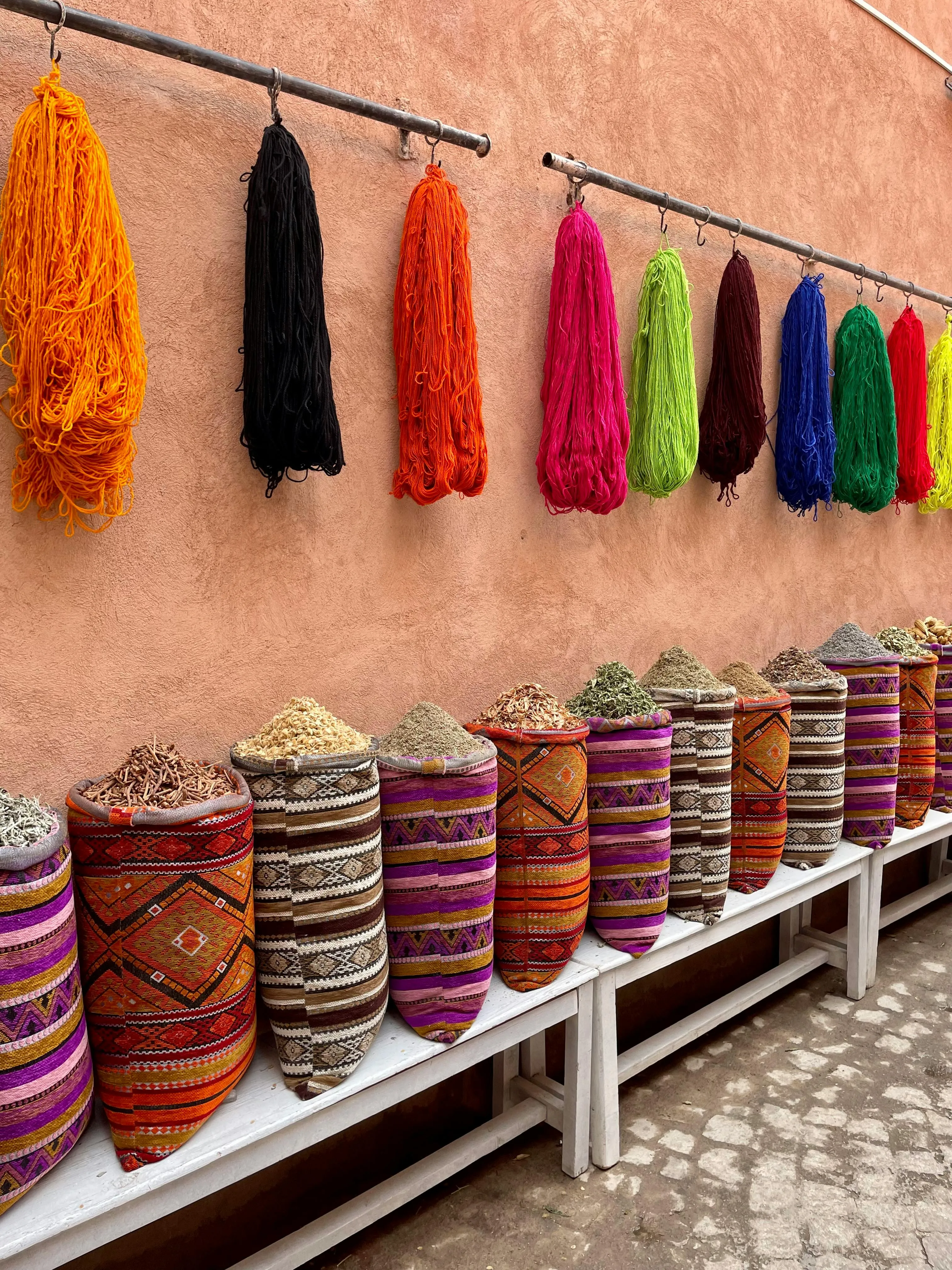
While contemporary minimalist interior design frequently prioritizes the monochrome palettes of the northeastern Middle Atlas, the Bauhaus masters were equally intoxicated by color. This is where the expressive, rare pile carpets of the Rehamna and Sraghna tribes command the field.
Woven with a structural fluidity that completely shuns commercial symmetry, vintage Rehamna rugs are masterpieces of abstract expressionism. The weavers utilized deep, naturally dyed red grounds as a canvas for unpredictable graphic elements. A grid pattern might start with sharp definition, only to completely dissolve into asymmetrical fields of color halfway through the textile.
It is precisely this creative boldness—this refusal to tie a knot based on a commercial blueprint—that gives the vintage Moroccan rug its blue-chip fine art value. Like a painting by Paul Klee or a composition by Kandinsky, these rugs demand to be looked at as individual artistic statements.
Elevating the Modern Sanctuary
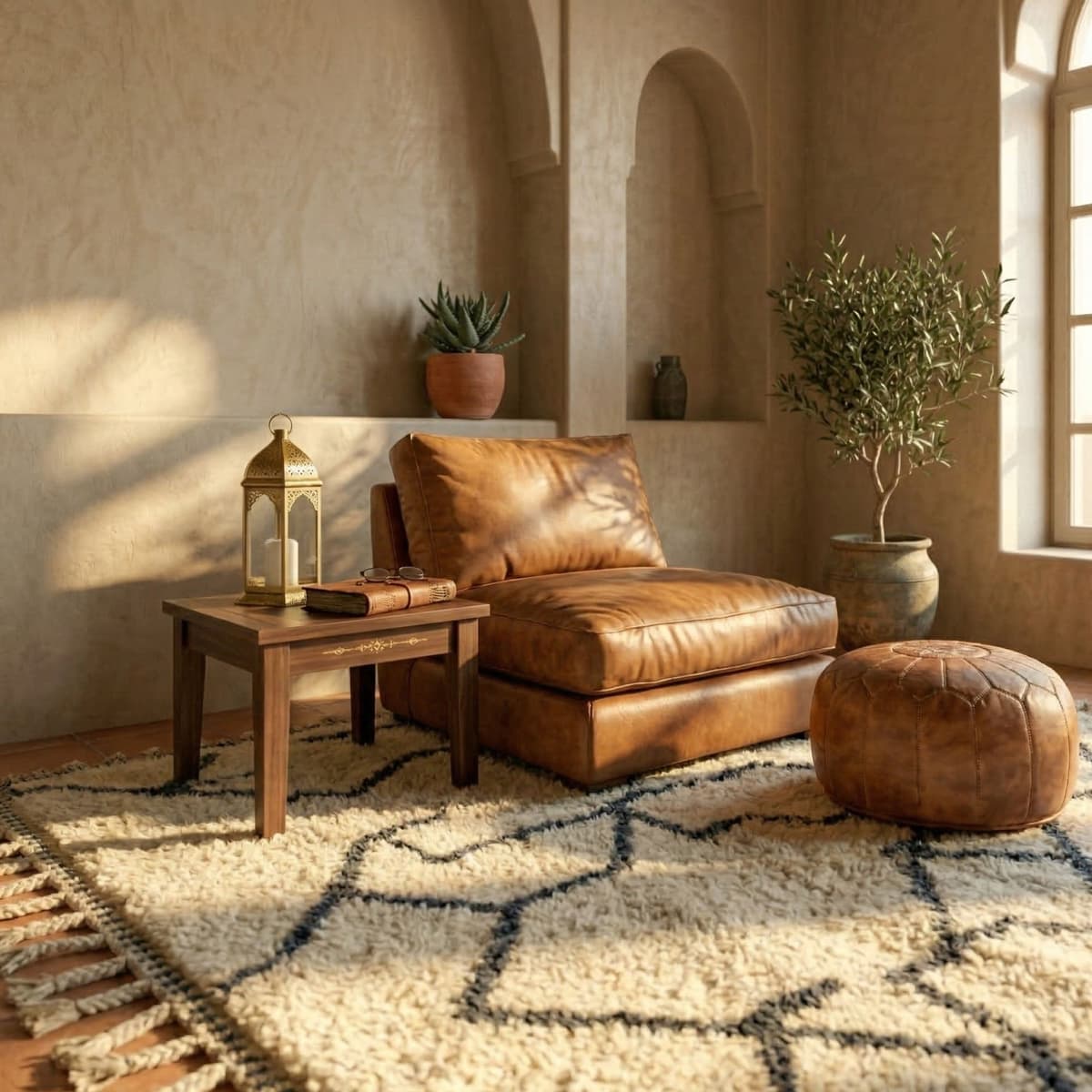
Bringing a modern art-influenced Moroccan rug from Nomadinas into your home is an act of design curation. It bridges the gap between the clean precision of contemporary architecture and the raw, tactile depth of human history.
The asymmetrical geometry of a vintage Rehamna or Middle Atlas pile rug acts as a visual anchor in a room. It creates an immediate masterclass in contrast: the sleek, unyielding lines of a modern leather lounge chair or a concrete wall are instantly softened and elevated by the human rhythm of the wool.
At Nomadinas, we honor the women whose ancestral creativity prefigured the global modern art movement. We invite you to step beyond ordinary home decor and experience the radical, enduring luxury of the loom.