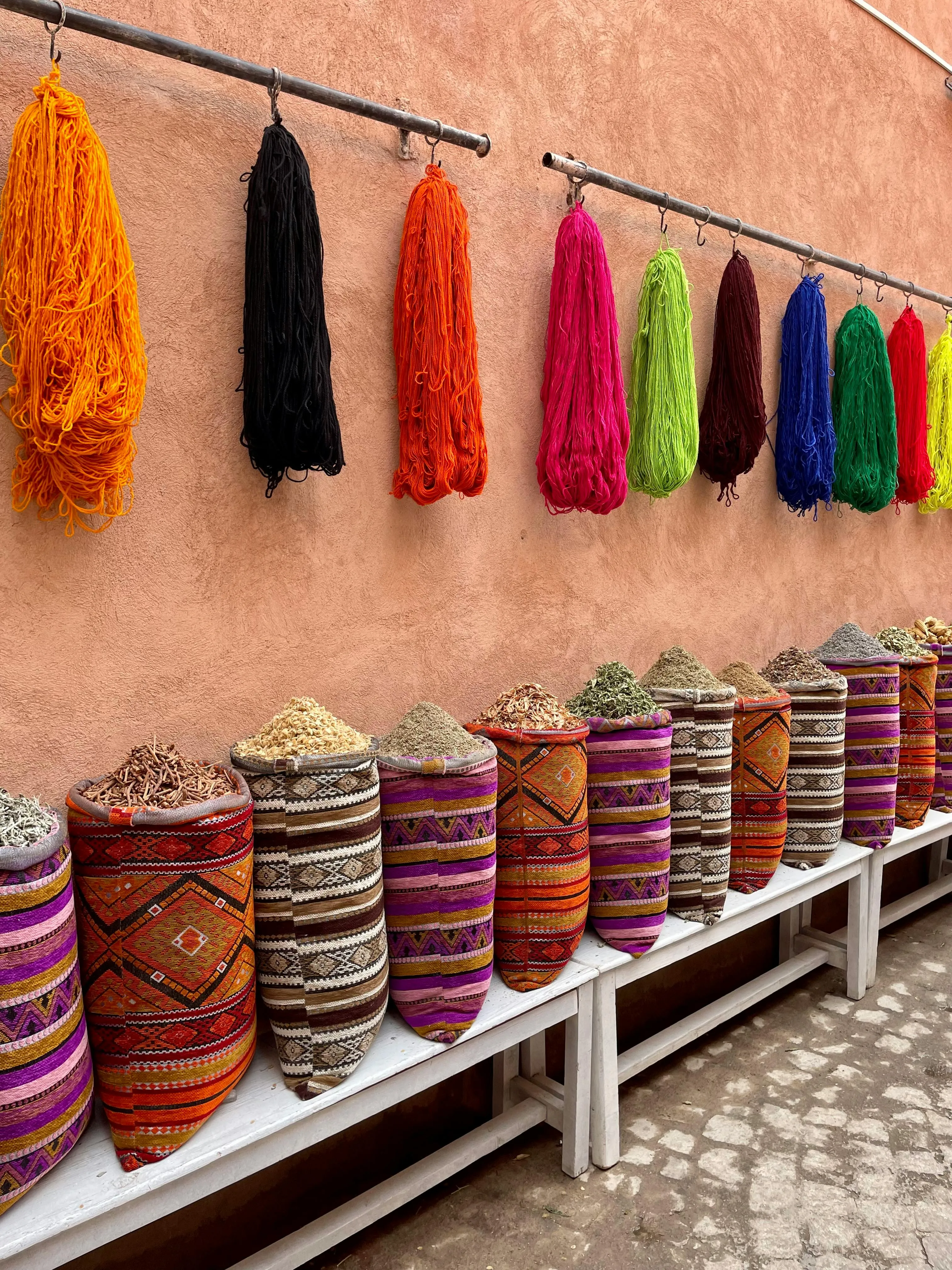
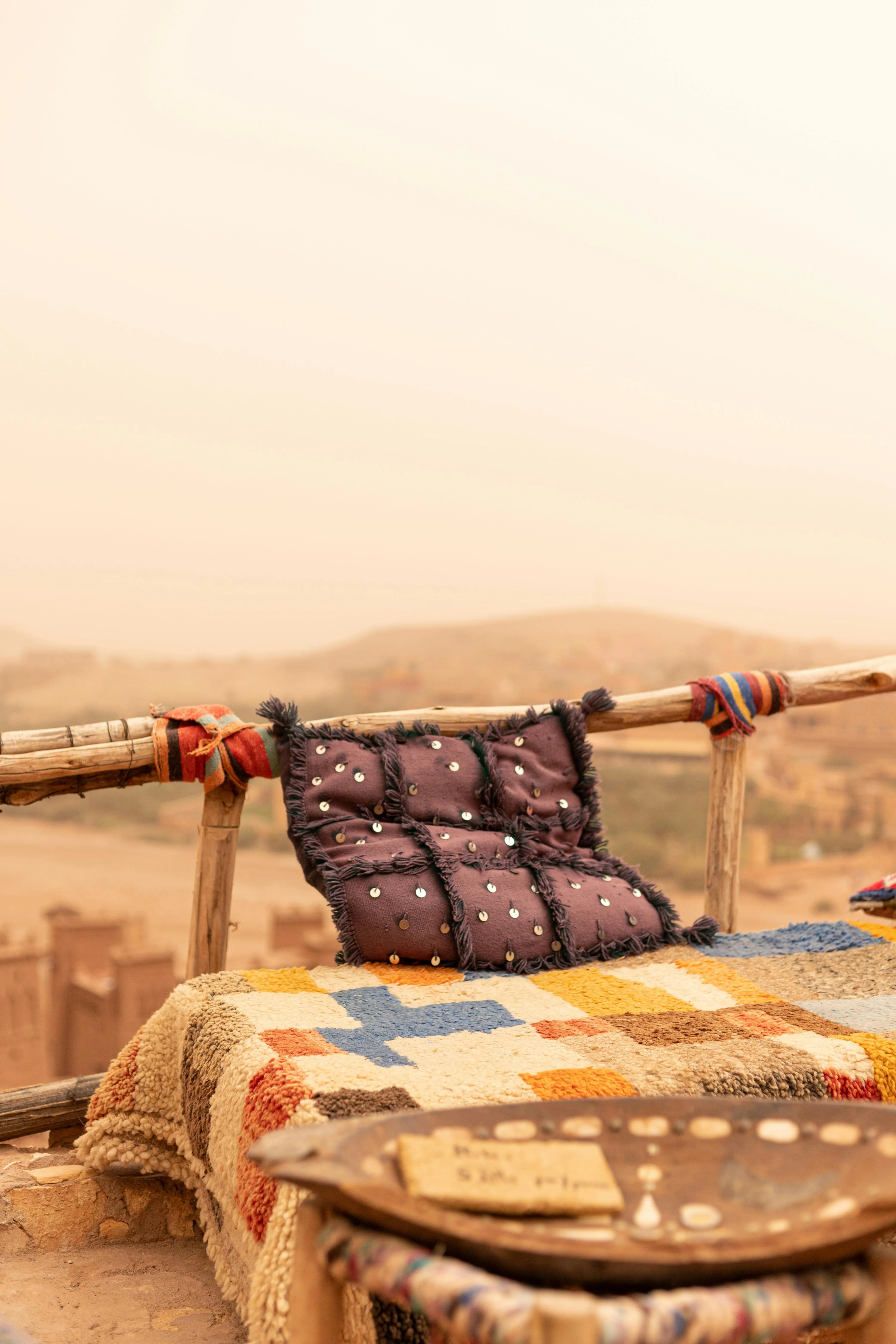
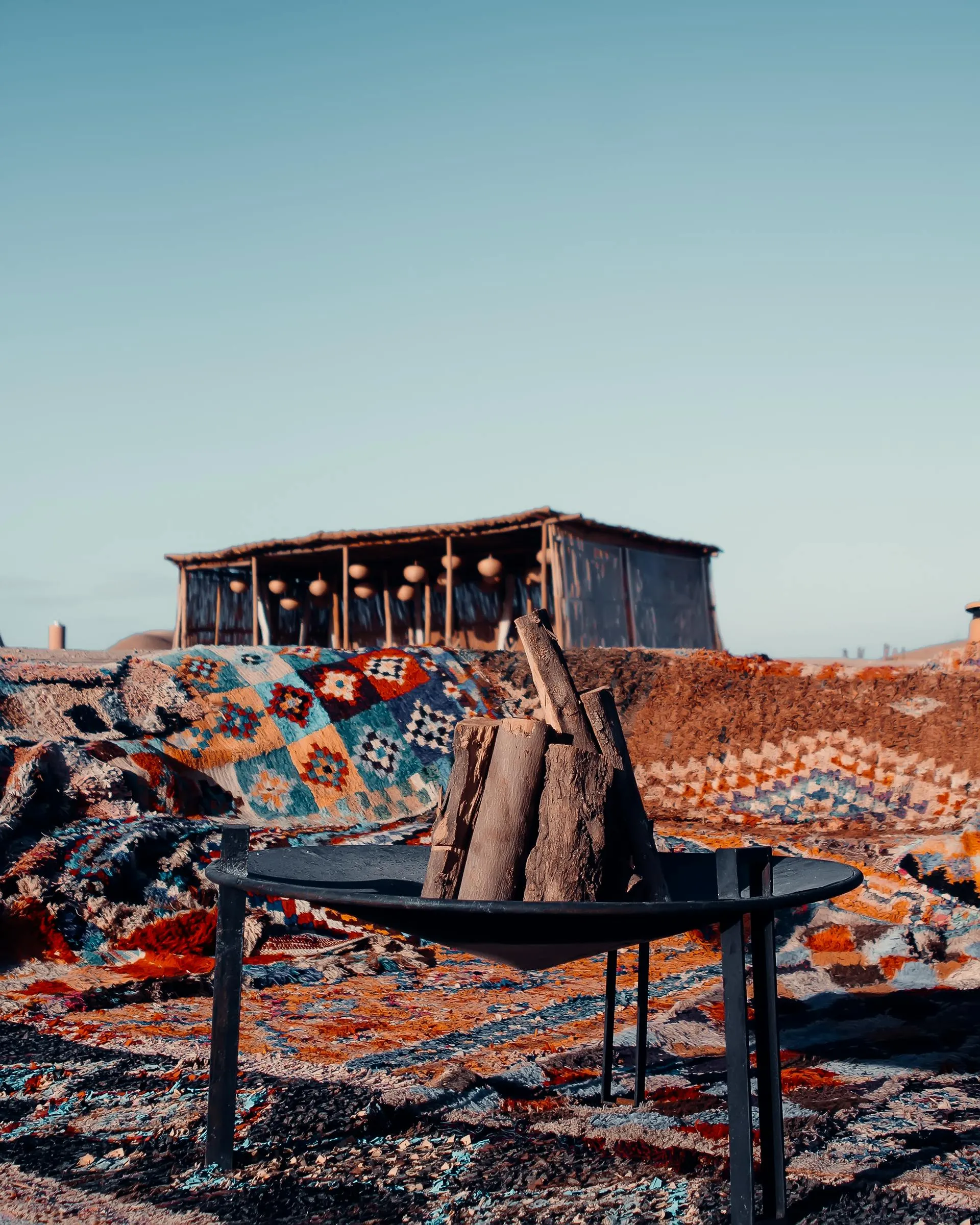
To gaze across the landscape of Morocco is to witness a land of fierce contrasts. It is a country where the snow-capped peaks of the Atlas Mountains surrender abruptly to arid plains, which in turn dissolve into the vast, silent dunes of the Sahara.
Just as the topography of North Africa refuses to be categorized under a single description, so too does its tribal art. For the uninitiated, the term “Moroccan rug” often conjures a single image—usually the minimalist black-and-white diamond pattern of the Beni Ouarain. But to the seasoned collector and the design purist, this is merely one chapter in a sprawling, vividly colored anthology.
At Nomadinas, we curate our collections with a deep respect for regional identity. The Amazigh (Berber) women who knot these masterpieces do not weave in a vacuum; they weave their immediate environment. The altitude, the local flora used for dyes, the breed of the sheep, and the ancestral heritage of the tribe all dictate the final textile.
Whether you are looking to anchor a mid-century living room or add a layer of history to a modernist bedroom, understanding the regional nuances of Moroccan rugs is the key to collecting with intention. Here is your map to the loom.
The Middle Atlas: The Minimalist Giants
The Beni Ouarain & Marmoucha
When we speak of the Middle Atlas mountains, we are speaking of altitude, isolation, and brutal winters. The tribes here, most notably the Beni Ouarain confederation, historically raised a specific ancient breed of small sheep that produced an incredibly thick, lustrous, and heavy fleece.
Because these rugs were originally designed as heavy winter bedding to protect against the frost, the pile is characteristically high and dense. Aesthetically, the Middle Atlas is the birthplace of primitive modernism. The women typically utilized the natural ivory of the sheep’s wool as an expansive canvas, articulating their tribal symbols—most commonly a network of diamonds—in un-dyed dark brown or black wool. The result is a heavy, architectural textile that has become the darling of modern, minimalist interior design.
Neighboring tribes like the Marmoucha share this structural DNA but occasionally introduce subtle, earthy colors and tighter, more complex geometric framing, offering a slightly more formal take on the Middle Atlas aesthetic.
The Central Plains: The Abstract Expressionists
The Boujad
Descend from the high mountains into the Haouz plains region, and the visual language shifts dramatically. The Boujad region is a bustling, historically significant trade hub, and its weaving tradition reflects a dynamic convergence of cultures.
If the Beni Ouarain is a study in minimalist restraint, the Boujad rug is an explosion of abstract expressionism. Because the climate here is more forgiving, the pile of the rugs is generally shorter, allowing the weavers to focus less on insulation and more on intricate, free-flowing design.
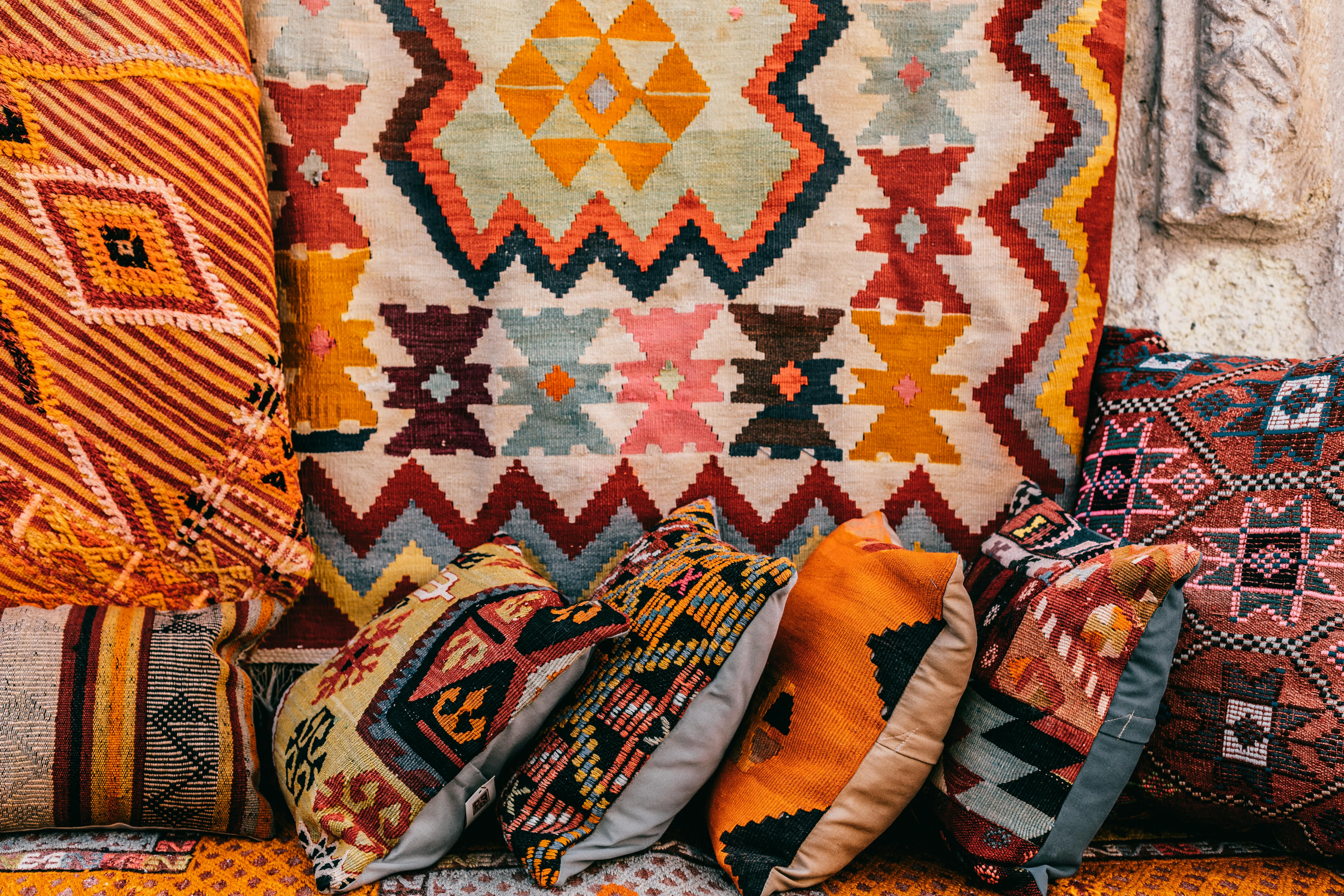
Boujad weavers are celebrated for their fearless use of color. Utilizing natural dyes derived from henna, madder root, and wild saffron, these rugs feature striking palettes of faded pinks, deep magentas, burnt oranges, and rich purples. Their designs are heavily asymmetrical, featuring floating geometric shapes, ancestral symbols, and shifting patterns that seem to dance across the wool. For the collector looking for a textile that functions as a vibrant piece of modern art, the Boujad is unmatched.
The High Atlas: The Canvas of Light
The Azilal
Nestled in the steep, craggy valleys of the High Atlas mountains lies the Azilal region. The rugs produced here bridge the gap between the heavy winter bedding of the Middle Atlas and the flatweaves of the southern deserts.
An Azilal rug is instantly recognizable by its distinct texture and vibrant bursts of creativity. The foundation of the rug is typically a relatively short pile of natural, creamy white wool—often mixed with cotton, which creates a slightly lighter, more supple handle. Against this bright canvas, the weavers introduce highly animated, intricate patterns using deeply saturated, brightly colored yarns.
The motifs in Azilal rugs are often more detailed and densely packed than those found in Boujad or Beni Ouarain pieces. They tell incredibly specific stories of rural life, featuring symbols for fertility, marriage, and the natural elements. The Azilal brings a joyful, graphic, and deeply human energy into any space it inhabits.
The Anti-Atlas and the South: The Precision of the Desert
The Siroua & Flatweaves (Hanbels)
As you move further south toward the fringes of the Sahara and the Anti-Atlas mountains, the climate becomes unforgivingly hot and arid. Here, a thick wool pile is no longer a necessity. Instead, the nomadic and semi-nomadic tribes excel in the art of the flatweave, known locally as a hanbel or kilim.
Woven tightly without the knotted pile, these textiles are lightweight, durable, and highly portable—perfect for a life in motion. The tribes of the Jebel Siroua region are renowned for their meticulous, almost mathematical precision. Their flatweaves feature intricate, highly organized bands of geometric patterns, often utilizing deep indigo, saffron yellow, and brick red.
These textiles are incredibly versatile, functioning beautifully as lightweight area rugs, wall hangings, or elegant throws draped over a sofa, bringing a refined, graphic desert aesthetic into the home.
Curating Your Personal Geography
Collecting authentic Moroccan rugs is not about following a design trend; it is about finding a piece of geography that resonates with your personal aesthetic.
Do you crave the heavy, calming minimalism of the snow-capped mountains? The passionate, colorful abstraction of the plains? Or the tightly woven, graphic precision of the desert?
At Nomadinas, we source directly from these distinct regions, ensuring that every piece in our collection retains the unadulterated DNA of its origin. When you unroll one of our rugs, you are not just placing a textile in your home—you are mapping the history, the climate, and the enduring artistry of the Moroccan landscape.