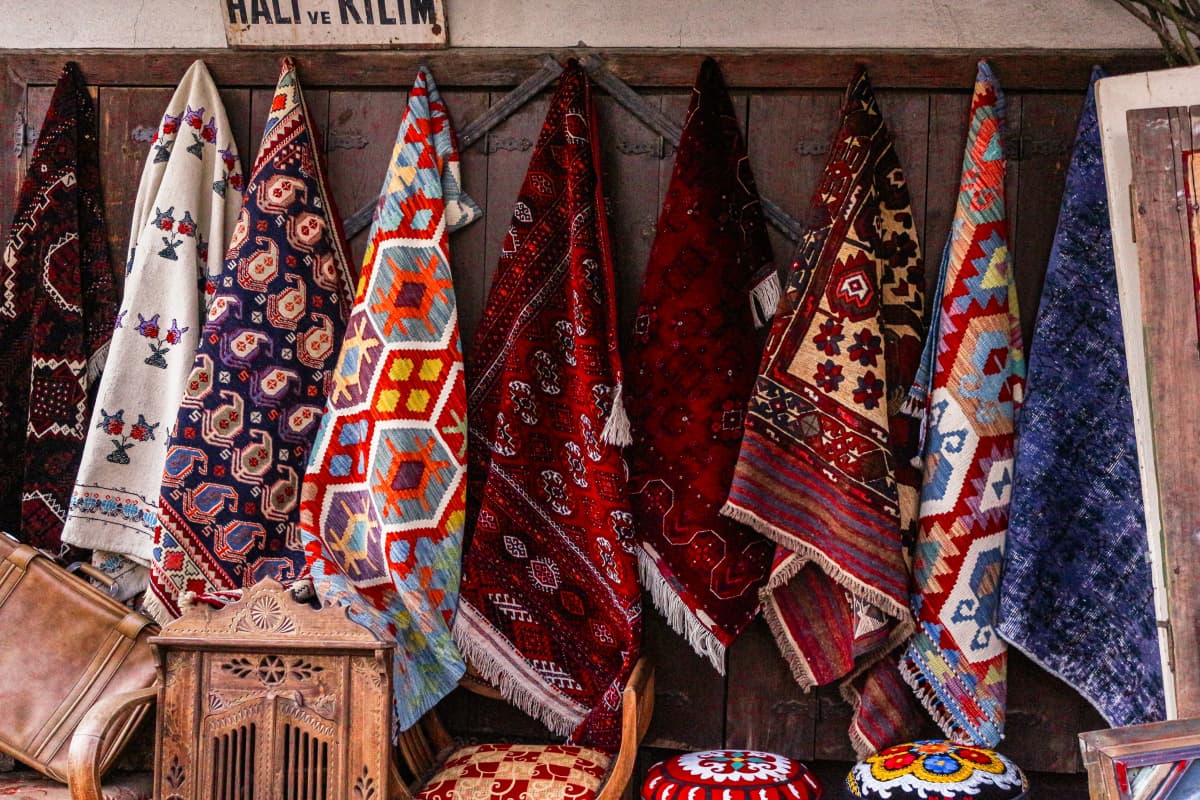
In the industrialized, hyper-connected modern world, the creation of the objects we bring into our homes is often a story of profound isolation. In cavernous, sterile factories, solitary workers stand at mechanized stations, churning out miles of identical, synthetic carpets intended for rapid global consumption. It is a process devoid of conversation, devoid of history, and entirely stripped of the human spirit.
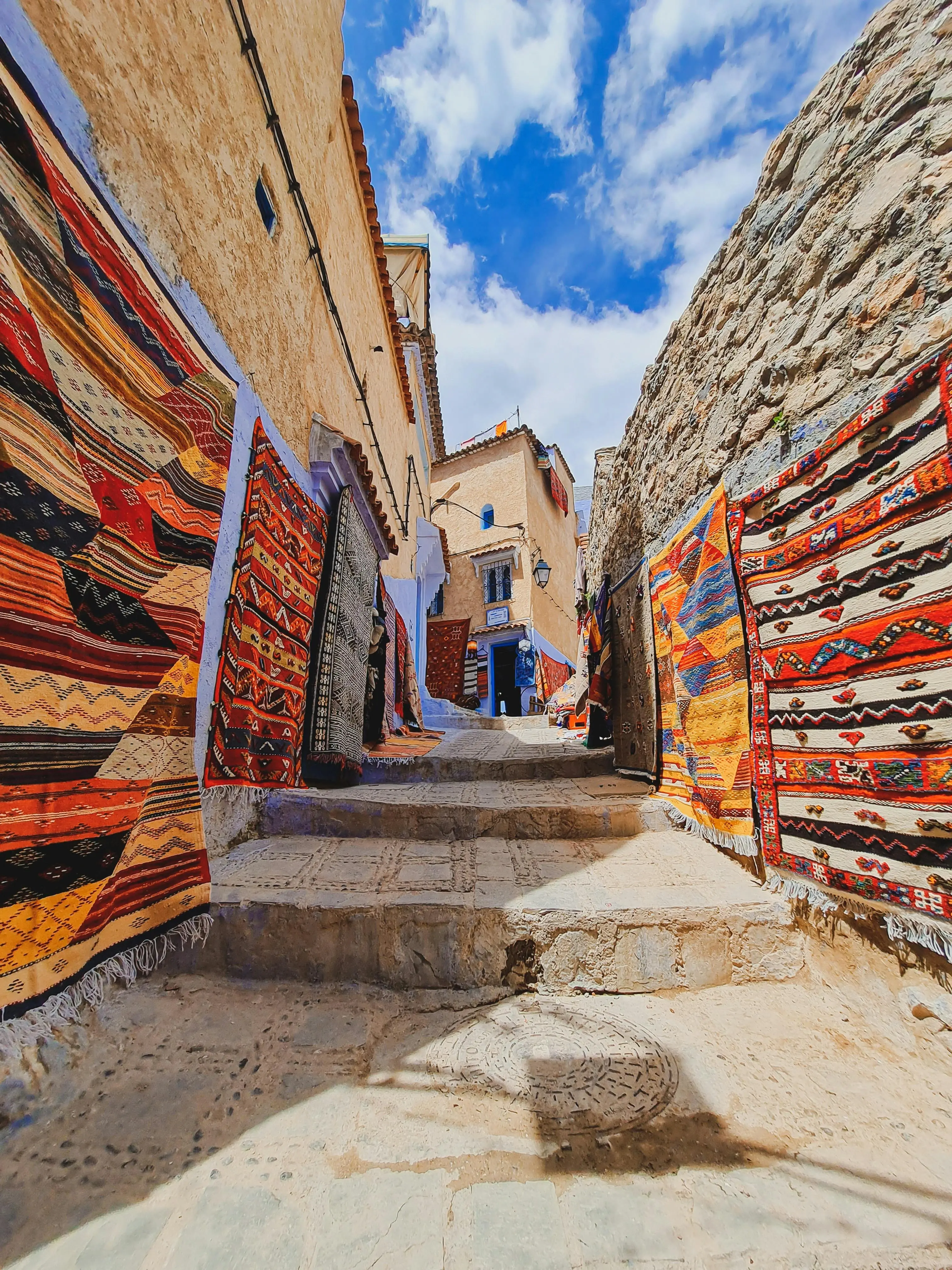
But journey into the rugged high altitudes of the Moroccan Atlas Mountains or the sun-baked plains of the Sahara, and a completely different rhythm of production emerges. Here, a rug is never born in isolation. It takes a village to raise a loom.
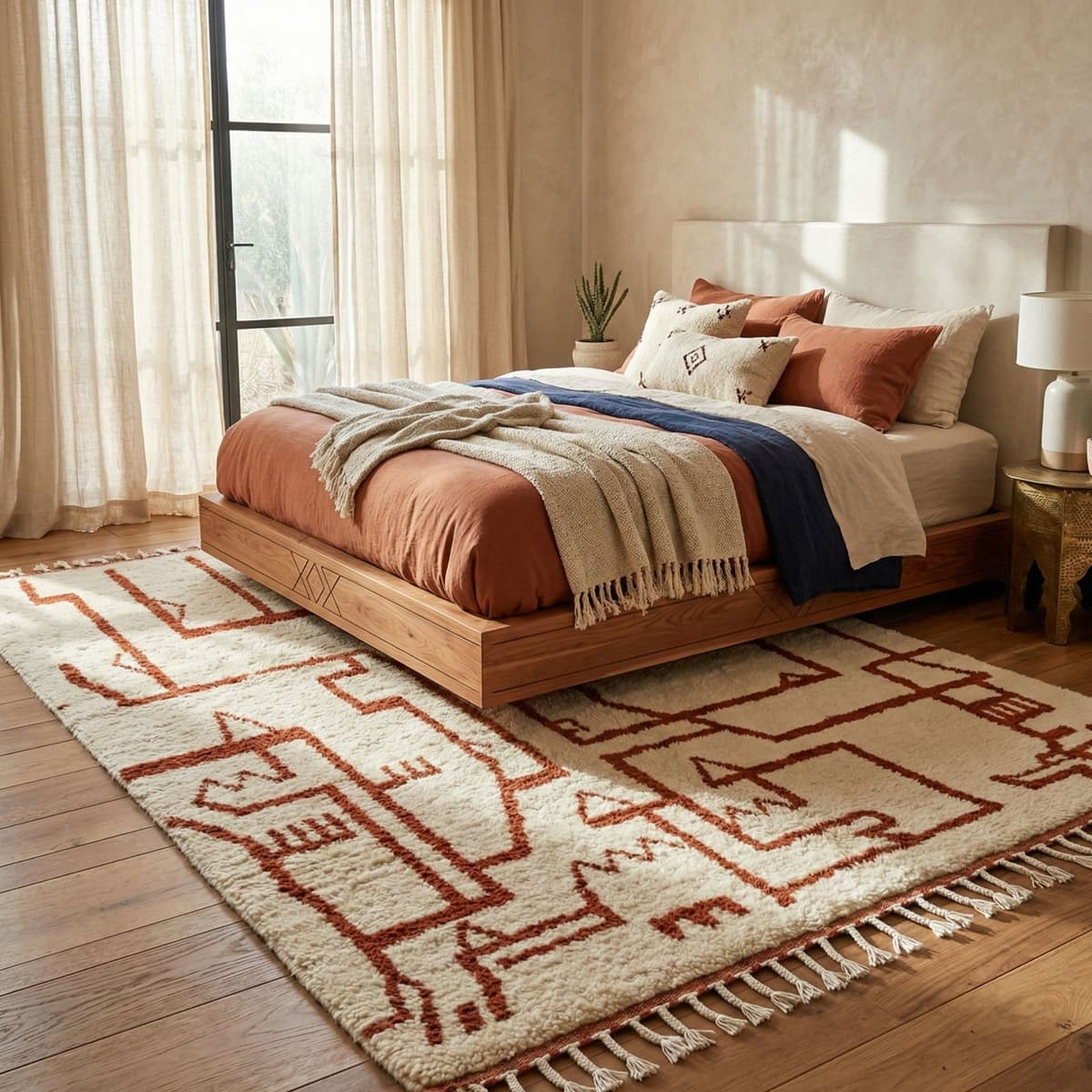
At Nomadinas, we believe that true luxury is inextricably linked to the ethics and the energy of creation. When you unroll an authentic, vintage, or heritage-crafted Moroccan rug in your home, you are not merely looking at the handiwork of a single, solitary artisan. You are looking at the physical manifestation of an ancient, sacred social contract. You are looking at the power of Adwal.
The Law of Mutual Aid
In the Tamazight language spoken by the indigenous Amazigh (Berber) tribes of Morocco, there is a fundamental concept known as adwal. It translates roughly to "cooperation" or "mutual aid". In the harsh, unforgiving environments of the high mountains and the arid deserts, survival has historically been impossible for those who attempt to live in isolation. The nomadic and semi-nomadic tribes thrived solely because they operated as a unified collective.
Adwal is the cultural law of shared labor, an unspoken agreement that members of the group will assist each other with a particular, monumental task until everyone in the community has been helped.
While this concept applies to agriculture, the construction of earthen homes, and the preparation of massive wedding feasts, it is perhaps most beautifully realized in the art of weaving. Among tribes like the Aït Khabbash in southeastern Morocco, every single aspect of weaving—from the shearing of the sheep to the final, ceremonial cutting of the warp threads—is a communal endeavor.
The Gathering of the Wool
The creation of a masterpiece begins long before the first knot is tied. Wool working is an incredibly labor-intensive process, demanding hours of meticulous, physical exertion that a single woman could not easily manage while simultaneously tending to children, cooking, and managing a rural household. Therefore, women do not work alone; they rely heavily on the aid of their daughters, daughters-in-law, friends, and neighbors.
The preparation of the fleece is a social event. Women gather in the courtyards of their earthen homes or beneath the shade of the date palms to wash the raw, lanolin-rich wool in river water. Once dried by the North African sun, the communal carding begins. The women sit in circles, using long-toothed metal combs to meticulously untangle and align the raw fibers.
As the wool is smoothed, it must be spun into yarn. The women use a small, traditional wooden drop spindle, called a tizdit, to create fine, strongly twisted threads for the warp, rolling them into large, heavy balls for later use. To create the thicker, more loosely twisted weft threads that will form the plush pile of the rug, they use short-toothed brushes and large, leg-twirled spindles called izdi.
This gathering is the beating heart of the village. As their hands work the wool, the women share the news of the day, offer advice to newly married brides, and sing traditional oral poetry. The rhythmic whir of the tizdit and the scratching of the carding combs provide a hypnotic, acoustic backdrop to the transmission of matriarchal wisdom.
Mounting the Loom: A Symphony of Hands
When the yarn is finally spun, dyed, and ready, the actual architecture of the loom must be established. The traditional Moroccan vertical loom is a massive, heavy wooden structure that requires significant strength and precise calibration to assemble. It is a task that simply cannot be done alone.
Three or four women must work in perfect synchronization to mount the warp threads onto the loom. This initial setup is a crucial stage; if the warp is strung with uneven tension, the entire rug will warp and buckle as it is woven. To begin the intricate process of warping, the women typically hammer a row of three stakes into the earthen ground to determine the ultimate length of the textile.
Working in tandem, one woman meticulously wraps the warp threads around the two outer stakes, crossing them around the central stake to create a massive figure-eight pattern. Women positioned next to each of the outer stakes act as guides, ensuring that the weft threads are adequately and perfectly spaced.
This physically demanding setup provides yet another chance for the women to gather together and socialize. It is a choreography of hands and thread that has remained unbroken for millennia.
The Shared Canvas
Even when the loom is raised and the weaving officially begins, the spirit of adwal remains. While a single master weaver may dictate the overall vision and abstract geometry of the rug, she is rarely the only one to touch it.
If a rug is particularly wide, two or more women will often sit side-by-side on the weaving bench, working on the same horizontal row simultaneously. The older, more experienced matriarchs will guide the hands of the younger girls, teaching them how to execute the traditional Berber knot, how to pack the wool down tightly using the heavy iron comb (taska), and how to read the tension of the loom.
On days when the primary weaver has other pressing household chores, the loom does not sit idle. A sister, a mother-in-law, or a trusted neighbor might step in to take a shift, weaving a few inches of the pattern before passing it back.
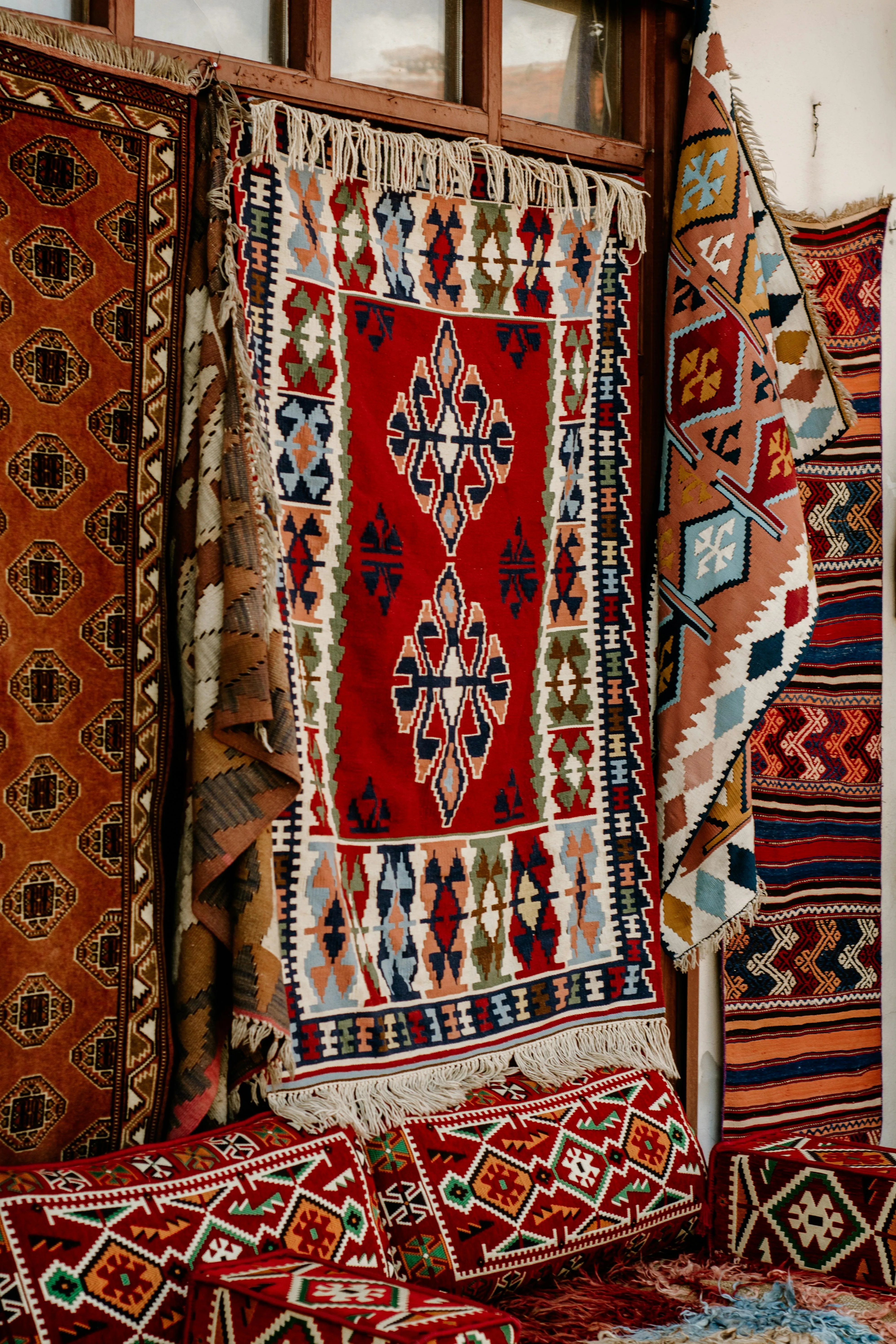
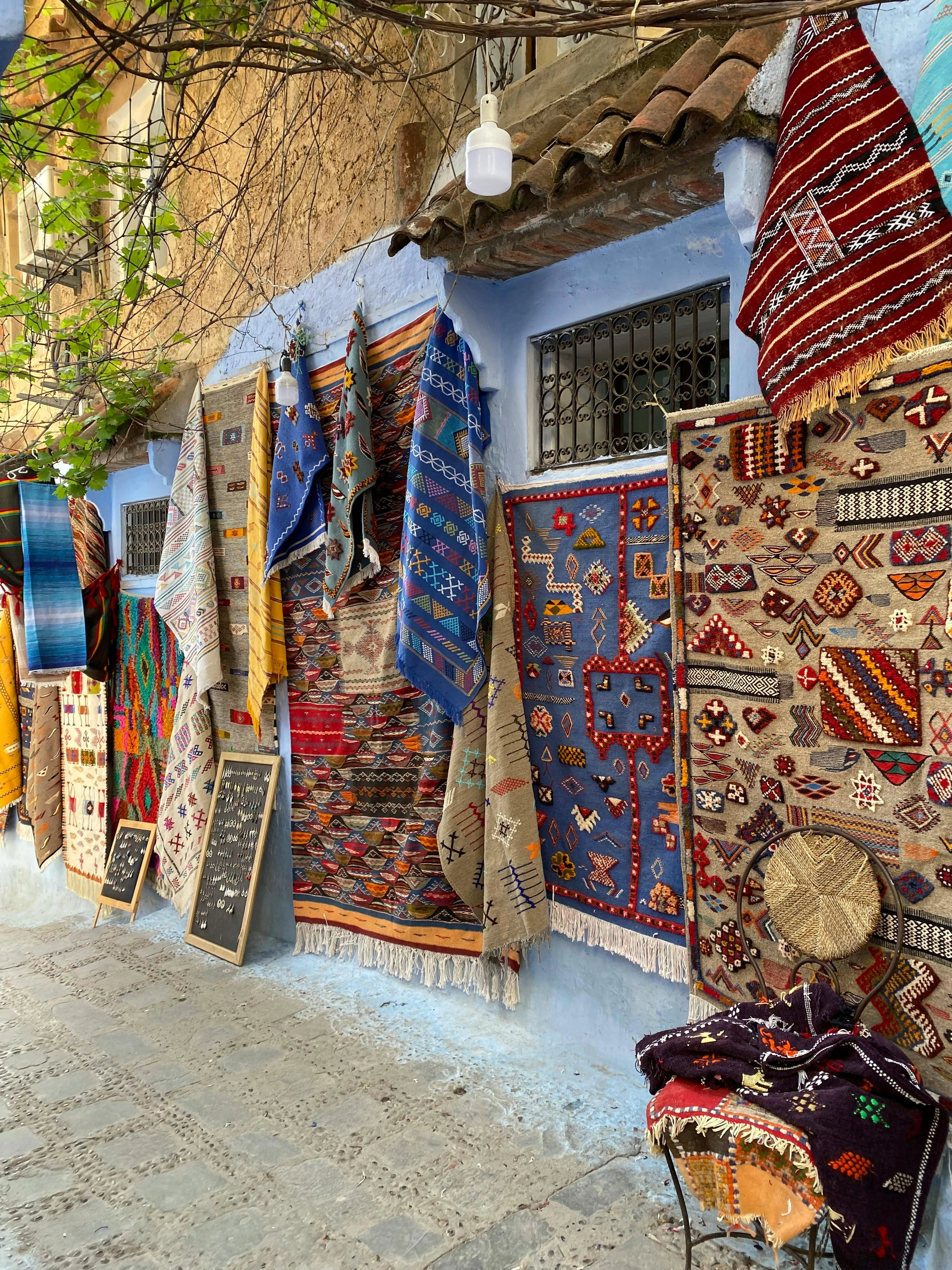
Because rural Amazigh weaving is improvisational and done without commercial blueprints, this collaborative approach leaves a breathtaking visual mark on the finished textile. As different women take to the loom, their individual tension, their specific way of tying a knot, and their intuitive choices regarding color and geometry are permanently recorded in the wool. It is what gives a vintage Moroccan rug its iconic, slightly asymmetrical, and deeply human character. You are not just looking at a pattern; you are looking at the woven conversation of a community.
Ethical Luxury and the Nomadinas Ethos
Understanding the deeply communal nature of Moroccan weaving fundamentally changes how we must view these textiles in the luxury market.
When interior designers or homeowners purchase mass-produced, factory-loomed rugs that mimic tribal patterns, they are supporting a system of isolation and mechanized extraction. But when you invest in an authentic, heritage-crafted Moroccan rug, your investment ripples outward. You are actively supporting the ancient system of adwal. You are ensuring that women can continue to gather in the courtyards of the Atlas Mountains, that daughters can continue to learn the rhythms of the tizdit from their grandmothers, and that the village remains economically empowered as a collective.
At Nomadinas, we are fiercely committed to this ethical chain of creation. We source directly from the cooperatives and rural villages where the spirit of mutual aid is still the absolute law of the land.
When you bring a Nomadinas rug into your home, you are anchoring your living space with an artifact of profound social harmony. You are wrapping your floors in a textile that was sung over, laughed over, and built by a symphony of hands. True luxury is not born in isolation; it is woven by the village.