In the modern world, body art is often viewed as a purely individualistic pursuit—a personal aesthetic choice divorced from the broader landscape. But journey into the heart of the Moroccan Atlas or the sun-baked hamadas of the southeastern desert, and a radically different understanding of the human body emerges.
For generations, the Amazigh (Berber) women of Morocco did not merely live within their culture; they wore it. The striking geometric motifs that modern designers revere on vintage Moroccan rugs were not born on the loom. Long before they were woven into wool, these ancient symbols were permanently etched into the skin of the matriarchs.
At Nomadinas, we believe that true luxury lies in the preservation of stories. To understand the captivating minimalism of a Beni Ouarain or the vibrant geometry of a Boujad rug, we must look to the disappearing art of the Amazigh tattoo. It is a story of blood, belonging, and the sacred geometry that binds a woman to the earth.
The Rite of Passage
Historically, the practice of facial and body tattooing was a profound rite of passage for young Amazigh girls. Among the Aït Khabbash—a prominent tribe of the nomadic Aït Atta confederation in southeastern Morocco—girls were typically tattooed between the ages of eleven and fourteen, a period that coincided with their transition into womanhood. This was not an isolated or somber medical procedure. It was a deeply social, communal activity shared among women.
A girl's mother, aunts, or neighbors would gather to perform the tattooing, using a pointed object like a prickly pear spike or a needle to prick the design into the skin. They would first outline the sacred geometry using pot-black (soot from the bottom of a cooking pot) or charcoal. After the skin was pierced, the women would apply crushed alfalfa to the wound, causing the healed tattoo to take on a deep, striking green color—the true mark of a masterful Amazigh tattoo, contrasting sharply with the blue-black inks of other regions. This deep green was not arbitrary; it was a conscious aesthetic choice, linking the woman's body to the fertility of the natural world and the life-giving properties of vegetation.
Baraka and the Purified Body
To understand why these women permanently marked their faces, wrists, and ankles, one must understand the Islamic and indigenous concept of Baraka—a state of divine blessing, healing energy, and spiritual protection.
In traditional North African culture, the human body is viewed as a vessel with vulnerable thresholds. Rites of passage, particularly a woman's transition into reproductive age, were considered moments of immense spiritual vulnerability. Tattoos were not just decorations; they were spiritual armor. By etching the skin with substances associated with Baraka, women were symbolically purifying their bodies.
The tattoo served as a permanent, protective seal. It guarded the woman against malevolent spirits (jnoun) and the jealous gaze of the "evil eye". It was a physical manifestation of her strength, her endurance, and her vital role as the life-giver and cultural anchor of her tribe.
A Woven Reflection: From Skin to Loom
The geometry of these tattoos is a masterpiece of minimalist design. The Aït Khabbash women typically wore a tattoo consisting of two straight, diagonal lines crossing at the top to create chevrons, from which smaller lines radiated. These sharp, angular lines were intensely personal, identifying a woman not just as Amazigh, but as a member of her specific tribal lineage.
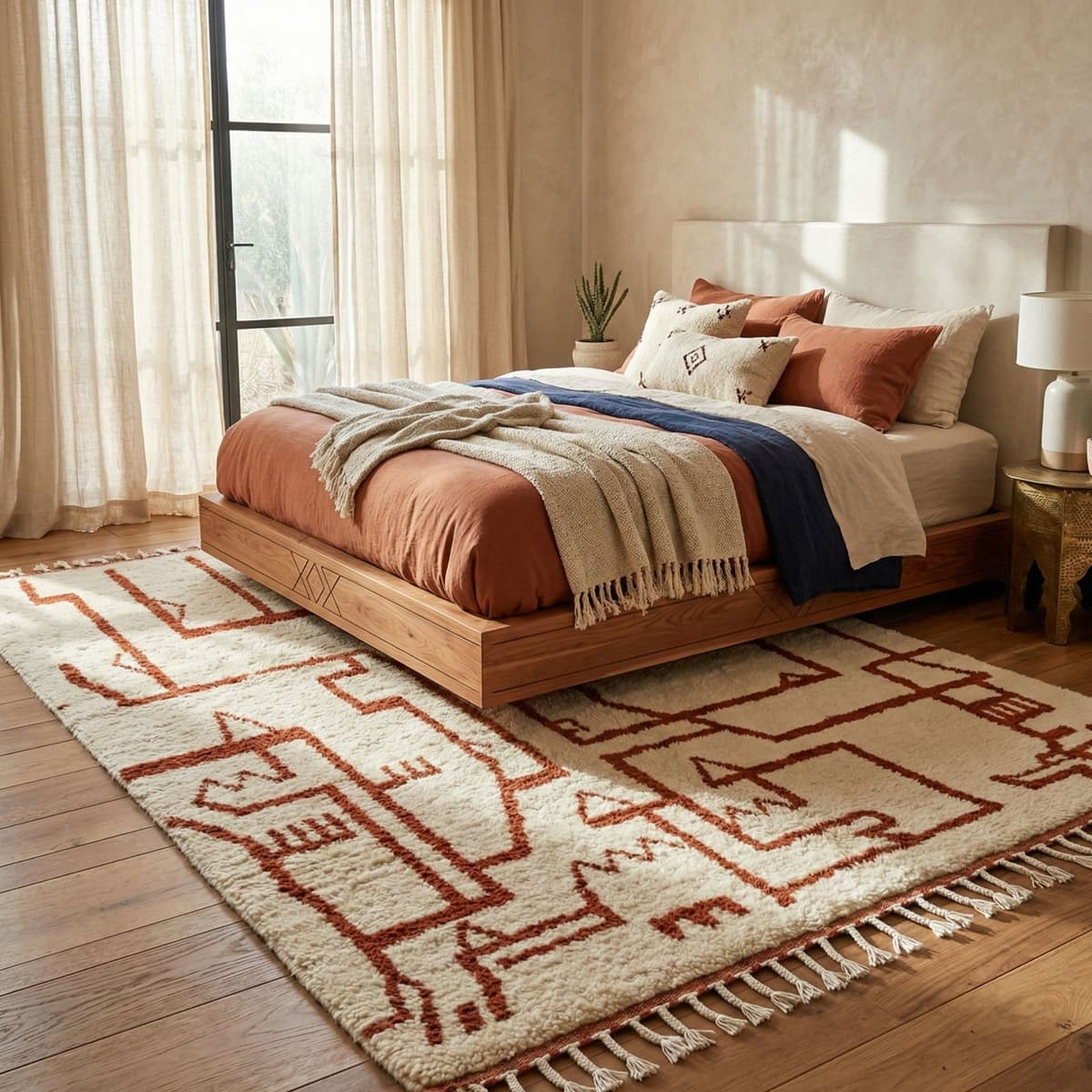
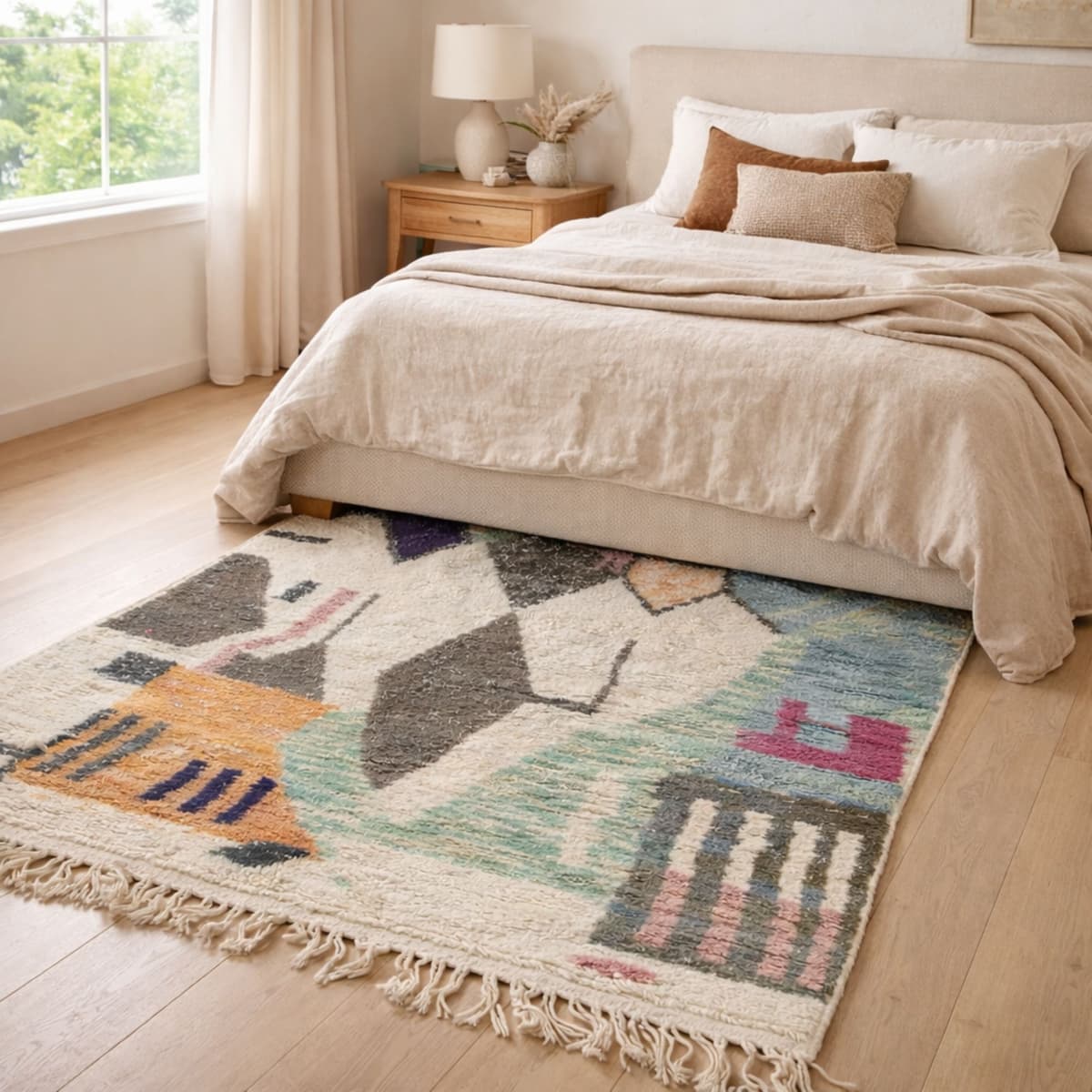
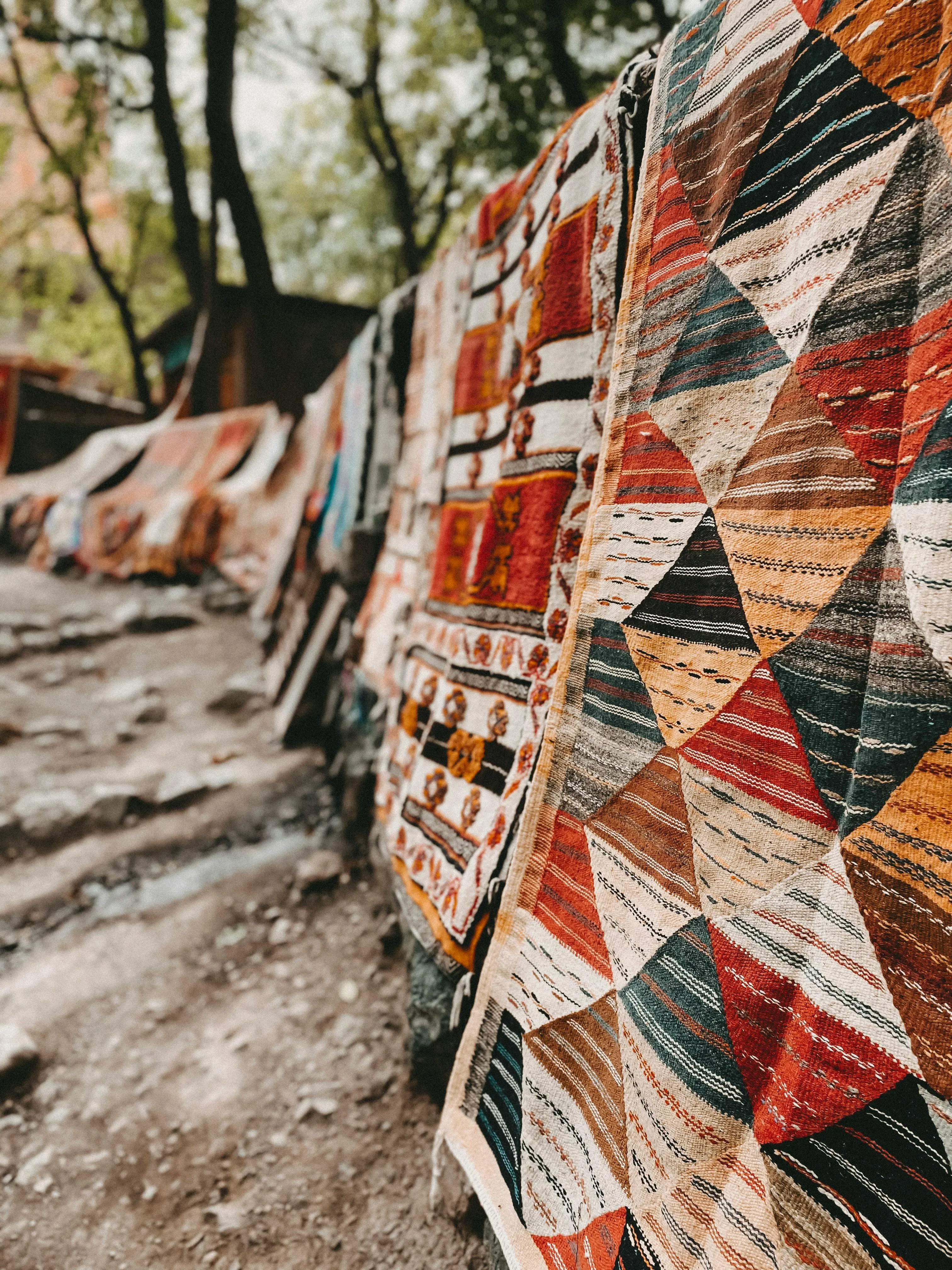
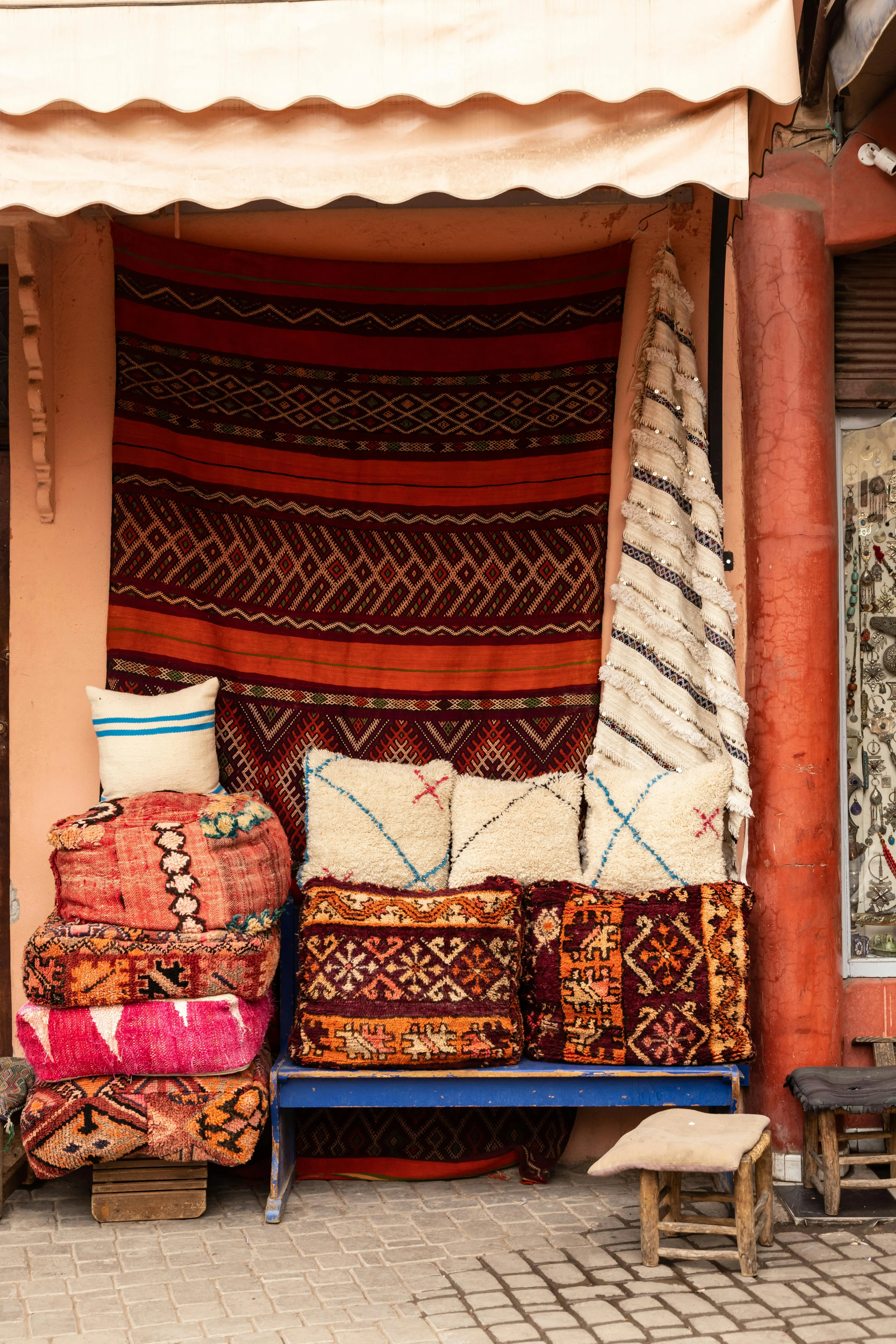
As you trace the lines of these faded tattoos, a breathtaking realization occurs: they are the exact same motifs found on the region's most coveted textiles. There is a profound, intrinsic relationship between Amazigh textile patterns and tattoo designs. The chevron, the diamond, and the intersecting lines that adorn the skin are the identical symbols that dance across the warp and weft of vintage Moroccan carpets. When an Amazigh woman sat at her loom, she was translating her physical identity into wool.
Some women noted that the chevron motifs on their skin and rugs resembled the tirsal—the wooden supports used to construct the traditional nomadic tent. The tent poles, much like the tattoos on a woman's face, divided the space into two symmetrical halves, acting as a mirror image of the human body. The tattoo, the tent, and the rug were all visual reminders of women's creative power and their role as the architects of nomadic life.
The Fading of the Ink
Today, the practice of facial tattooing among the Amazigh has almost entirely vanished. As nomadic populations transitioned to sedentary life in oasis towns, they encountered shifting religious and social pressures. Interpretations of Islamic Hadith that prohibited the permanent alteration of the body became more strictly enforced.
By the 1970s, social pressure caused the Aït Khabbash and other tribes to abandon the practice. The deeply meaningful green lines on the chins and foreheads of the elders became stigmatized, viewed by younger, urbanized generations as relics of an unsophisticated, rural past. Many older women, internalizing this stigma, have attempted to remove their tattoos with natural herbs, often hoping that the marks will be spiritually burned away in the afterlife.
The Loom as the Last Sanctuary
While the ink may be fading from the skin of the matriarchs, the sacred geometry of the Amazigh has not been lost. It simply found a new, enduring canvas.
As the practice of tattooing disappeared, the artistic forms and rich symbolism formerly expressed on the body were aggressively transferred to textiles. The brightly colored, hand-woven rugs and the meticulously embroidered indigo head coverings (tahruyt) became the new vessels for this ancient visual language. The women refused to let their identity be erased; they wove it into the very fabric of their homes.
Curating a Legacy
When we curate a vintage Moroccan rug for Nomadinas, we are not merely sourcing an abstract piece of floor decor. We are preserving a language that was once written in blood and green alfalfa.
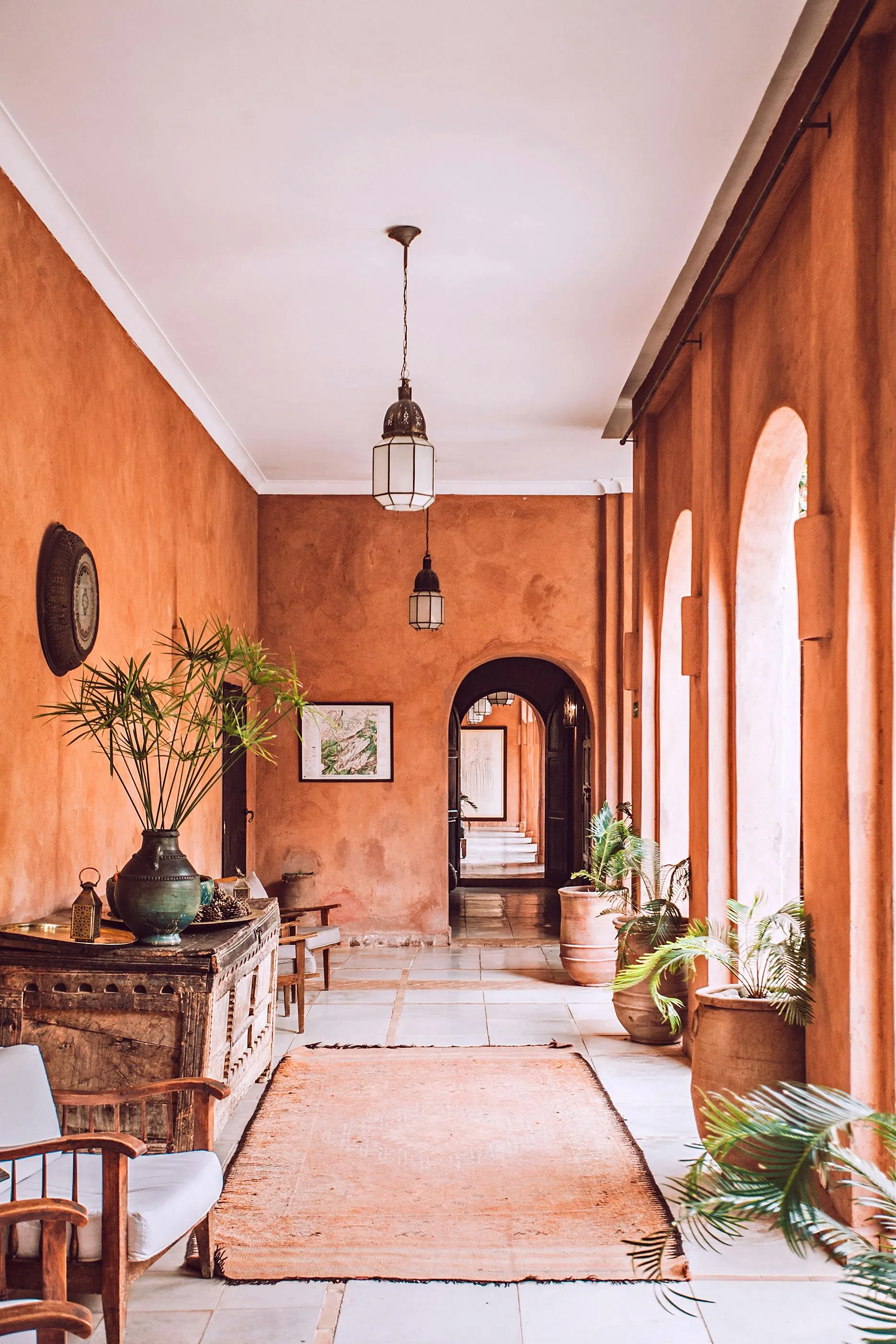
To bring one of these textiles into a modern luxury interior is to honor the women who bore the weight of their culture on their skin. The bold, asymmetrical diamonds and sharp chevrons of a Moroccan rug bring incredible architectural tension and warmth to contemporary spaces. But more importantly, they carry the undeniable soul of the matriarch. Embrace the geometry of the Atlas, and let the legacy of the Amazigh women anchor your sanctuary.