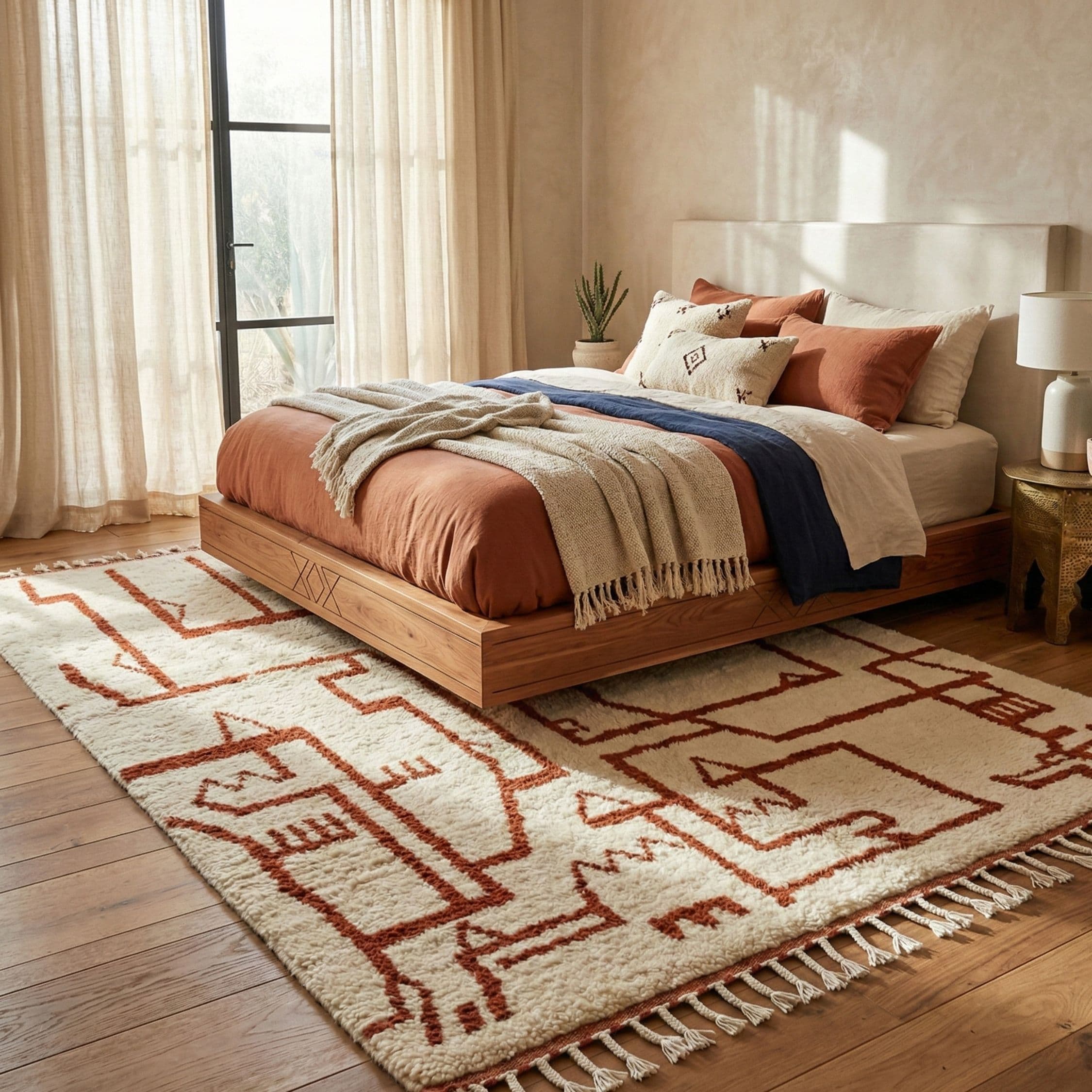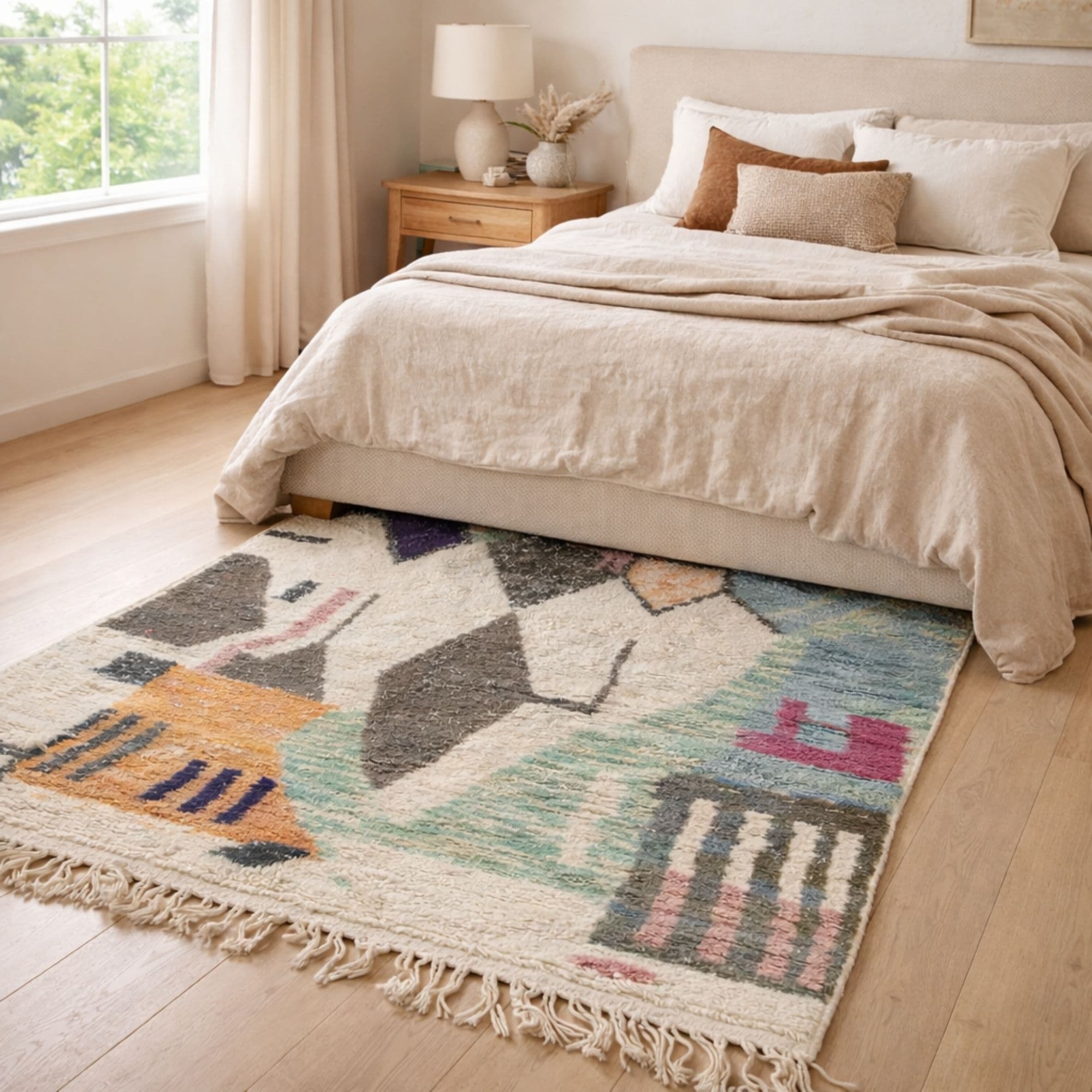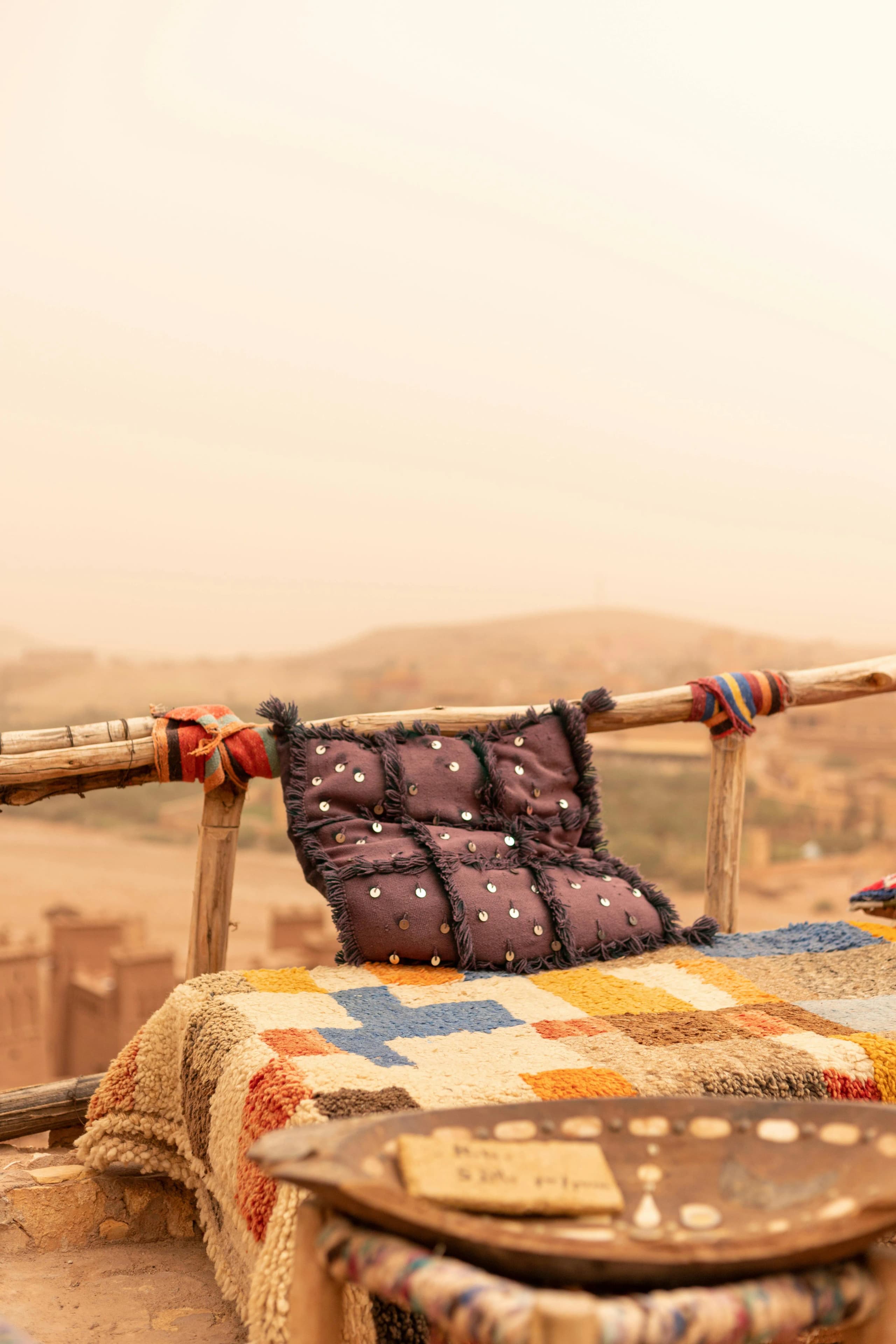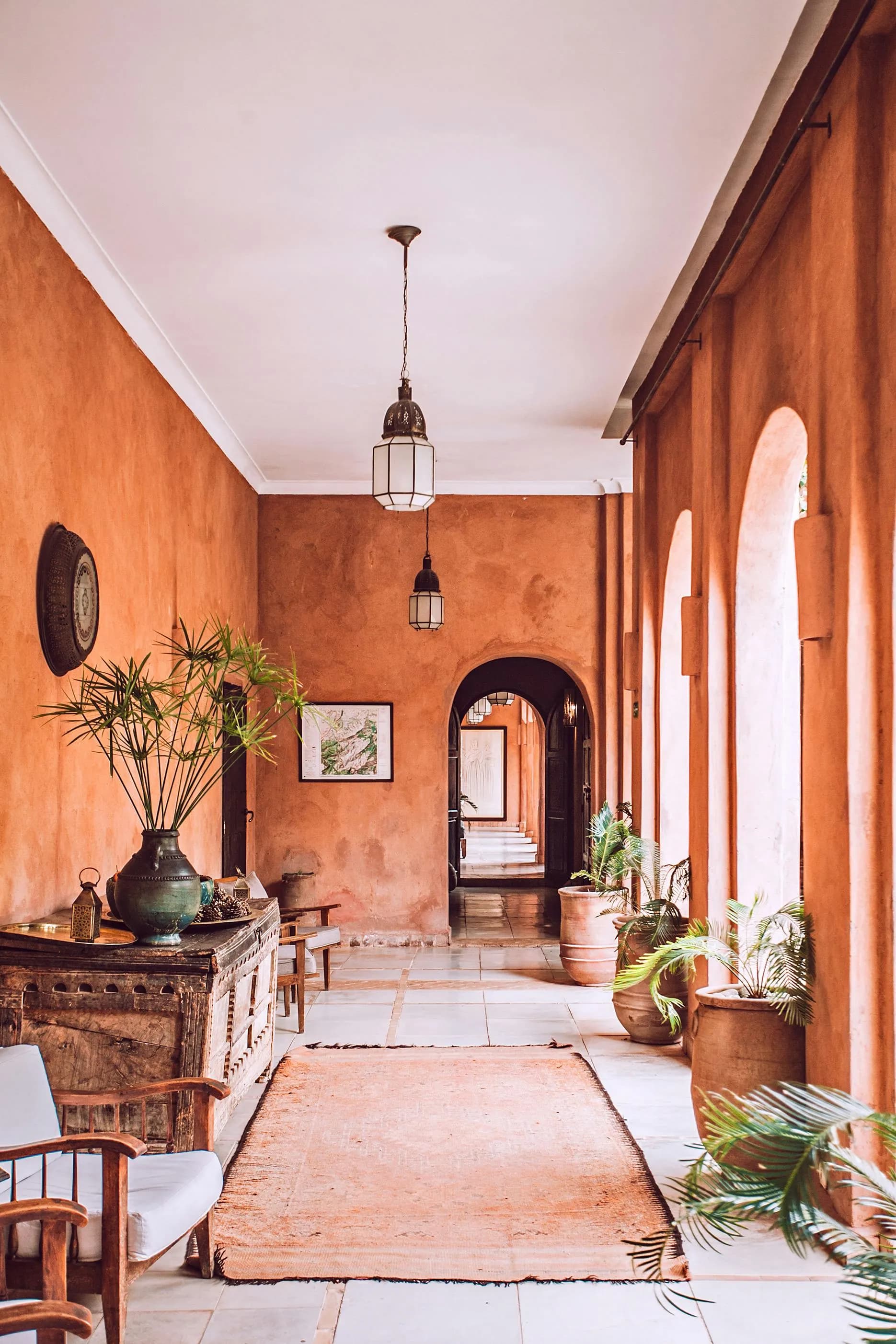
In the contemporary world of luxury interior design, we often speak of creating a “sanctuary.” We use architecture, lighting, and plush textiles to build a physical fortress against the relentless noise and stress of modern life. But long before the concept of wellness-focused interiors became a global trend, the Amazigh (Berber) women of the Atlas Mountains were already engineering sanctuaries.
They did not just weave for physical warmth; they wove for spiritual defense.
When you look at an authentic, vintage Moroccan rug, you are not merely looking at an abstract arrangement of geometric shapes. You are looking at a meticulously crafted talisman. At Nomadinas, we believe that understanding the spiritual weight of these textiles transforms them from beautiful objects into profound, living elements of your home. It is time to decode the protective magic of the loom.
The Pulse of Baraka
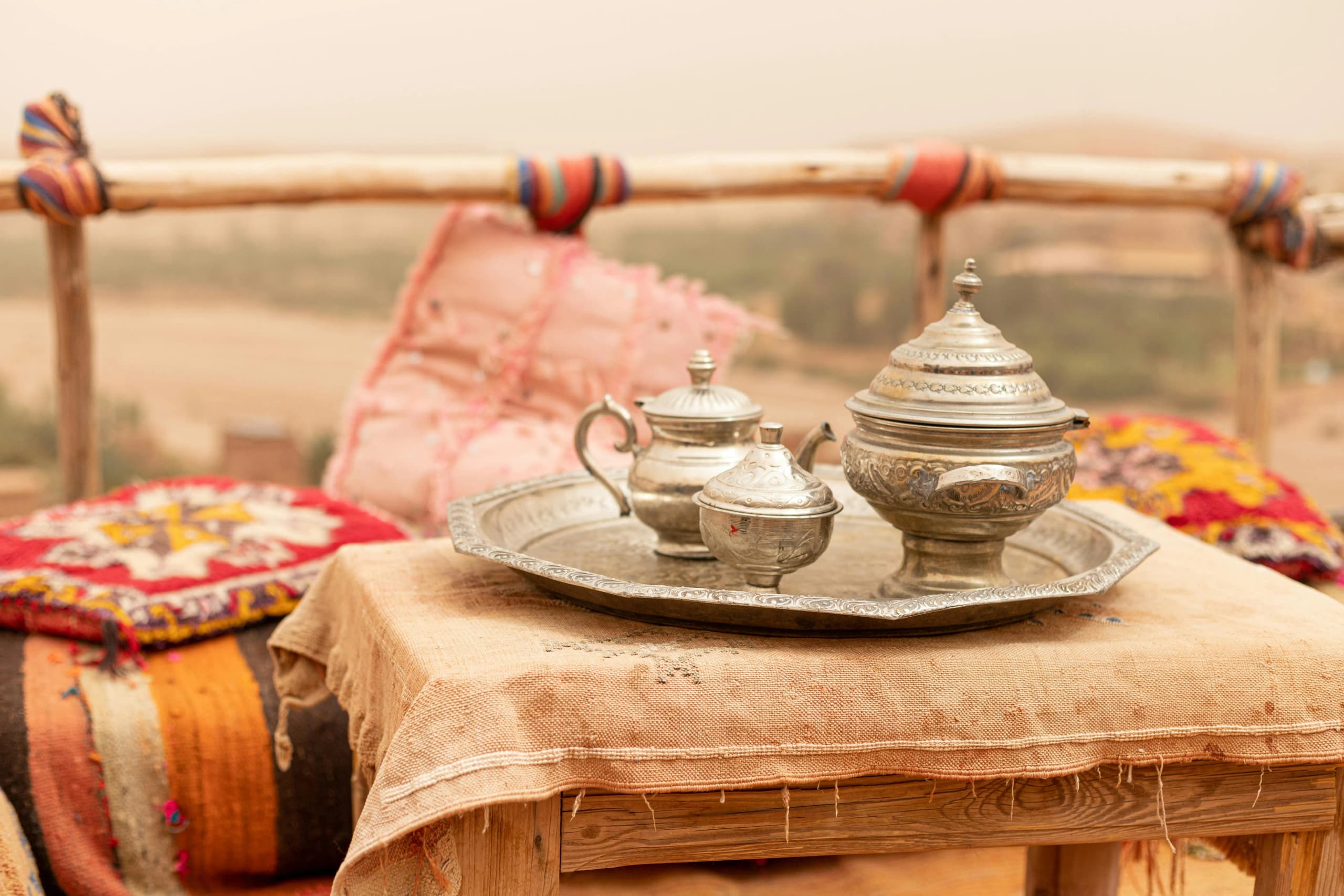
To understand the spiritual nature of Moroccan craftsmanship, one must first understand the concept of Baraka. In North African Islamic and indigenous Amazigh traditions, Baraka is a state of divine blessing, grace, and positive spiritual energy. It is not an abstract concept; it is a tangible force that can reside in people, places, and, crucially, objects.
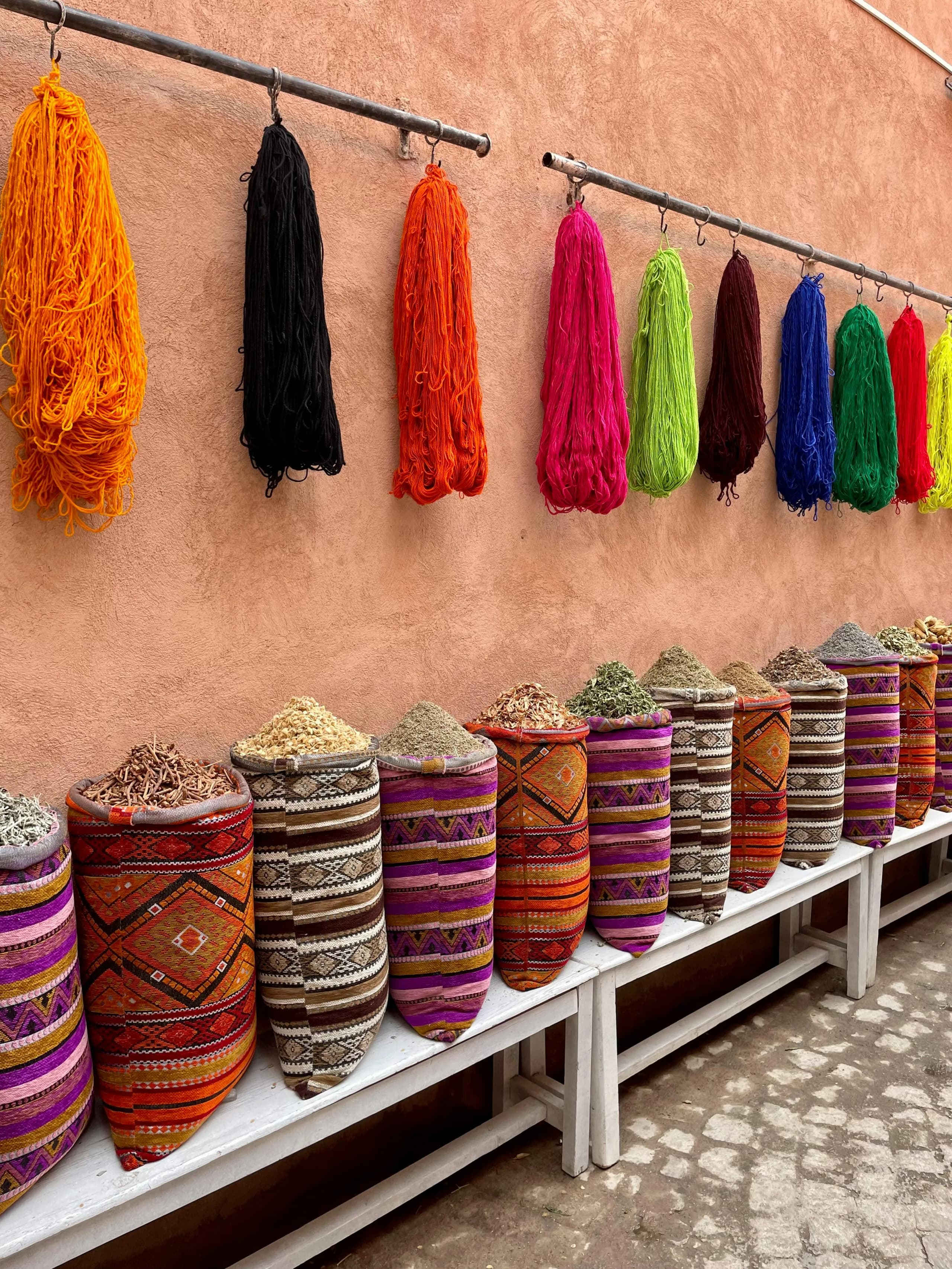
For the rural weavers of Morocco, the creation of a rug is a vessel for capturing and transmitting Baraka. The entire lifecycle of the rug is steeped in reverence. The wool itself is considered pure and holy, as sheep are highly respected animals in the culture. The act of spinning the wool, preparing the natural dyes from the earth, and stringing the vertical loom are all accompanied by quiet prayers and intentionality.
When an Amazigh woman weaves a rug for her family, she is actively weaving Baraka into the very foundation of their sleeping quarters. The heavy wool acts as physical insulation against the freezing mountain winds, while the Baraka acts as an invisible shield against misfortune, illness, and negative energy.
Deflecting the Evil Eye: The Architecture of Defense
In many traditional cultures across the Mediterranean and North Africa, the belief in the “evil eye” (l’ayn) is deeply rooted. It is the belief that a malevolent glare, often born of envy or malice, can bring tangible harm or bad luck to a person, their family, or their home.
Because the Amazigh women were the guardians of the home, it fell to them to create an architecture of defense against this invisible threat. They did so through the symbols they knotted into their rugs.
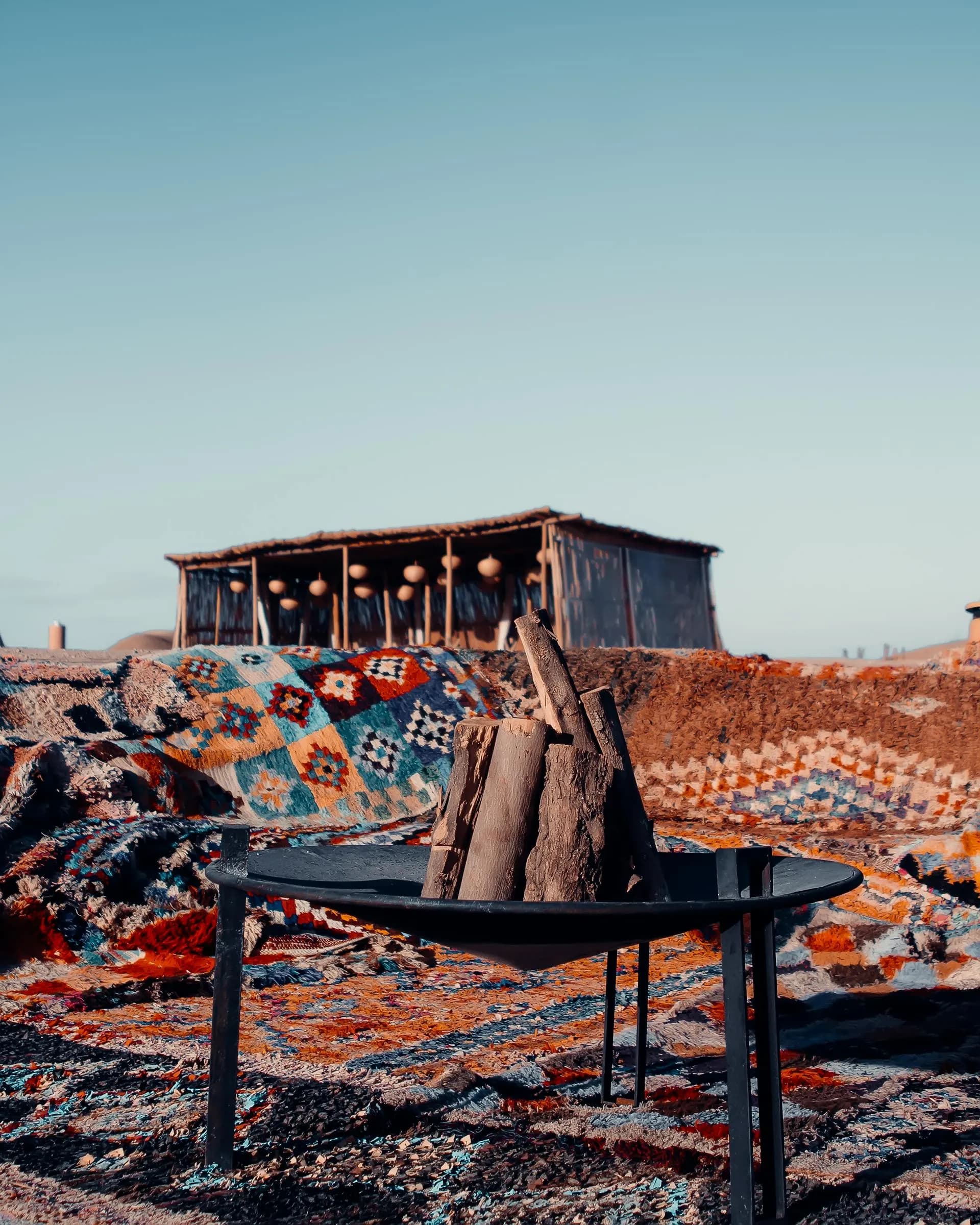
The most prominent and universally recognized protective symbol in Moroccan weaving is the diamond. While a single diamond often represents the womb and fertility, a network of interlocking diamonds—the iconic motif of the Beni Ouarain tribes—serves a very different purpose. The sharp angles and repeating geometric lines are designed to catch, confuse, and scatter the energy of the evil eye. The malevolent gaze is drawn into the complex web of the pattern, becoming trapped in the sharp corners and dissipating before it can harm the inhabitants of the room.
Other protective motifs include the eight-pointed star, which symbolizes the sun and radiates life-affirming energy, and the cross, which points to the four cardinal directions, grounding the space and establishing a boundary that negative spirits cannot cross.
The Deliberate Flaw: An Act of Humility
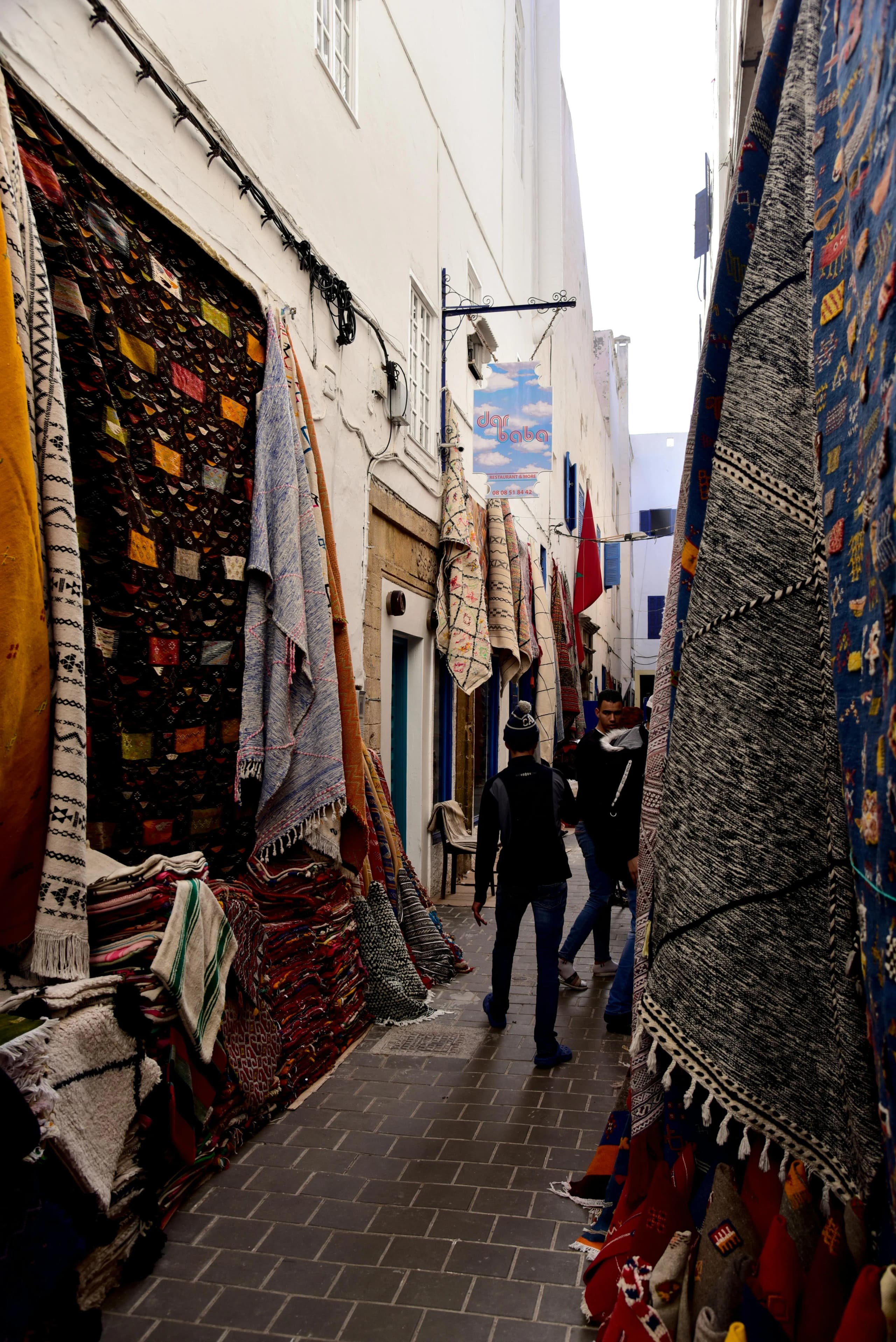
One of the most captivating aspects of authentic Moroccan tribal art is its inherent imperfection. Modern, mass-produced carpets are celebrated for their flawless symmetry and perfectly straight lines. In stark contrast, a vintage Boujad or Azilal rug is a riot of asymmetry. A line of diamonds might suddenly shift off-center; a border might disappear halfway down the rug; a sudden, unexplained block of color might interrupt an otherwise uniform pattern.
To the untrained eye, these appear to be mistakes. To the collector and the cultural historian, these are the most valuable parts of the textile.
These “flaws” are profoundly intentional. In Amazigh culture, perfection belongs only to the Divine. To create an object that is perfectly symmetrical is considered an act of profound arrogance, one that practically invites the evil eye through sheer hubris. By deliberately introducing an asymmetrical line or a sudden change in pattern, the weaver is demonstrating humility.
Furthermore, these visual interruptions serve a dual protective purpose: they jolt the eye. If a malevolent spirit is following the lines of the rug, a sudden break in the pattern disrupts its path, effectively breaking the spell. This beautiful, intentional imperfection is what gives an authentic Moroccan rug its undeniable heartbeat.
The Ritual of the Cut
The spiritual journey of the rug does not end when the final knot is tied. Taking the completed textile off the loom is a significant ritual, often treated with the same emotional weight as a birth.
In some rural regions, when the warp threads are finally cut to release the rug from the wooden frame, the women of the family gather. Water or milk might be lightly sprinkled over the textile to cool the friction of the weaving and to bless its completion. In tribes like the Beni Jelidassen, the back of the newly finished weaving is sometimes daubed with henna—a sacred plant associated with joy and protection—painting additional unseen crosses or symbols onto the reverse side of the wool to seal the Baraka inside.
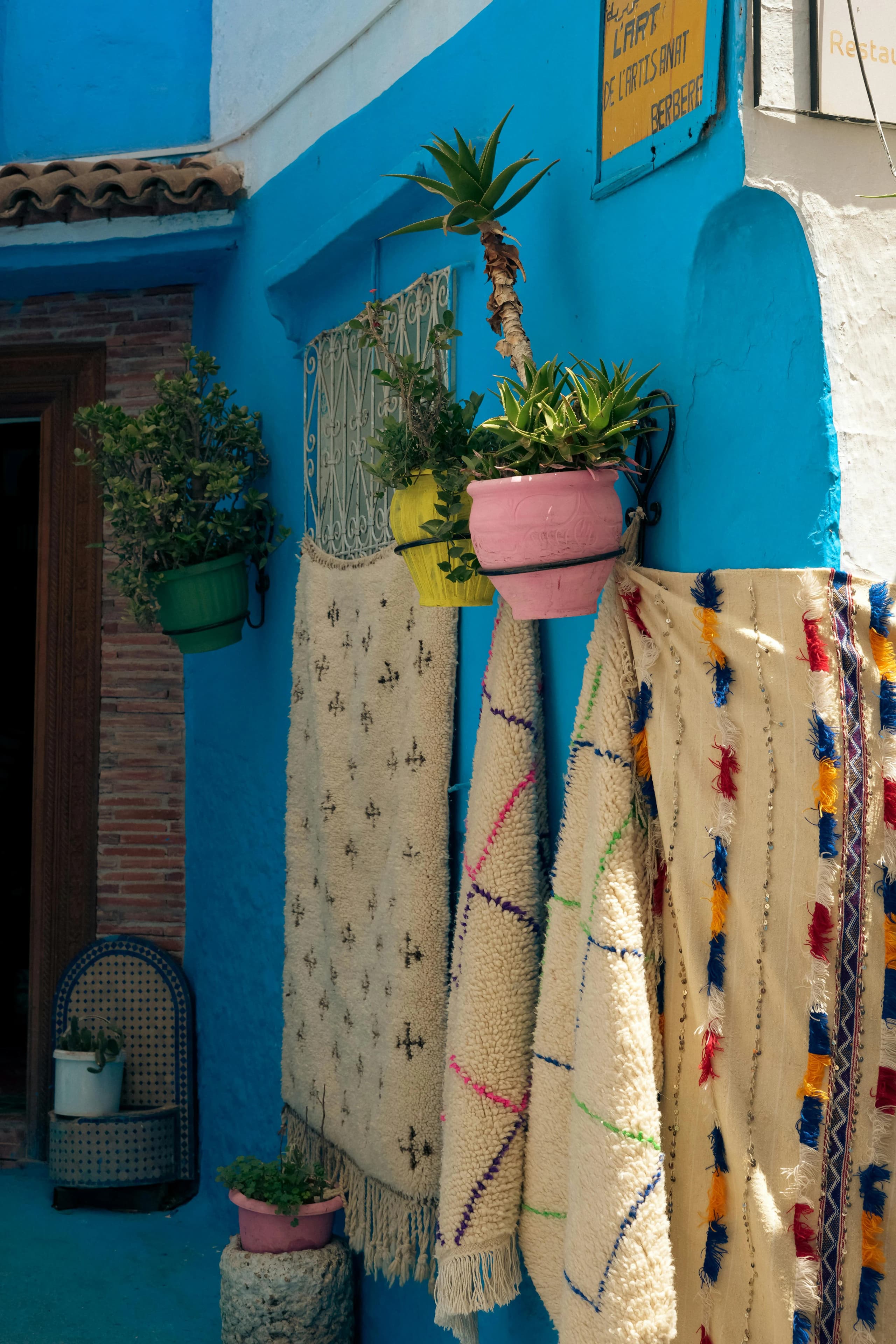
Anchoring Your Sanctuary
In our modern, hyper-connected era, the desire for a home that feels safe, grounded, and emotionally resonant has never been stronger. We are turning away from sterile, mass-produced decor because we instinctively crave objects that carry a human frequency.
When you source an authentic vintage or heritage-crafted Moroccan rug from Nomadinas, you are bringing more than a piece of mid-century design history into your space. You are anchoring your room with a woven talisman. You are laying down a textile that was created with the explicit intention of blessing the ground it covers and protecting the people who walk upon it.
Embrace the heavy wool, trace the asymmetrical lines of the diamonds, and allow the quiet, protective magic of the Atlas Mountains to turn your home into a true sanctuary. Discover our tribal Berber and ivory heritage collections to find your own protective talisman.