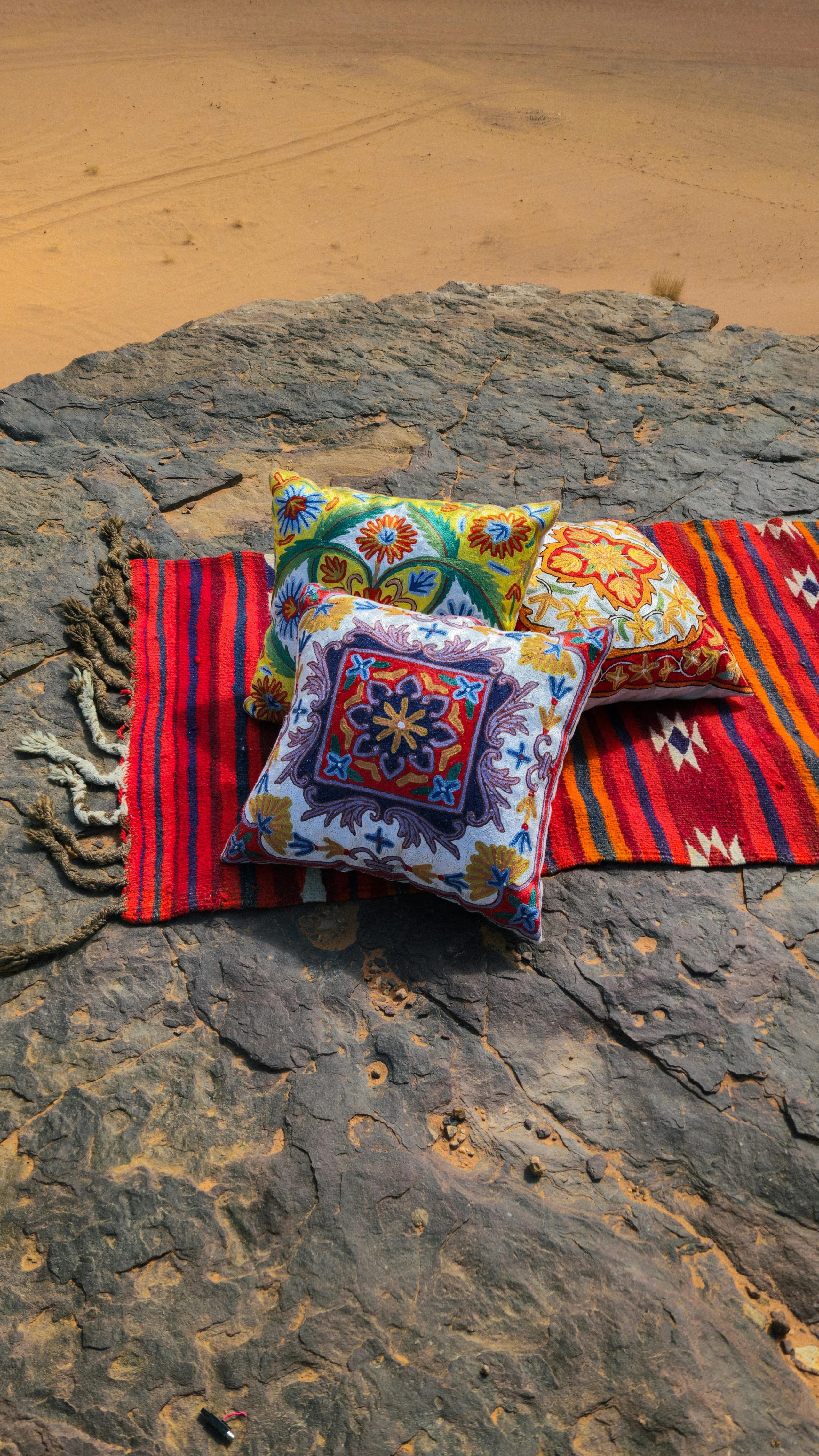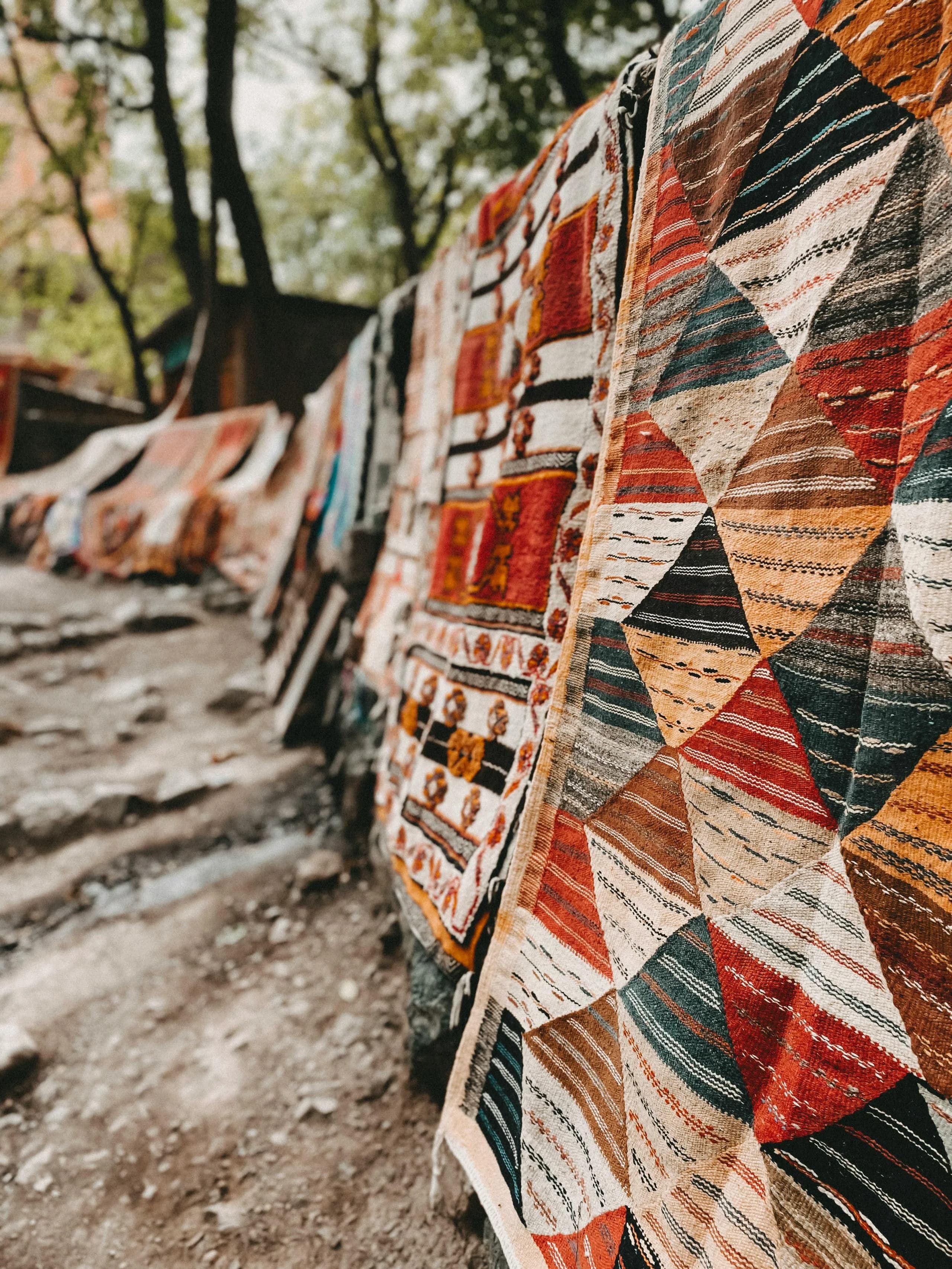
To stand before a vintage Moroccan rug is not merely to admire a beautiful textile; it is to read a diary written in wool. In the West, we often view interior design through a purely aesthetic lens—a curation of colors, textures, and shapes designed to please the eye. But within the rugged, breathtaking landscapes of the Atlas Mountains, art is intrinsically tied to survival, identity, and bloodline.
For centuries, the Amazigh (Berber) people have maintained a deeply rich, predominantly oral culture. While the men historically navigated the public spheres of commerce and agriculture, it was the women who held the vital role of cultural historians. At Nomadinas, we believe that understanding the true luxury of a Moroccan rug requires looking beyond the beautiful threads to the hands that tied them.
The Amazigh woman is the architect of her tribe’s visual language. Through the rhythmic, meditative act of weaving, she translates the spiritual beliefs, the ancestral memories, and the natural rhythms of her world into enduring physical form. She is not just a maker of home decor; she is the undisputed leader of cultural preservation.
The Loom as a Sacred Space
The creation of a rug is an act of profound intimacy and spiritual weight. The traditional vertical loom, built from wood and tensioned by hand, is considered a living entity within the Amazigh home. When a woman sets up her loom, she is framing a sacred space.
The sensory experience of weaving is hypnotic. There is the earthy, sweet scent of raw lanolin clinging to the hand-spun wool. There is the vibrant alchemy of natural dyes—the deep indigo of the night sky, the fiery red of madder root, the golden yellow of wild saffron. And there is the heartbeat of the craft: the heavy, rhythmic thud of the metal comb (tashtart) packing the weft threads down, sealing the knots into place.
It is within this sensory sanctuary that the weaver is entirely free. Unlike commercial carpet production, which relies on strict blueprints and rigid symmetry, rural Amazigh weaving is an improvisational art form. The woman at the loom pulls from her memory, her environment, and her current emotional state to create her design. The imperfections—the sudden shift in color, the slightly asymmetrical line—are not mistakes; they are the breathing, human signature of the artist.
Decoding the Language of the Ancestors
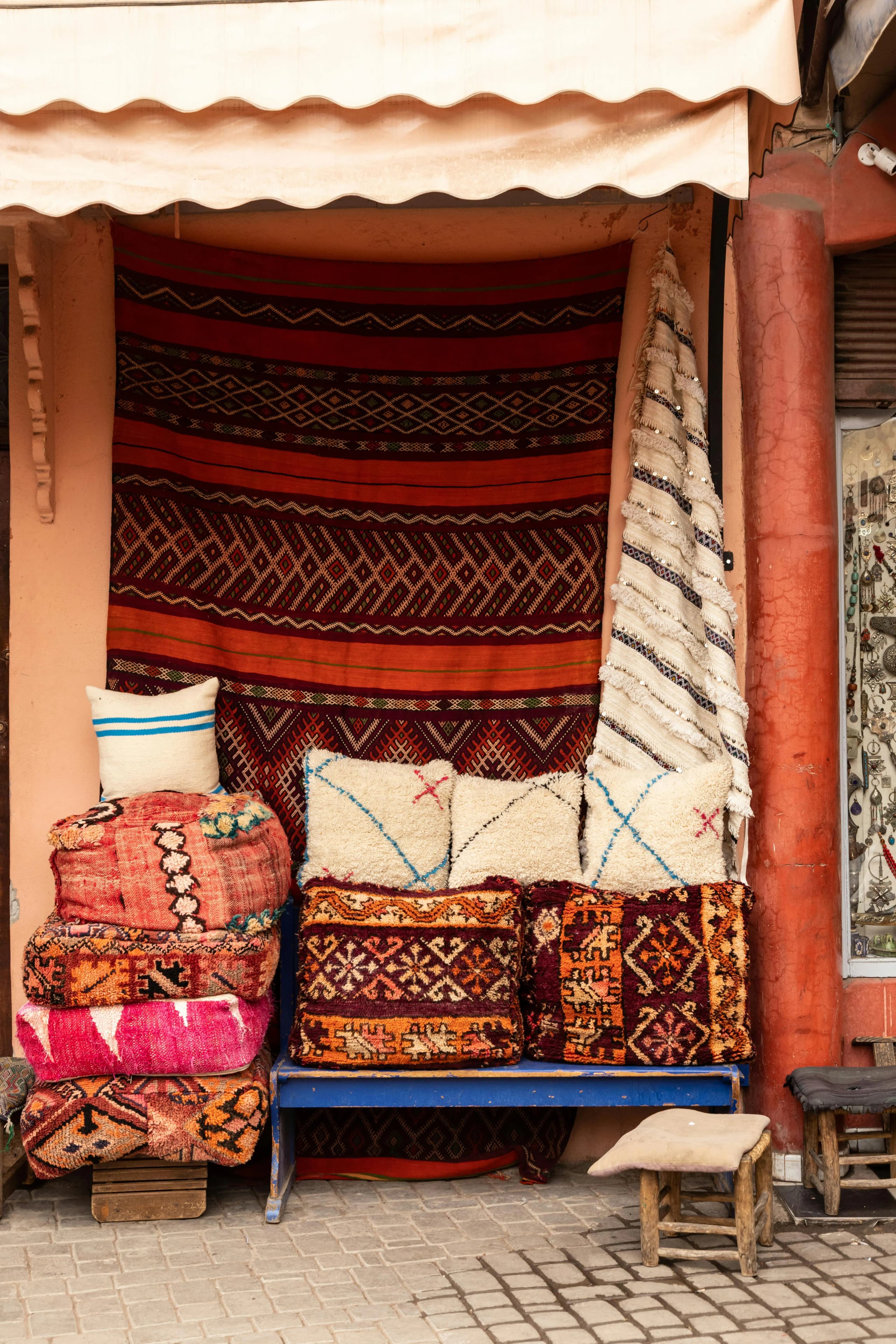
Because Tamazight (the Amazigh language) was traditionally spoken rather than written, the woven motifs of a rug served as the community’s alphabet. The symbols are abstract, powerful, and deeply rooted in the natural world and the human lifecycle.
While exact meanings can shift from tribe to tribe—from the snowy peaks of the Beni Ouarain to the arid plains of the Boujad region—certain universal symbols act as the pillars of Amazigh design:
The Diamond (The Womb and the Eye)
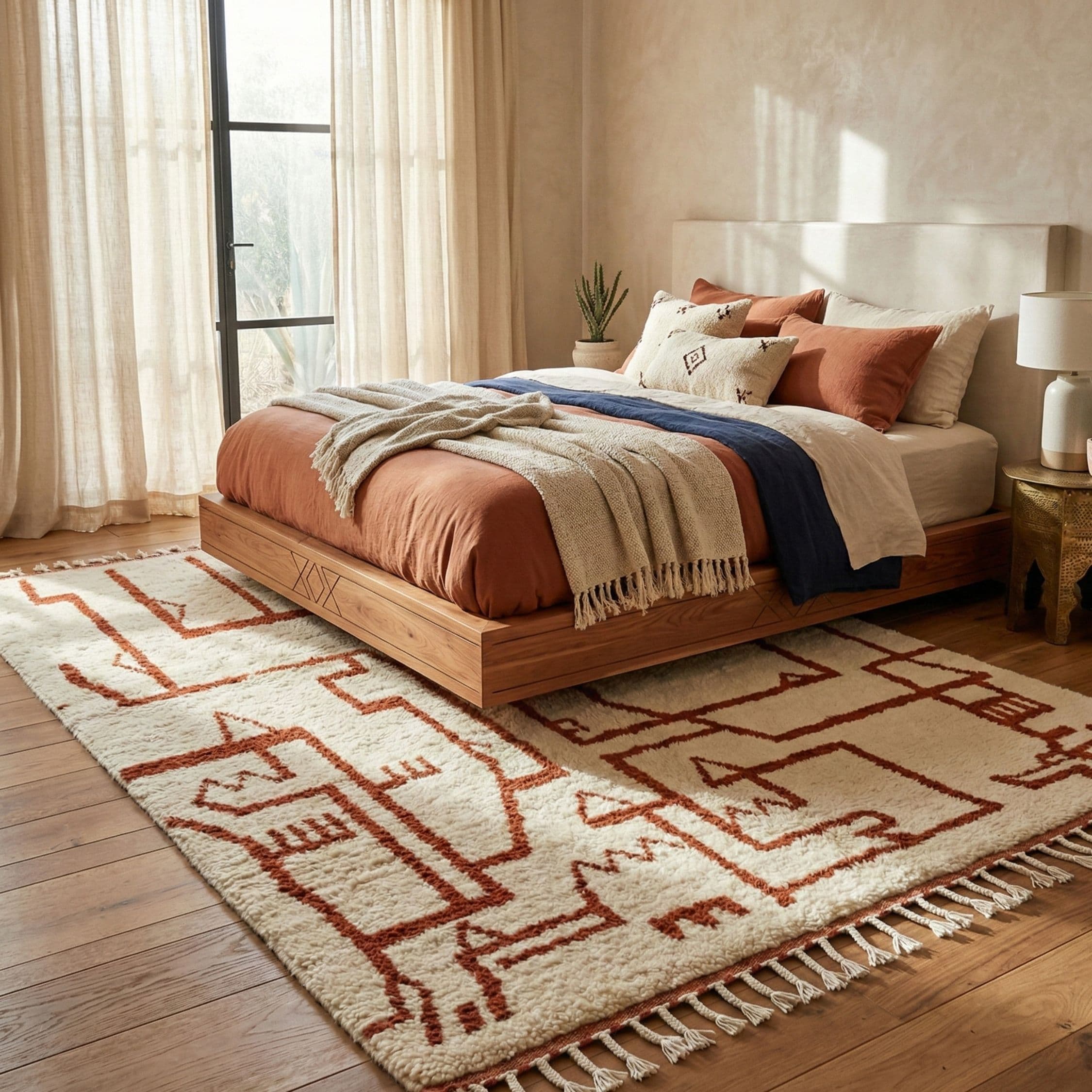
Perhaps the most iconic of all Moroccan motifs, the diamond is a potent symbol of womanhood. It represents the womb, fertility, and the life-giving power of the matriarch. When a diamond features a smaller symbol inside it, it often signifies pregnancy or the conception of a new idea. Woven in repeating, expansive networks, the diamond also acts as a mirror to deflect the evil eye, protecting the home and the family from malevolent energy.
The Chevron and the Zigzag (Water and Journeys)
The harsh beauty of the North African landscape dictates much of its art. Zigzag lines and chevrons frequently represent the flow of water—a precious, life-sustaining resource in the mountains and the desert. Alternatively, these paths can represent the physical journeys of the nomadic tribes, tracing their seasonal migrations across the topography of the Atlas.
The Cross (The Elements)
Unlike the religious connotations of the cross in the West, the Amazigh cross typically represents the four cardinal directions, the intersection of the spiritual and physical realms, or the fundamental elements of nature: fire, water, earth, and air.
The Spider and the Snake (Protection)
In Amazigh mythology, certain creatures possess protective magic. The abstract representation of a spider—a fellow weaver—symbolizes the sun and hard work. The snake, often depicted as a long, undulating line of contrasting wool, represents masculine energy, fertility, and the power of healing.
Tattoos on Skin, Tattoos on Wool
To fully grasp the significance of these woven symbols, one must look closely at the women themselves. The geometric motifs found on the rugs are the exact same symbols traditionally tattooed onto the faces, hands, and ankles of Amazigh women.
These facial tattoos (tighazayin) were rites of passage, marking a woman’s transition into adulthood, her tribal affiliation, and her spiritual fortitude. As the practice of facial tattooing has slowly faded over the last century due to modernization and religious shifts, the loom has become the ultimate sanctuary for these sacred marks.
When an Amazigh woman weaves a diamond or a chevron into her carpet, she is effectively transferring the tattoos of her ancestors from skin to wool. She is ensuring that the visual identity of her people outlives her.
The Matriarchs of Modernism
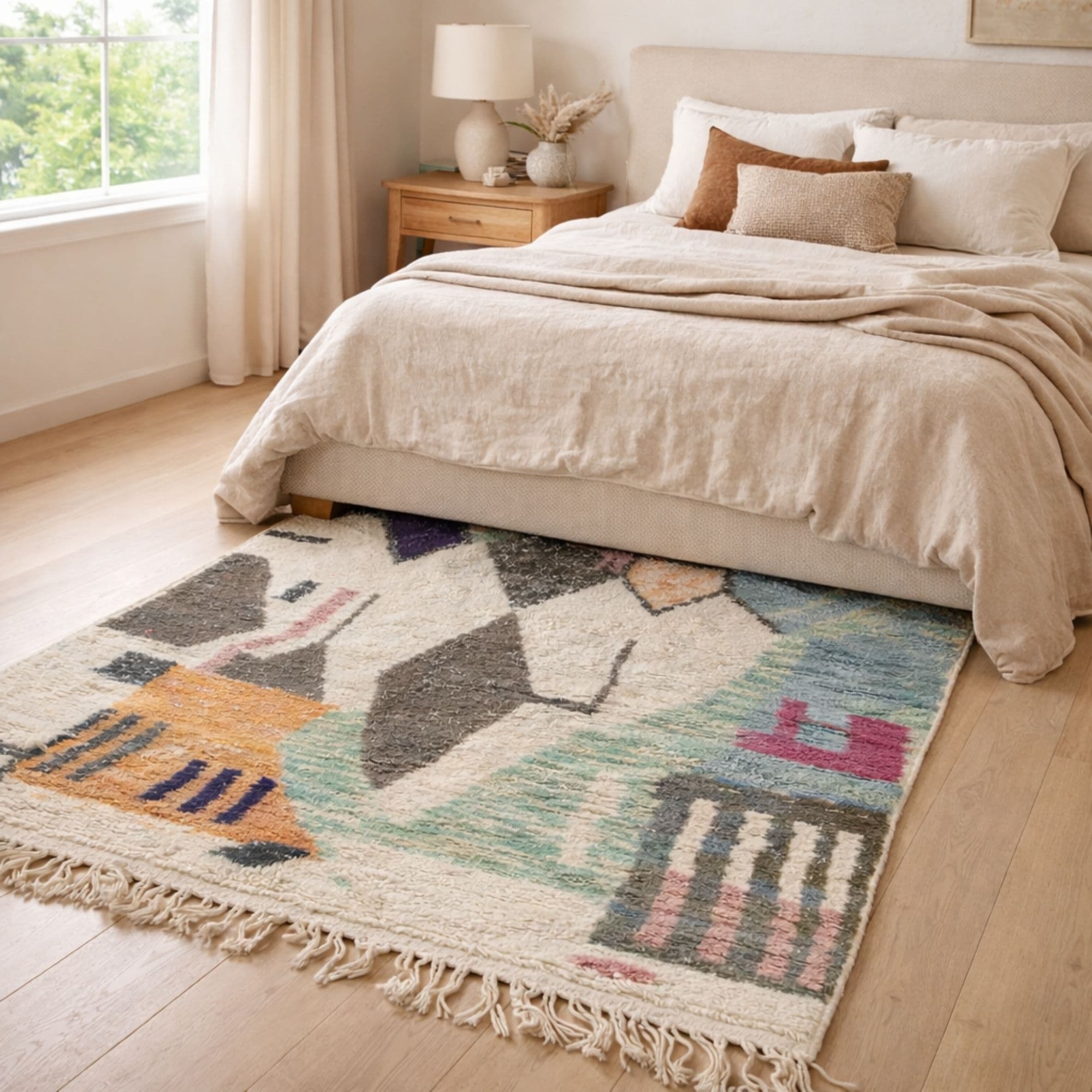
The profound irony of the Moroccan rug is that its ancient, tribal origins perfectly prefigured the abstract modernist movement of the 20th century. Decades before Western artists like Paul Klee and Mark Rothko explored the emotional resonance of abstract geometry and floating fields of color, Amazigh women were weaving these exact concepts into their winter bedding.
Their ability to balance negative space, their fearless use of asymmetrical color blocking, and their reduction of complex natural forms into sharp, minimalist geometry make them some of history’s greatest, albeit unrecognized, abstract artists.
A Legacy Woven for Your Home
At Nomadinas, our curation of Moroccan rugs is guided by a deep reverence for these female artisans. When you bring one of these pieces into your home, you are not merely acquiring a luxury textile to anchor your living room. You are becoming a custodian of a matriarchal legacy.
You are bringing home a story of resilience, a prayer for protection, and a testament to the women who have quietly, beautifully woven the soul of Morocco into existence for thousands of years.