There are certain colors in the world that hold a weight far heavier than mere pigmentation. They are colors born not in a laboratory, but in the earth, the wind, and the relentless heat of the sun. In the vast, sweeping expanses of the Sahara Desert, that color is a deep, intoxicating, almost metallic blue.
It is the color of the Tuareg scarf.
For the modern collector, interior designer, and global traveler, this striking indigo textile has become a symbol of ultimate worldly sophistication. Whether elegantly draped over a modernist sofa or worn as a dramatic, luxurious accessory, the Tuareg scarf carries an undeniable presence. But at Nomadinas, we know that true luxury is rooted in authentic storytelling. To appreciate the profound beauty of these textiles, one must journey into the heart of the desert to understand the people who forged them.
The Blue Men of the Desert
The Tuareg are a fiercely independent, semi-nomadic Amazigh (Berber) people who have navigated the harsh and beautiful topography of the Sahara for millennia. They are the masters of the dunes, controlling the ancient trans-Saharan trade routes that connected North Africa to the sub-Saharan Sahel.
To outsiders, they are often known by a legendary moniker: “The Blue Men of the Desert.”
This title is derived directly from their most iconic garment, the tagelmust. The tagelmust is a remarkably long piece of cotton fabric—sometimes reaching lengths of ten meters or more—that is dyed a rich, profound indigo. For the Tuareg men, this scarf is not a simple accessory; it is a vital instrument of survival and a profound cultural identifier.
Wrapped intricately around the head and face, leaving only a narrow slit for the eyes, the tagelmust serves as a highly effective shield against the brutal Saharan sun, the biting winds, and the stinging, blowing sands. But its function transcends the physical. In Tuareg society, the veiling of the face by men is a mark of modesty, dignity, and high social status. The deeper and richer the indigo, the wealthier and more respected the wearer.
The Alchemy of Dry Indigo
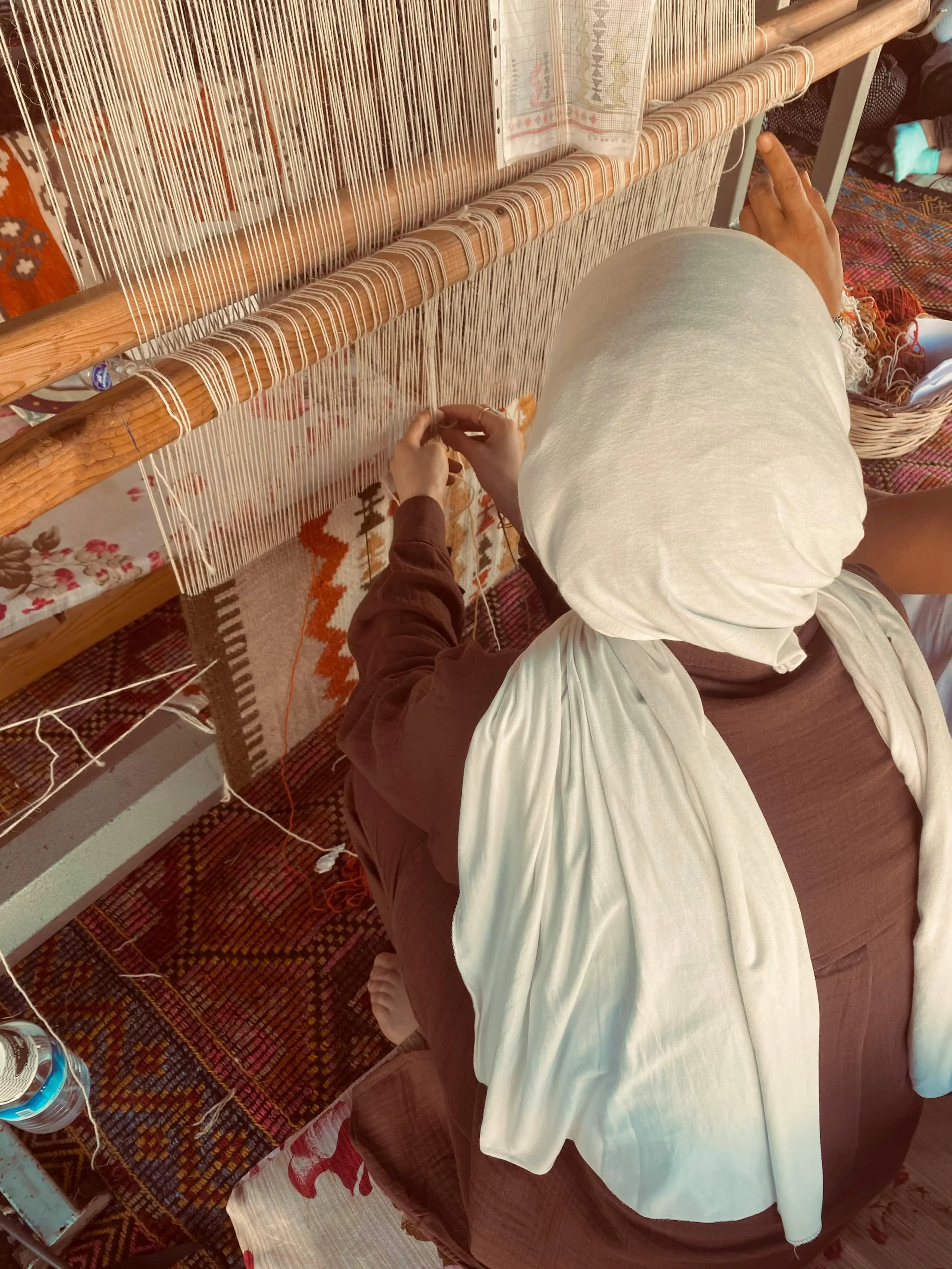
The creation of an authentic Tuareg scarf is a labor-intensive art form that borders on alchemy. Unlike standard dyeing processes where fabric is simply submerged in a vat of liquid, the traditional preparation of Tuareg indigo is entirely unique—and it is dictated by the desert environment.
Because water is an incredibly scarce and precious resource in the Sahara, the indigo dye cannot be wasted in massive liquid vats. Instead, the indigo is applied dry. The dyed cotton fabric is laid out, and dry, powdered indigo pigment is literally pounded into the fibers of the cloth using heavy wooden mallets.
This rhythmic, forceful pounding does two remarkable things. First, it binds the pigment deeply into the weave of the cotton without the need for excess water. Second, the sheer friction and pressure polish the fabric, leaving the finished scarf with a breathtaking, slightly metallic, copper-like sheen.
Because the dry indigo is not chemically sealed into the fabric, the dye naturally and beautifully rubs off onto the skin of the wearer over time—hence the legendary blue-tinted skin of the Tuareg nomads. Far from being a flaw, this transfer of color is considered a mark of authenticity, a blessing, and a testament to the raw, unadulterated nature of the dye.
Draping History in the Modern Home
Today, the aesthetic power of the Tuareg scarf has transcended its origins as a desert survival garment, finding its way into the most beautifully curated homes and wardrobes around the world. In the realm of high-end interior design, it is the ultimate layering piece.
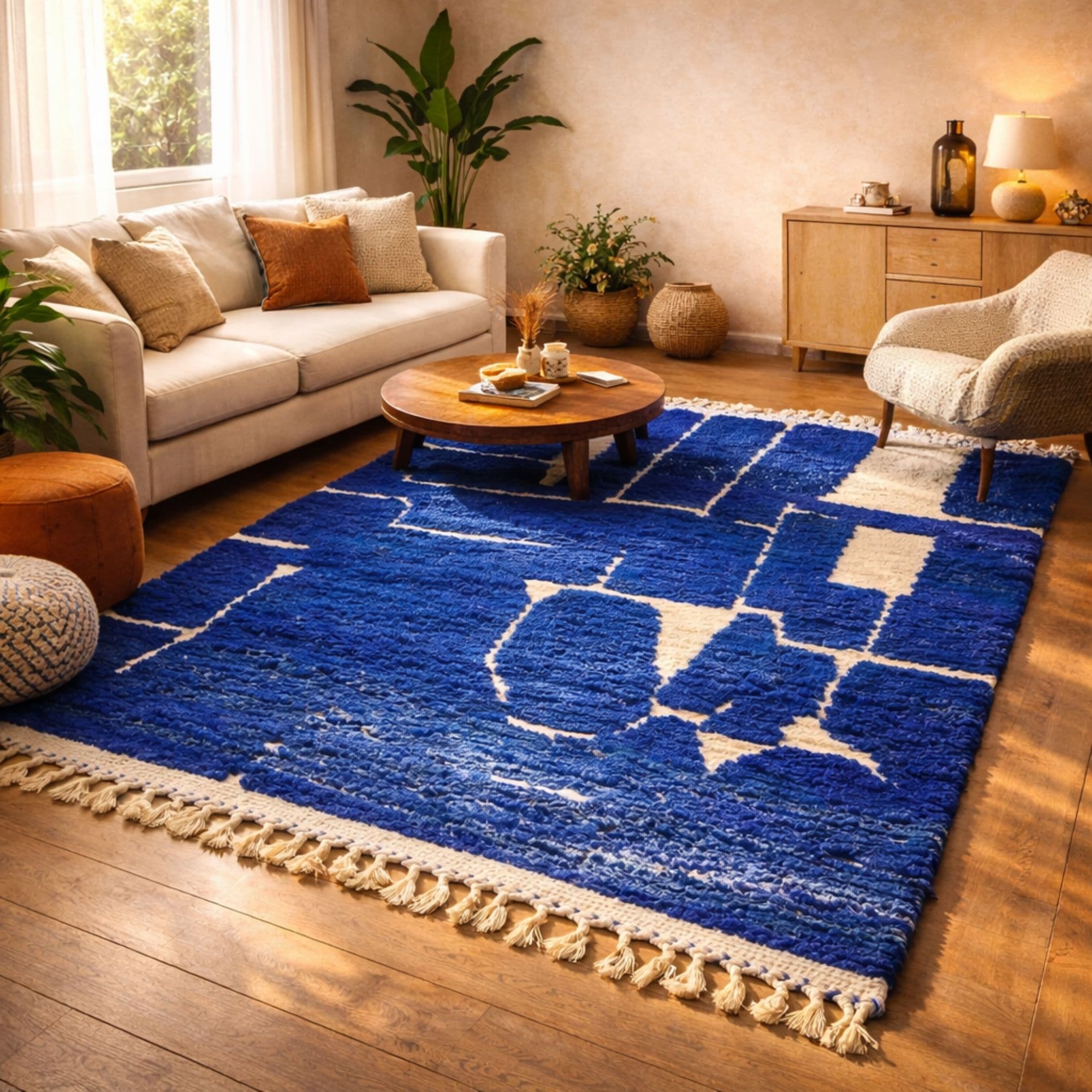
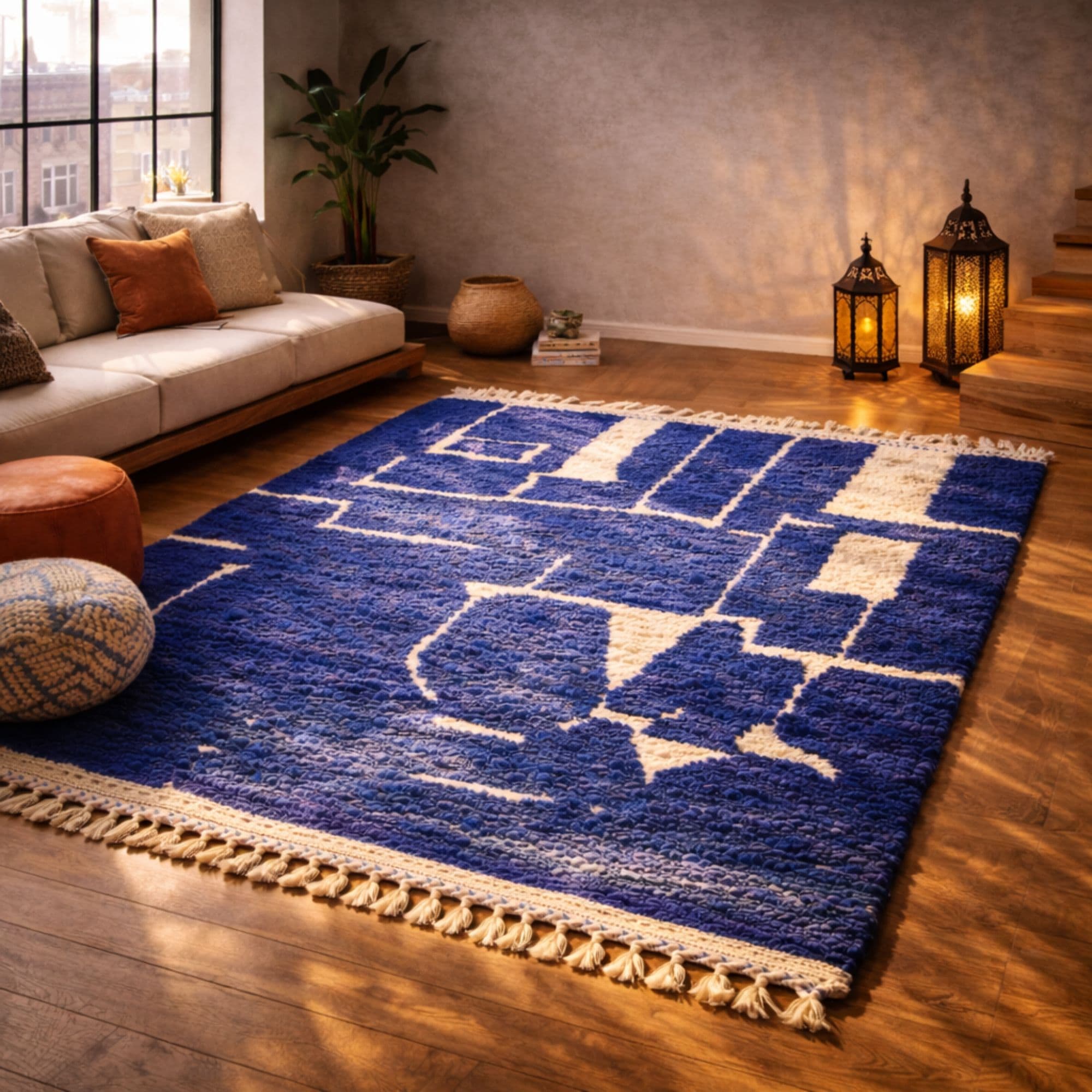
In an organic modern living room, where neutral tones of cream, sand, and terracotta dominate, a Tuareg scarf introduces a vital, electric shock of color. The deep indigo acts as a grounding anchor. Because the fabric is remarkably lightweight yet holds significant volume, it drapes flawlessly.
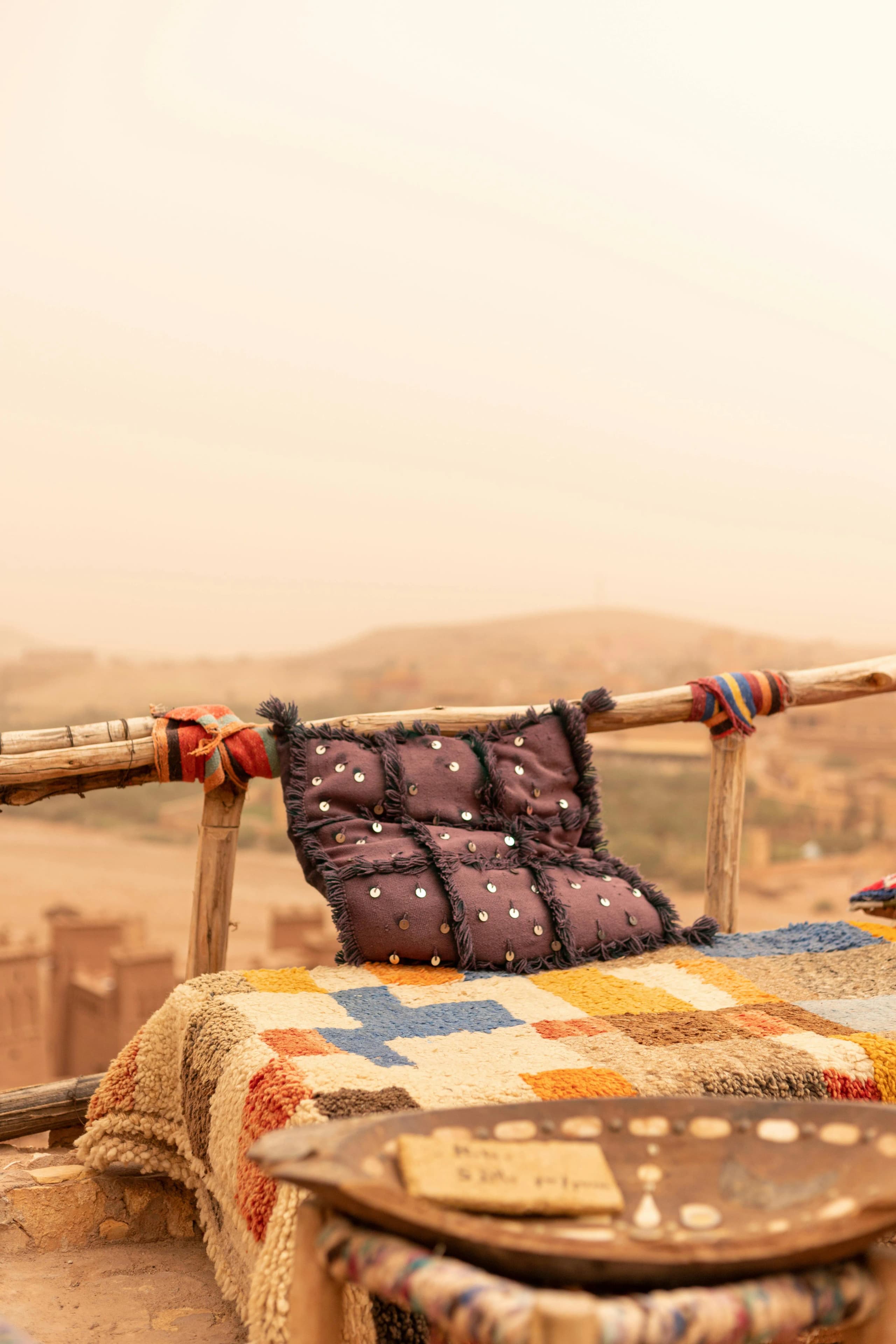
Designers frequently utilize these textiles to soften the hard edges of modern architecture. Draped effortlessly over the back of a Pierre Jeanneret chair, tossed across the foot of a minimalist linen bed, or even professionally framed behind museum glass as a large-scale piece of textural abstract art, the scarf brings an instant narrative of global history and tactile luxury into the room.
A Wearable Legacy
Beyond the home, the Tuareg scarf remains an incredibly chic, gender-neutral wearable accessory. Worn as a voluminous shawl on a cool evening or wrapped thickly around the neck as a statement scarf, the breathable cotton and striking color elevate any modern wardrobe. It is a piece that ages beautifully, the rigid pounding of the indigo slowly softening with wear, turning the fabric into an incredibly supple, second skin.
The Nomadinas Commitment
As the global demand for these iconic indigo textiles rises, the market is unfortunately flooded with cheap, chemically dyed imitations that lack the characteristic sheen, the profound color depth, and the cultural integrity of the originals.
At Nomadinas, we are committed to preserving the legacy of the loom and the dye mallet. We source our Tuareg scarves with a strict dedication to authenticity, ensuring that the textiles we offer carry the true, unadulterated DNA of the Saharan trade routes.
When you bring a Nomadinas Tuareg scarf into your life—whether you drape it across your favorite armchair or wear it out into the world—you are holding a piece of the desert. You are embracing the raw, elegant survivalism of the Blue Men, and adding a layer of profound, historical luxury to your everyday life.