In the realm of contemporary luxury, the word "architecture" almost exclusively conjures images of unyielding permanence: soaring glass panes, heavy steel beams, and poured concrete. We are conditioned to believe that a true sanctuary must be built from the ground up, anchored immovably to the earth.
But journey into the sweeping, arid expanses of southeastern Morocco, and a radically different architectural philosophy emerges. For the nomadic Amazigh (Berber) tribes, survival demanded mobility. Their homes could not be made of stone; they had to be woven.
At Nomadinas, we believe that to truly understand the soul of a Moroccan rug, you must first understand the structure it was born within. The legendary textiles of the Atlas and the Sahara were not merely decorations placed inside a home—they were the home. This is the story of "soft architecture," a mastery of earth and wool, where the women of the desert engineered mobile fortresses that rivaled any modern architectural marvel.
The Architecture of Survival
To navigate the extreme landscapes of the Sahara, a shelter must be extraordinarily resilient. The Ait Khabbash—a prominent nomadic group of the Ait Atta confederation in southern Morocco—raised goats, sheep, and camels across a territory that demanded constant movement. Their survival hinged on a shelter that could protect their families from the blistering, scorching desert sun, unpredictable sandstorms, and the bitter, freezing cold of the desert nights.
The solution to this environmental extreme was the nomadic tent. However, these structures were not simply pitched; they were painstakingly manufactured from scratch. The creation, construction, and dismantling of these tents were the exclusive domain of the Amazigh women.
In these nomadic societies, women were the undisputed architects. The scholar Labelle Prussin famously explored this dynamic, noting that women are the architects in nomadic societies and discussing their nomadic arts as gendered symbols of womanhood and female creativity. In the harshness of the desert, the matriarch was the literal builder of the family's sanctuary.
The Horizontal Loom and the Aflidj
The construction of a desert tent began long before the wooden poles were raised. It began on the ground.
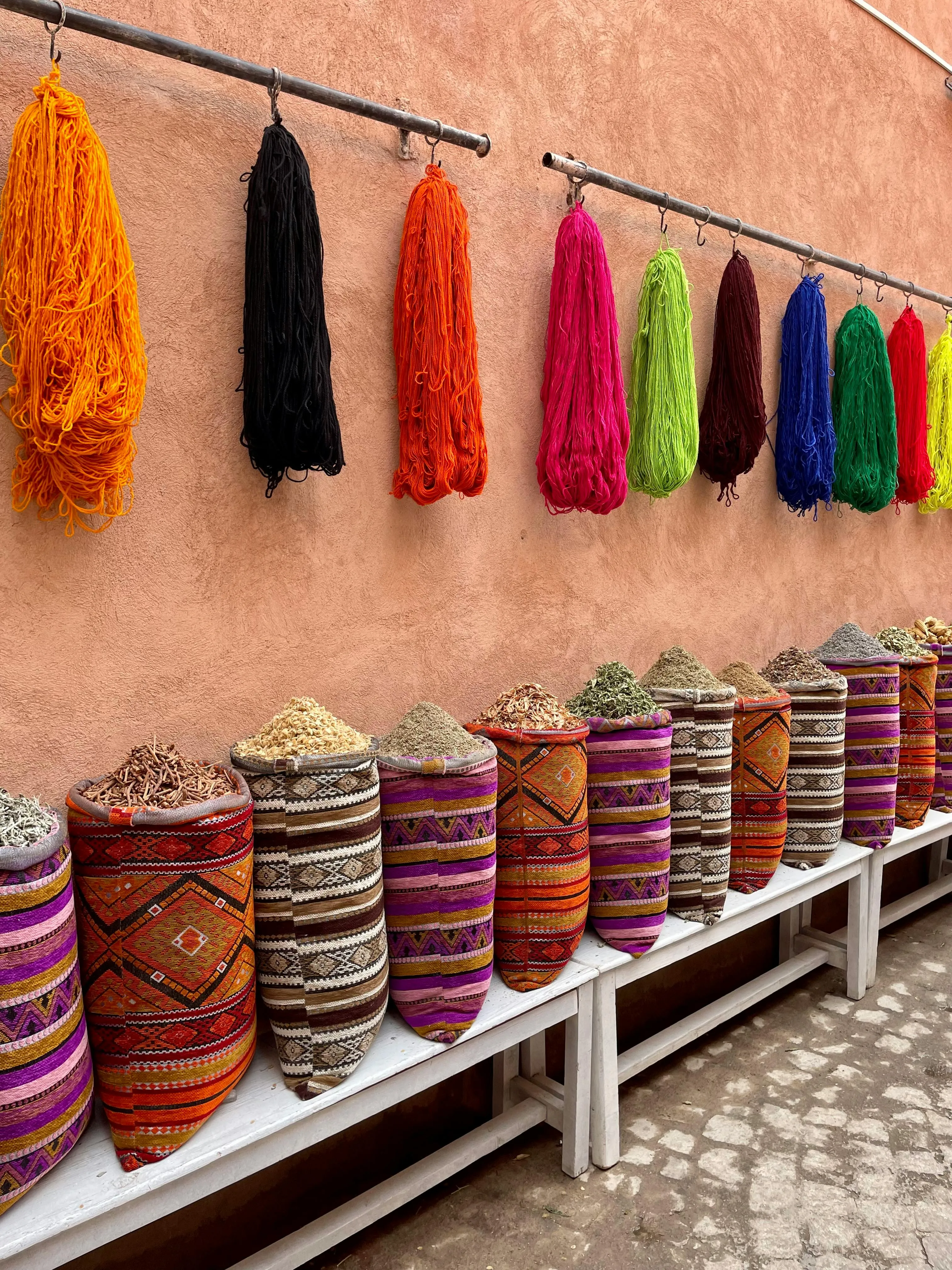
While the soft, lanolin-rich hair from sheep and camels was carefully reserved for weaving the plush floor coverings and blankets on vertical indoor looms, the exterior of the tent required something far more impenetrable. The women utilized the strong, coarse hair of their goat herds to weave the long, narrow, dark brown tent panels known as aflidj (plural iflidjen).
Because these panels were massive, they could not be woven on a standard upright loom. Instead, the women utilized a horizontal ground loom, called azetta n iflidjen, which ran completely parallel to the earth. To construct this loom, the women would pound four pegs directly into the desert floor and tie two cross-poles between them, working under the open sky.
The physical labor was immense. Each individual aflidj panel was at least two feet wide and a staggering thirty-two feet long. A medium-sized nomadic tent required approximately seven of these massive iflidjen to be sewn together, and a single panel could take a weaver three weeks of continuous, rhythmic labor to complete.
The Genius of Goat Hair
The use of goat hair for the exterior of the tent was an act of brilliant environmental engineering. Woven tightly together, the coarse fibers possessed natural, miraculous properties perfectly suited for the Sahara.
During the blistering heat of the day, the loose, breathable weave allowed the desert winds to pass through the fibers, circulating air and cooling the interior of the tent. However, when the rare, torrential desert rains arrived, the goat hair fibers would physically swell and expand as they absorbed the moisture. This swelling effectively sealed the tiny gaps in the weave, transforming the breathable canopy into a watertight, protective roof.
It was a living, breathing structure—an organic smart-home engineered centuries before the advent of modern architectural technology.
The Tirsal: Sacred Geometry and the Womb
Beyond its incredible utility, the nomadic tent was deeply infused with spiritual and feminine symbolism. In the vast, infinite, and often dangerous openness of the Saharan landscape, the tent provided an enclosed, concentrated space.
This bounded, protected environment was intimately associated with female fertility and containment. The tent was metaphorically viewed as a womb—a safe, enclosed sanctuary where life was nurtured and protected from the harsh exterior world.
The geometry of the tent itself heavily influenced the artistic language of the tribe. The interior of the Ait Khabbash tent was supported by two wooden pillars that crossed each other, known as tirsal. This distinct, crossed shape created sharp, triangular lines and chevrons. The women, acting as both architects and artists, absorbed this geometry. Some women explicitly noted that the chevron motifs they tattooed onto their skin and wove into their rugs deeply resembled the tirsal supports of their tents.
The tent poles, much like the tattoos on a woman's face, divided the space into two symmetrical halves, acting as a mirror image of the human body. Thus, the tent, the tattoo, and the rug became an interconnected visual language, constantly reinforcing the creative power of the women who built them.
Listen for the Loom's Echo
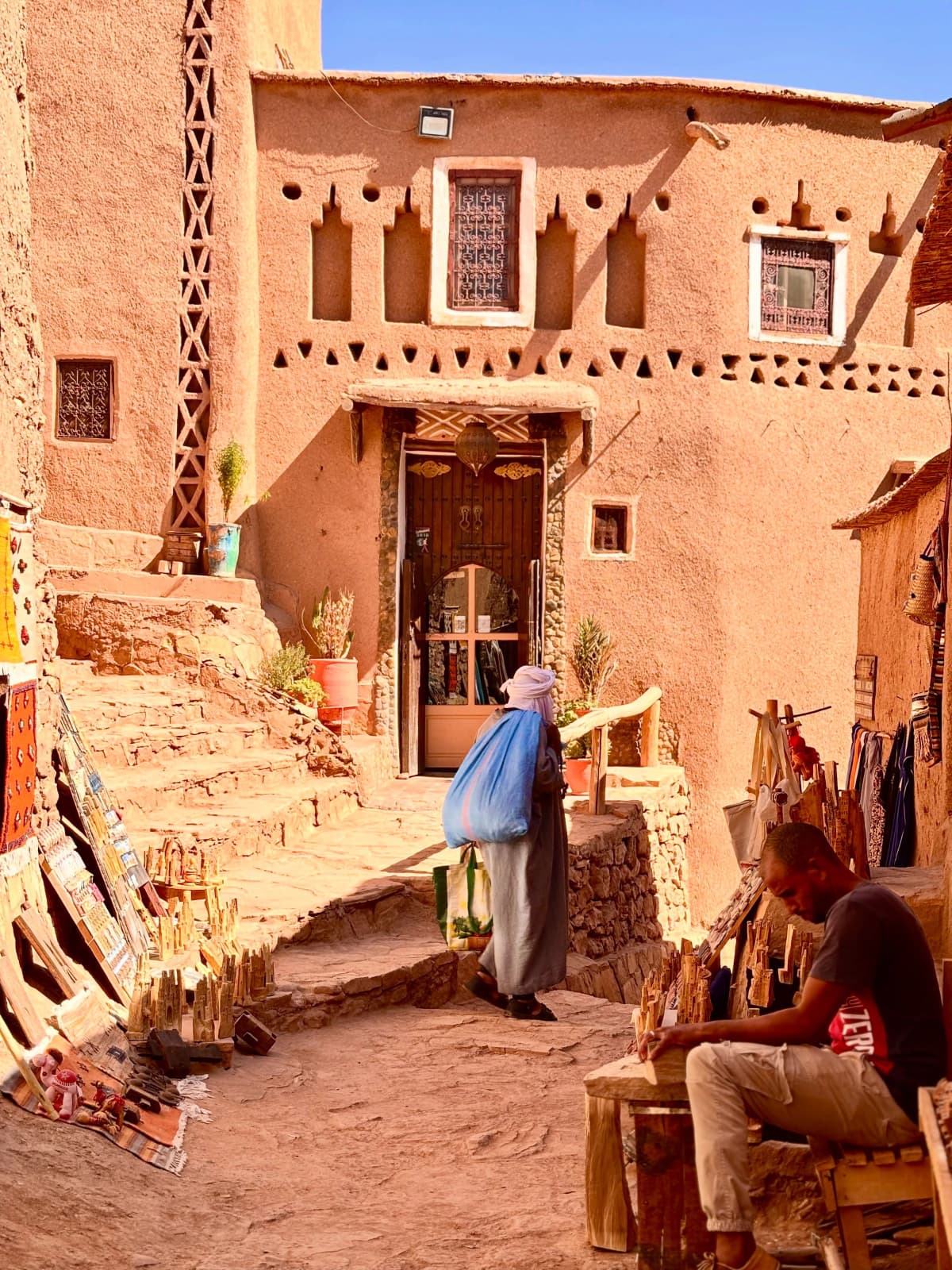
Today, the sweeping nomadic caravans of the past have largely faded. Beginning in the mid-20th century, due to shifting borders, devastating droughts, and colonial pressures, the majority of the Ait Khabbash and other nomadic tribes were forced to abandon their tents. They settled into permanent, earthen mud-brick homes in the oases and desert towns.
While the dark goat-hair tents may no longer dot the horizon in the thousands, the soul of the nomadic architect did not vanish. It simply moved indoors.
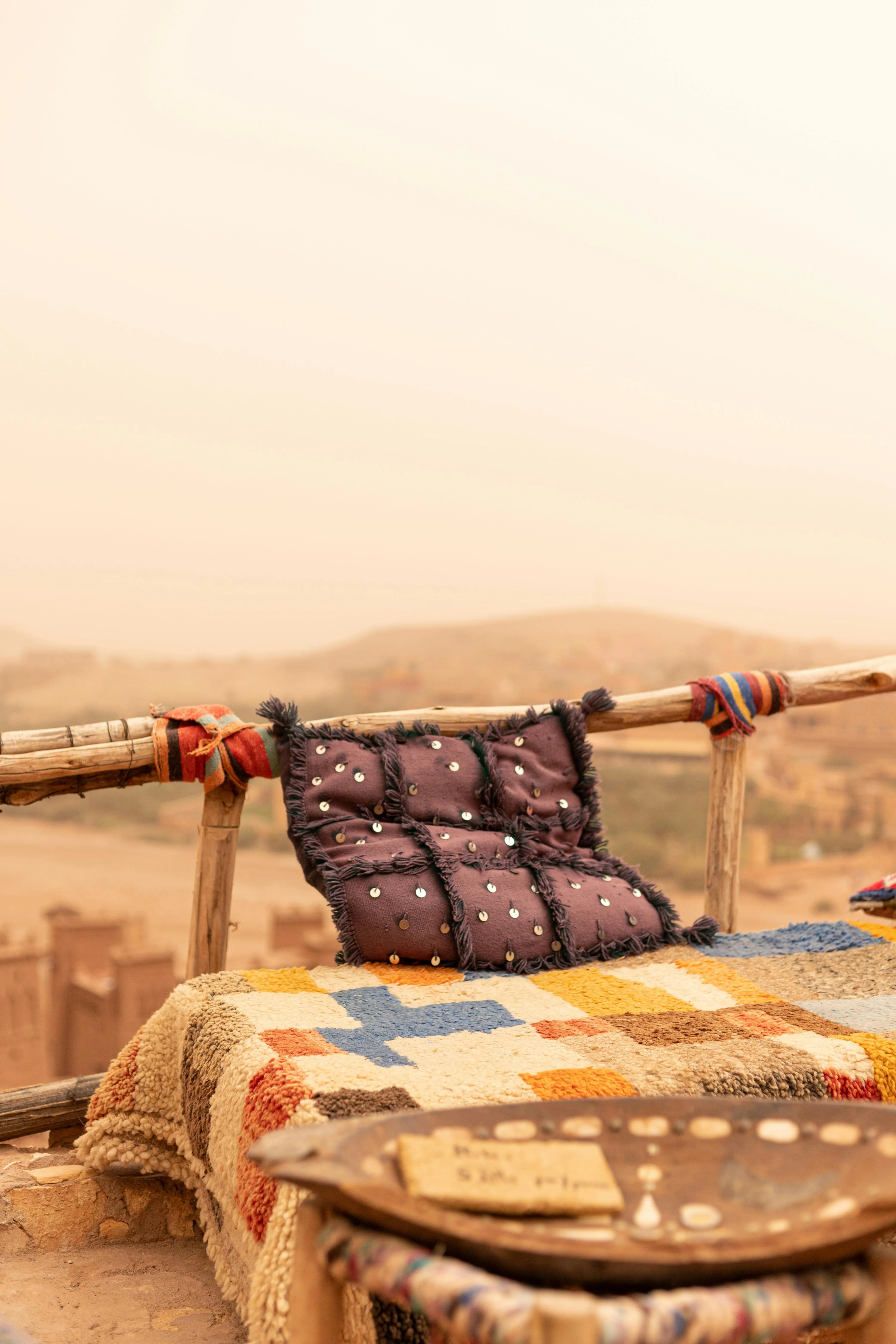
The women took the sacred geometry of the tirsal, the deep understanding of enclosed sanctuary, and their unparalleled weaving skills, and focused them entirely on the rugs, blankets, and tapestries that now adorn their permanent walls and floors. You can still hear the loom's echo in every vintage Moroccan rug we curate.
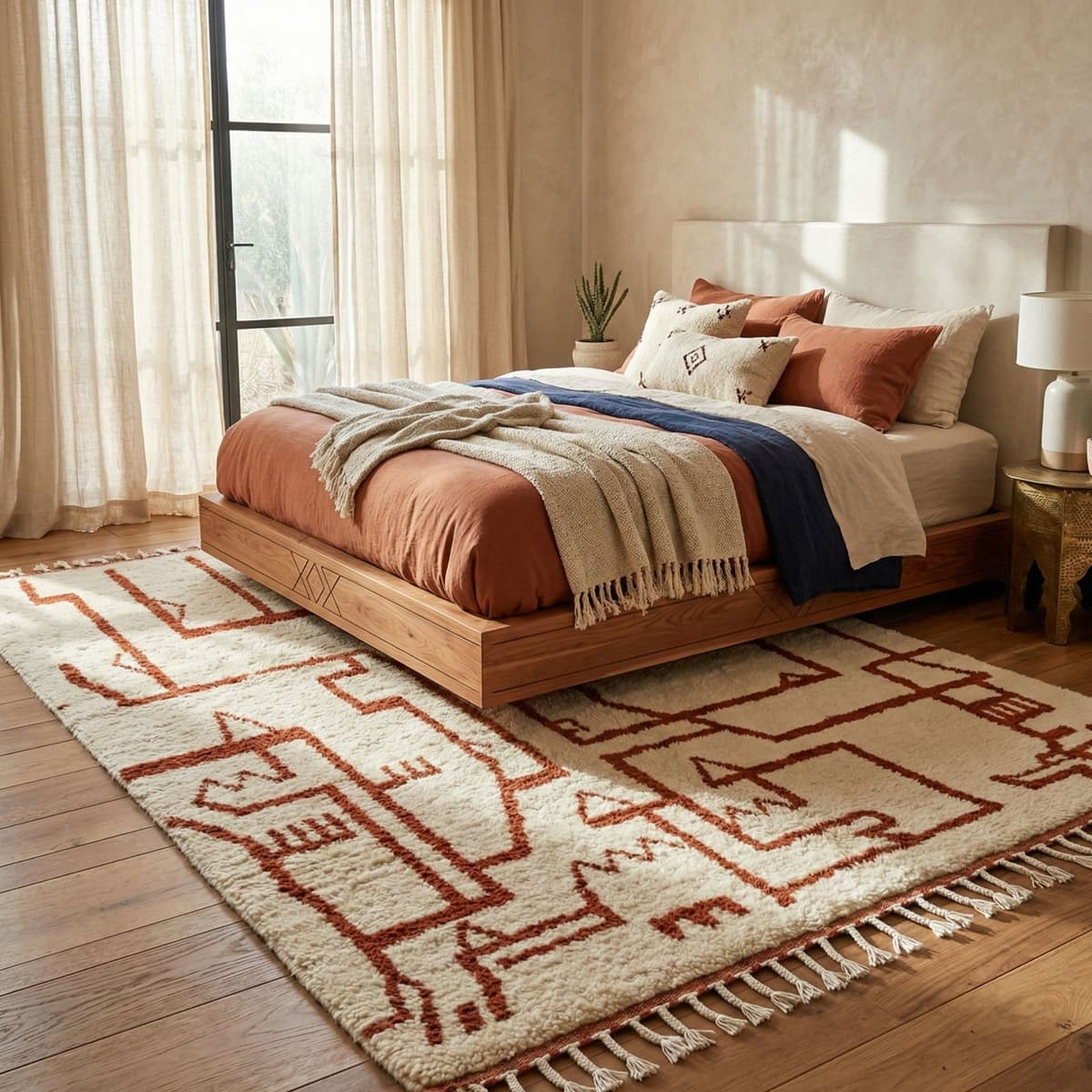
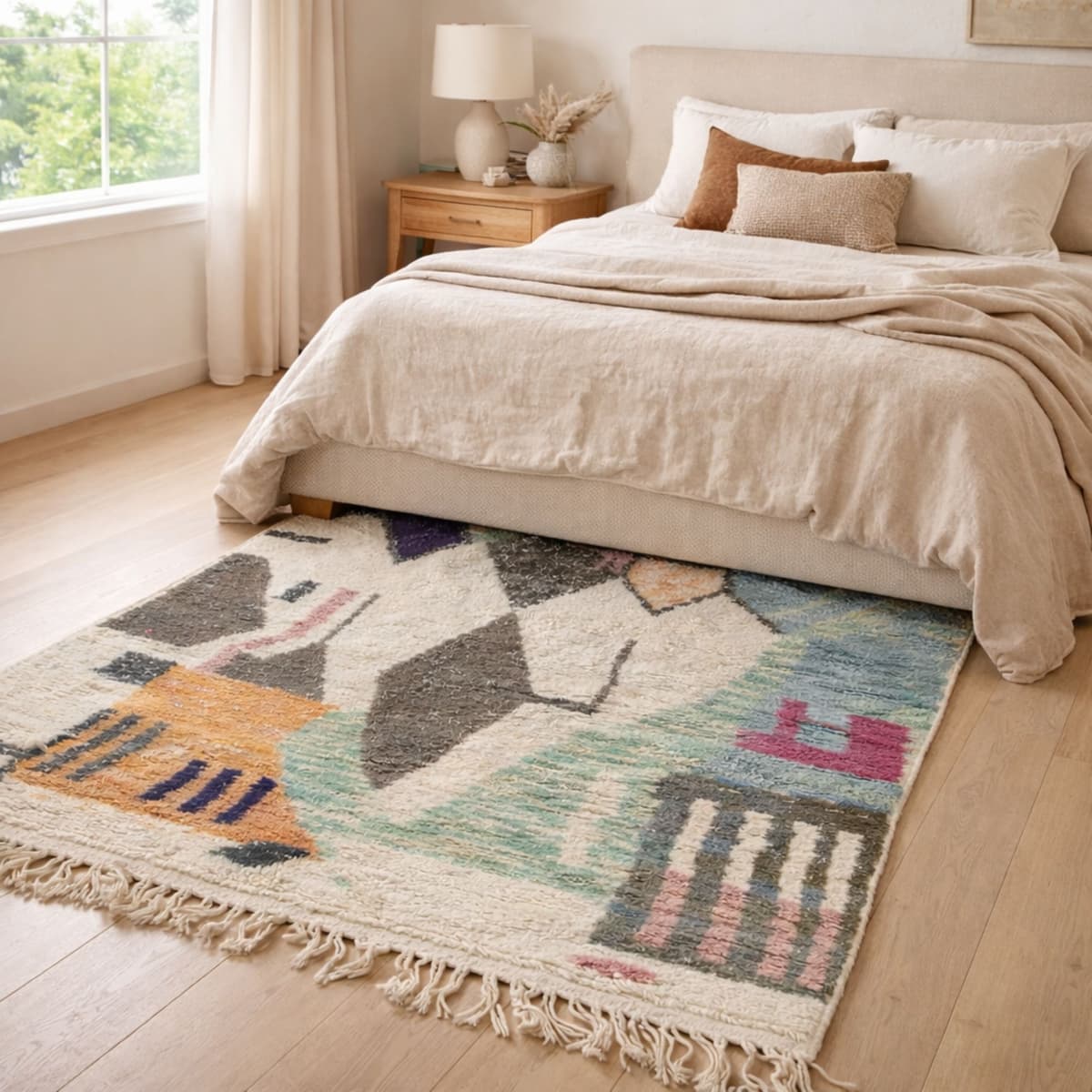
At Nomadinas, we invite you to bring this legacy of soft architecture into your own space. When you anchor a modern room with a heavy, hand-knotted Amazigh carpet, you are not merely placing a decorative object on the floor. You are laying down the foundation of a sanctuary. You are honoring the brilliant, resilient women of the desert who understood that the ultimate luxury is a home that protects, breathes, and beautifully endures.