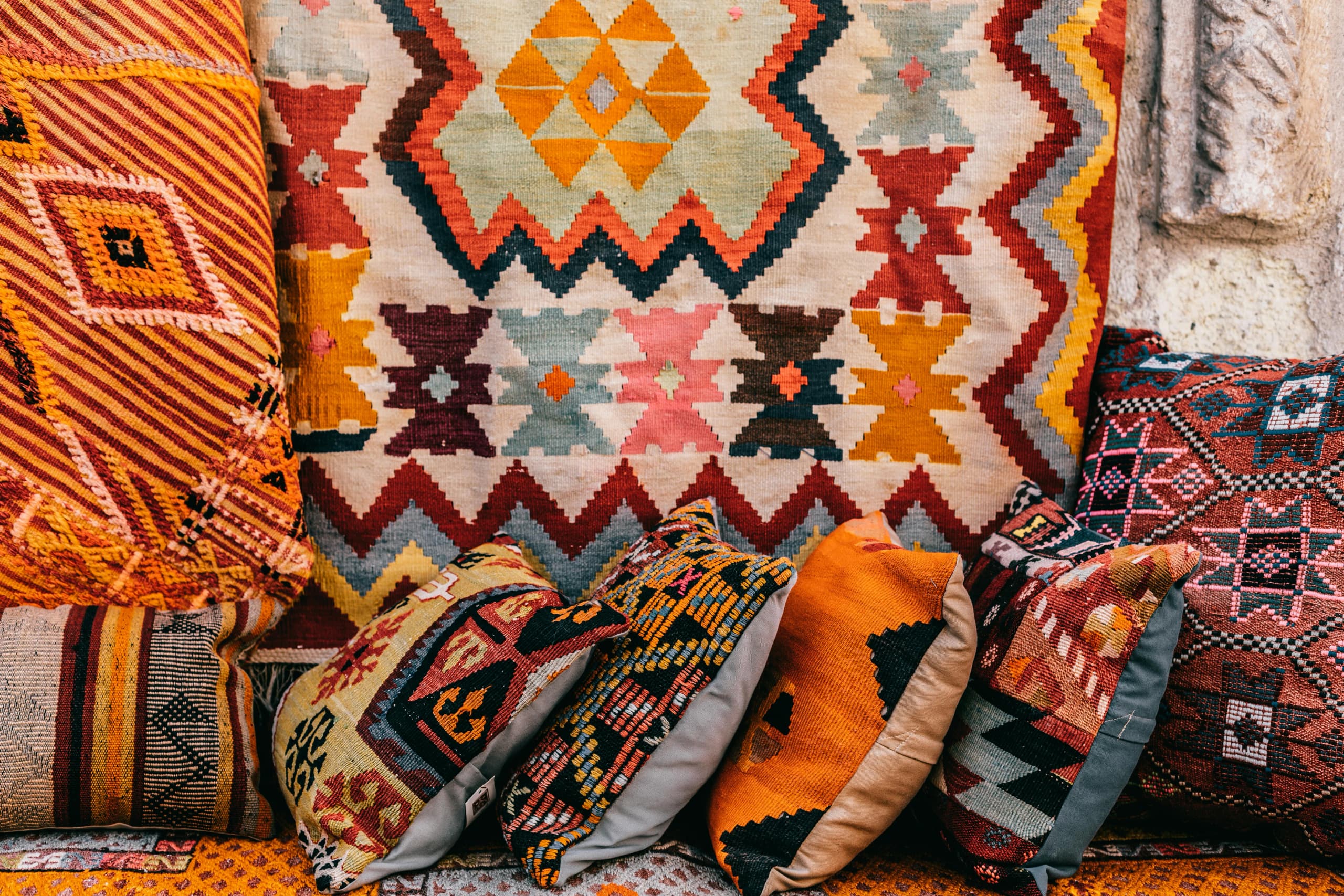
We live in an era of machine-made precision. From the sleek glass rectangles in our pockets to the laser-cut, mass-produced furniture in our homes, modern life is largely defined by exact symmetry and flawless replication. Yet, as our environments become increasingly perfect, a profound design counter-movement has taken hold in the luxury space: a desperate, beautiful craving for the human touch.
In high-end interior architecture, this craving is often described using the Japanese concept of wabi-sabi—the aesthetic appreciation of the imperfect, the impermanent, and the incomplete. It is a philosophy that finds profound elegance in raw textures, asymmetrical lines, and the graceful aging of natural materials.
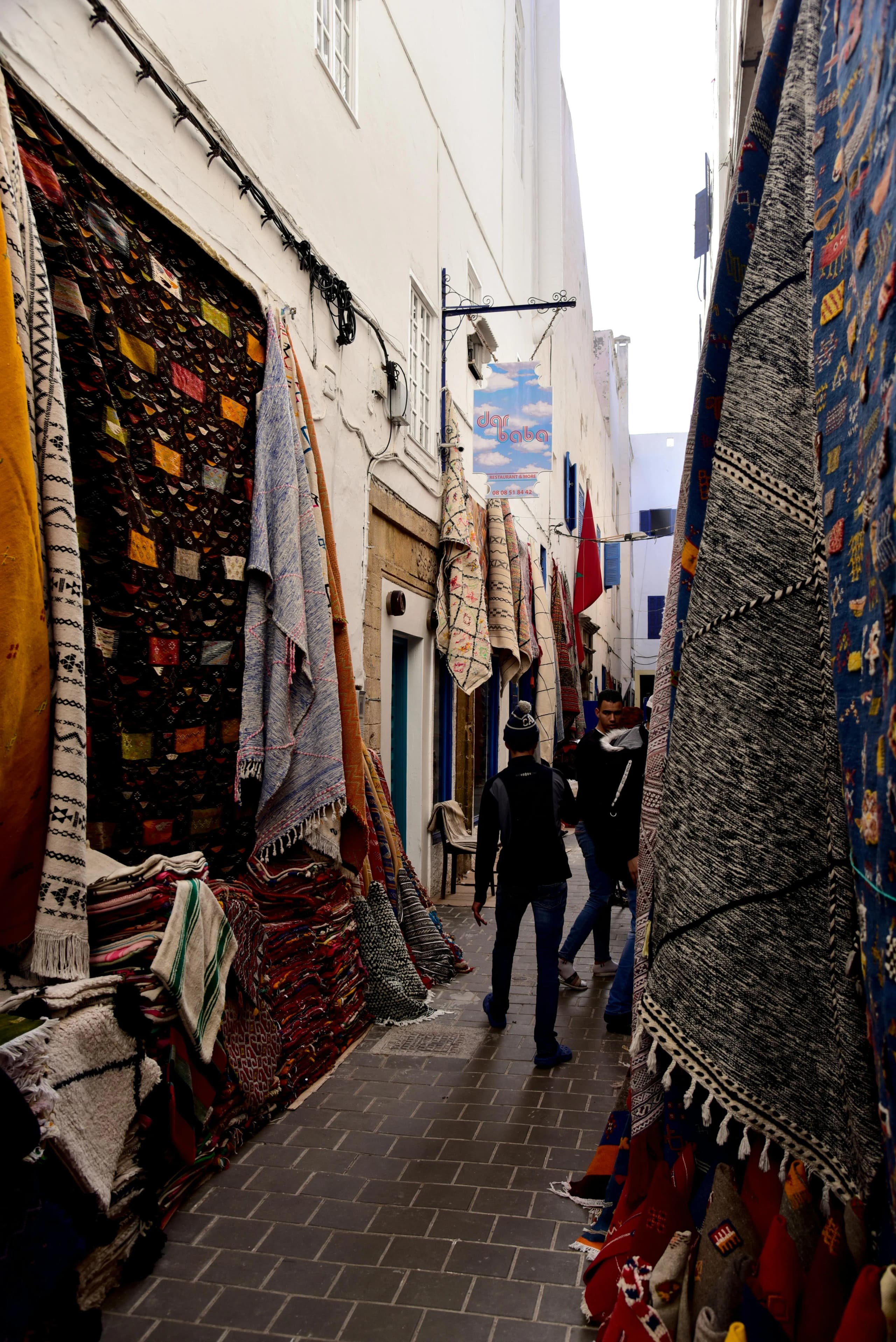
If you are looking for the ultimate expression of wabi-sabi in the textile world, you will not find it in a factory. You will find it in the remote, snow-capped peaks and sweeping valleys of the Moroccan Atlas Mountains. At Nomadinas, we believe that the true luxury of a vintage Amazigh (Berber) rug lies not in its perfection, but in its breathtaking, woven flaws.
The Myth of the Perfect Border
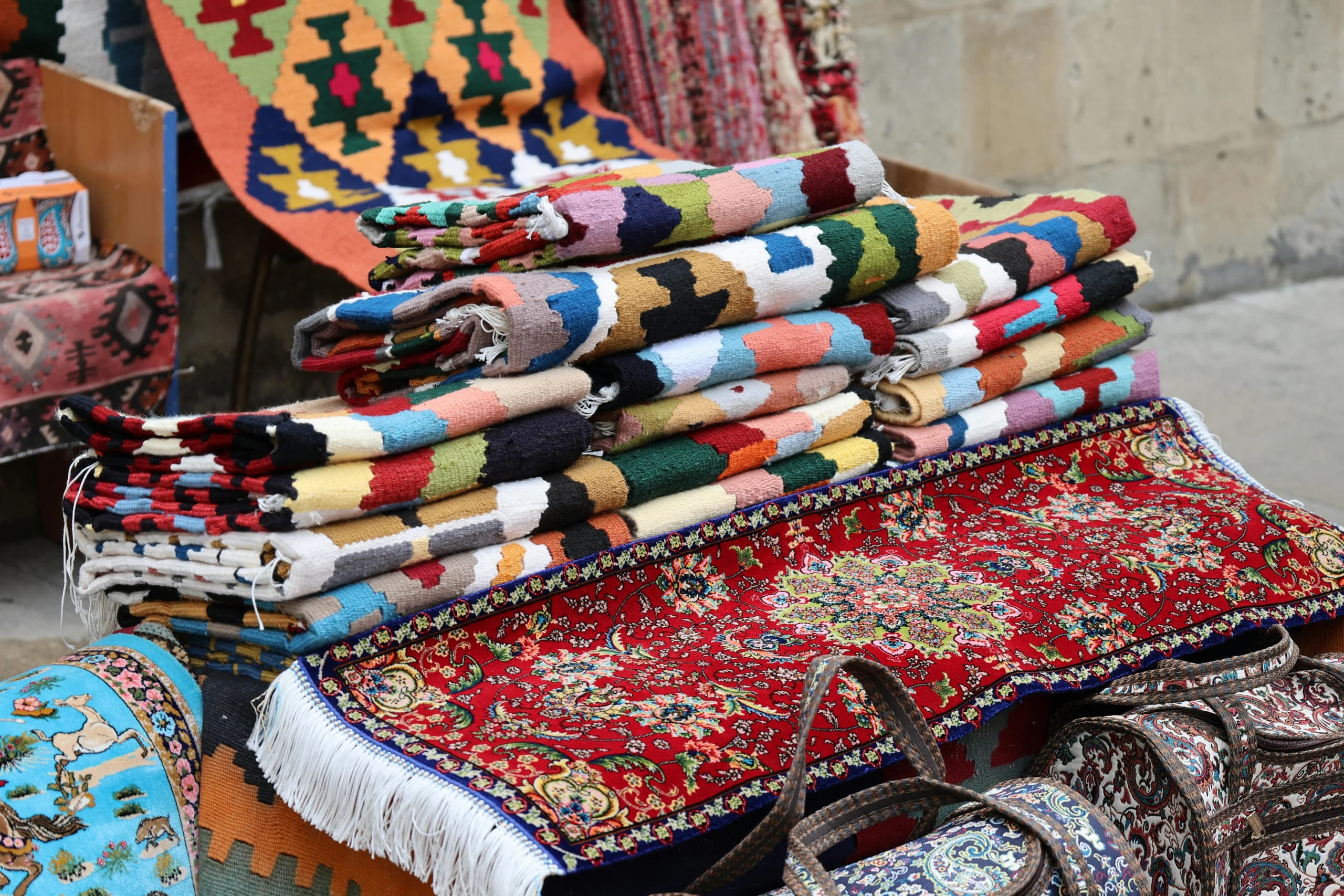
For centuries, the Western world was introduced to oriental rugs through the highly commercialized, urban weaving centers of Persia and the Levant. These classical carpets were (and still are) celebrated for their rigid, mathematical precision. They are plotted out on complex blueprints, featuring perfectly mirrored medallions and strict, confining borders that frame the design like a painting.
The rural weaving traditions of the Amazigh tribes represent a total rebellion against this rigidity.
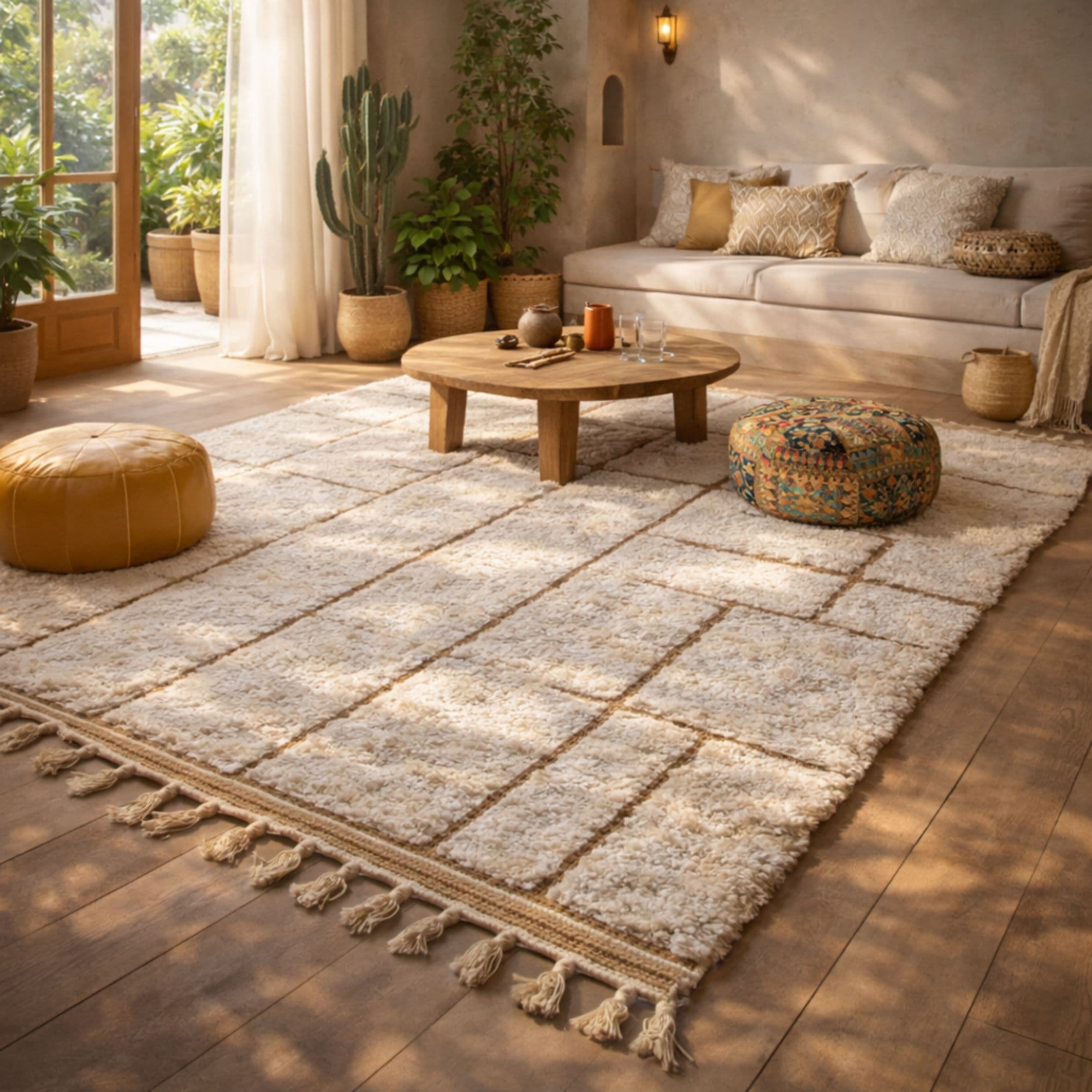
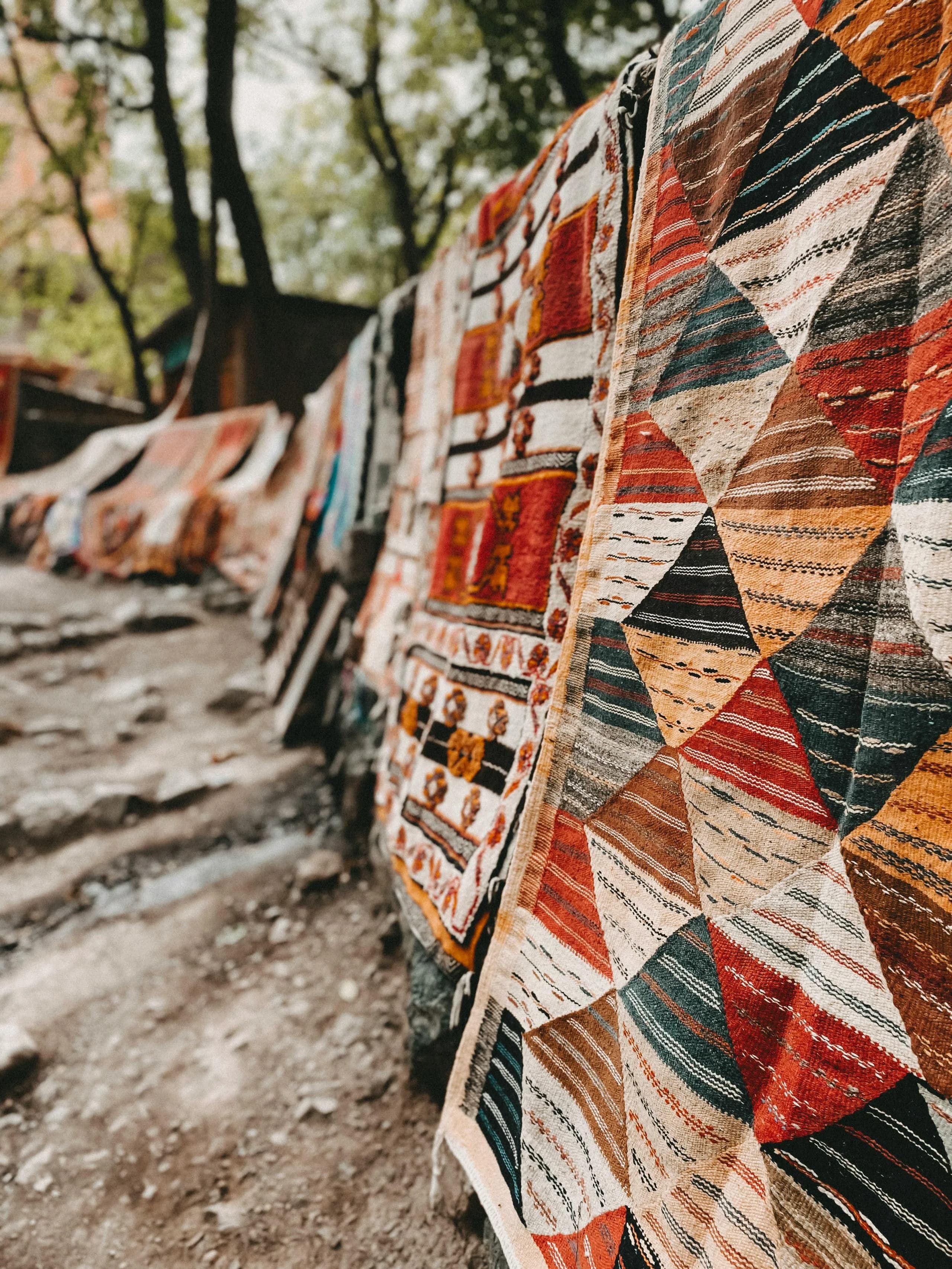
When you unroll an authentic vintage Beni Ouarain or a vibrant Boujad rug, you are immediately struck by a sense of visual freedom. The classic Beni Ouarain carpet design, for example, features a network of diamonds made of relatively fine black lines on a white ground, but borders are remarkably uncommon. The design simply bleeds off the edge of the textile.
This lack of a border is a philosophical statement. It implies that the pattern—and by extension, the energy of the home—is infinite. It is not caged; it is a continuous rhythm that extends outward into the room. This unbounded approach to space is precisely why mid-century and modern minimalist architects fell in love with Moroccan tribal art; it perfectly mirrored their own desires to break down walls and create open, flowing floor plans.
Weaving the Human Condition
Unlike urban rugs, an authentic vintage Moroccan carpet was rarely woven from a blueprint. The rural Amazigh woman worked from memory, intuition, and her immediate emotional landscape. Because a single rug could take many months—or even over a year—to complete, it essentially became a woven diary of that specific period in her life.
This is where the magic of asymmetry is born.
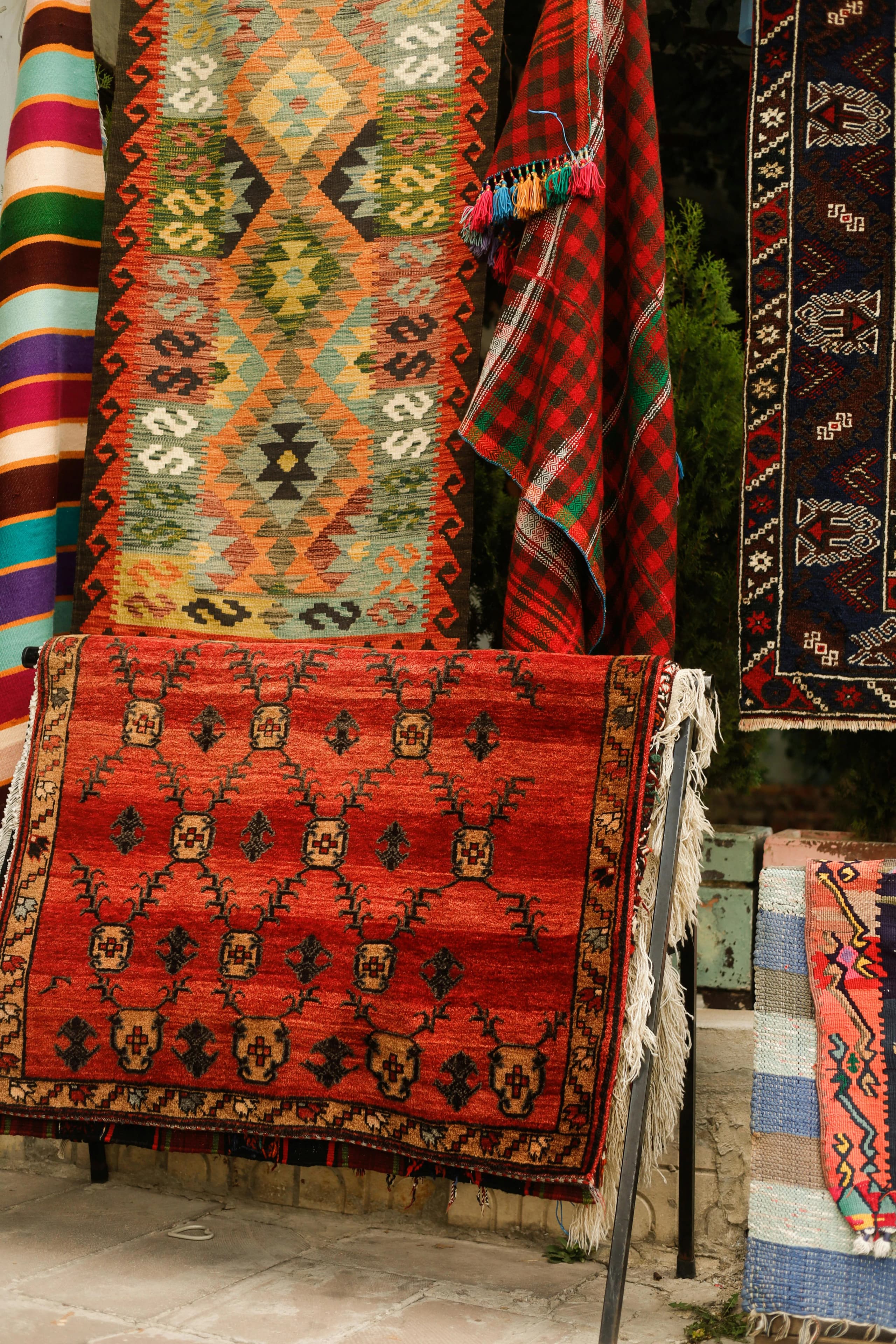
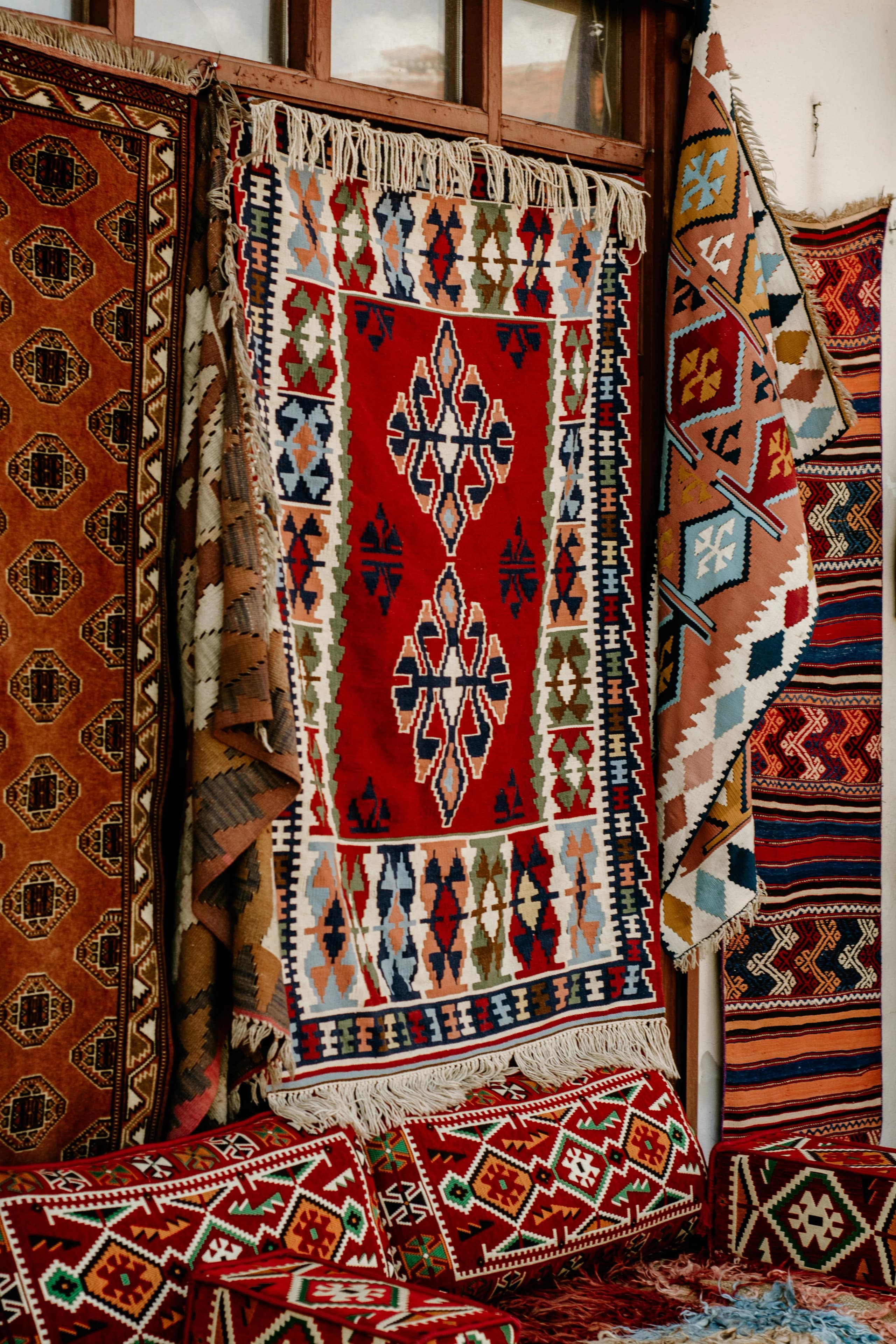
As you trace the lines of a vintage tribal rug, you might notice that a pattern of neat, repeating diamonds suddenly grows larger on one side. A line might zigzag unexpectedly, or a block of faded pink might abruptly shift into a deep magenta. To a factory inspector, these are errors. To a collector, they are the heartbeat of the textile.
These shifts occurred because the weaver’s tension changed as her pregnancy advanced, or because the harsh winter gave way to spring, altering the natural light in her home. Perhaps she ran out of a specific batch of dyed wool and simply continued with what the earth provided next. Or, most profoundly, the “flaw” was placed there deliberately. In Amazigh culture, as in many traditional societies, absolute perfection is a trait reserved exclusively for the Divine. To weave a perfectly symmetrical rug is considered an act of supreme arrogance. The deliberate flaw is an act of spiritual humility.
Abrash: The Paintbrush of Time
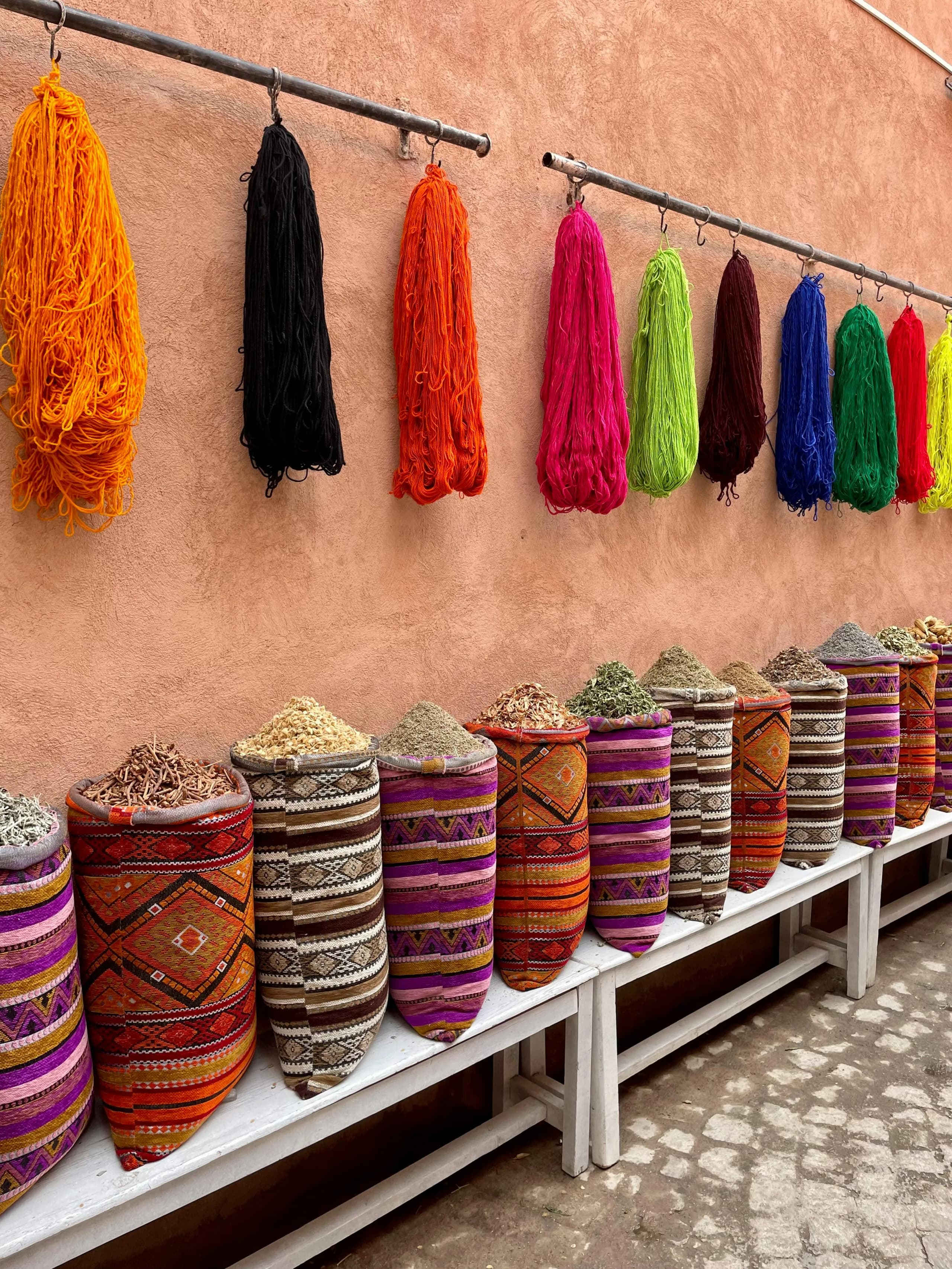
The beauty of imperfection extends deeply into the colors of the rug. When working with natural botanicals like madder root, wild saffron, and indigo, absolute color uniformity is impossible to achieve.
Hand-spun wool absorbs natural dyes unevenly. Furthermore, a large rug requires the weaver to dye her wool in multiple, small-batch vats over several months. Each vat will have slight variations in temperature, mineral content from the water, and botanical concentration.
This results in abrash—the stunning, watercolor-like horizontal bands of varying color tones that wash across the surface of a vintage rug. Abrash gives the textile an incredible sense of depth and movement. It ensures that the rug does not look flat or synthetic. Over decades of use, as the natural dyes gently fade in the sun, this abrash becomes even more pronounced, turning the rug into a living, evolving piece of art.
Styling Imperfection in a Modern Space
Integrating the wabi-sabi aesthetic of a Moroccan rug into a luxury interior is a masterclass in establishing tension.
The most breathtaking rooms are built on contrast. If your space features the sharp, clean lines of contemporary architecture—polished concrete floors, stark white walls, and sleek, modular furniture—it desperately needs a counterweight to prevent it from feeling sterile.
Dropping a deeply textured, wildly asymmetrical vintage Boujad or a heavy, irregular Beni Ouarain into the center of that space immediately grounds the room. The rug introduces a narrative of human labor, ancient history, and earthy warmth. It gives the eye permission to relax. It tells the inhabitants that this is not a museum to be observed, but a sanctuary meant to be lived in.
The Nomadinas Promise
In a market increasingly flooded with machine-made replicas that use lasers to print “perfectly imperfect” tribal patterns onto synthetic fibers, the true, raw soul of Moroccan weaving is more precious than ever.
At Nomadinas, we do not curate for perfection; we curate for humanity. Every vintage piece we source directly from the Atlas Mountains and the surrounding plains carries the unadulterated DNA of its maker. We invite you to embrace the asymmetrical lines, to run your hands over the heavy, hand-spun wool, and to discover the profound luxury of a masterpiece that is beautifully, perfectly flawed.