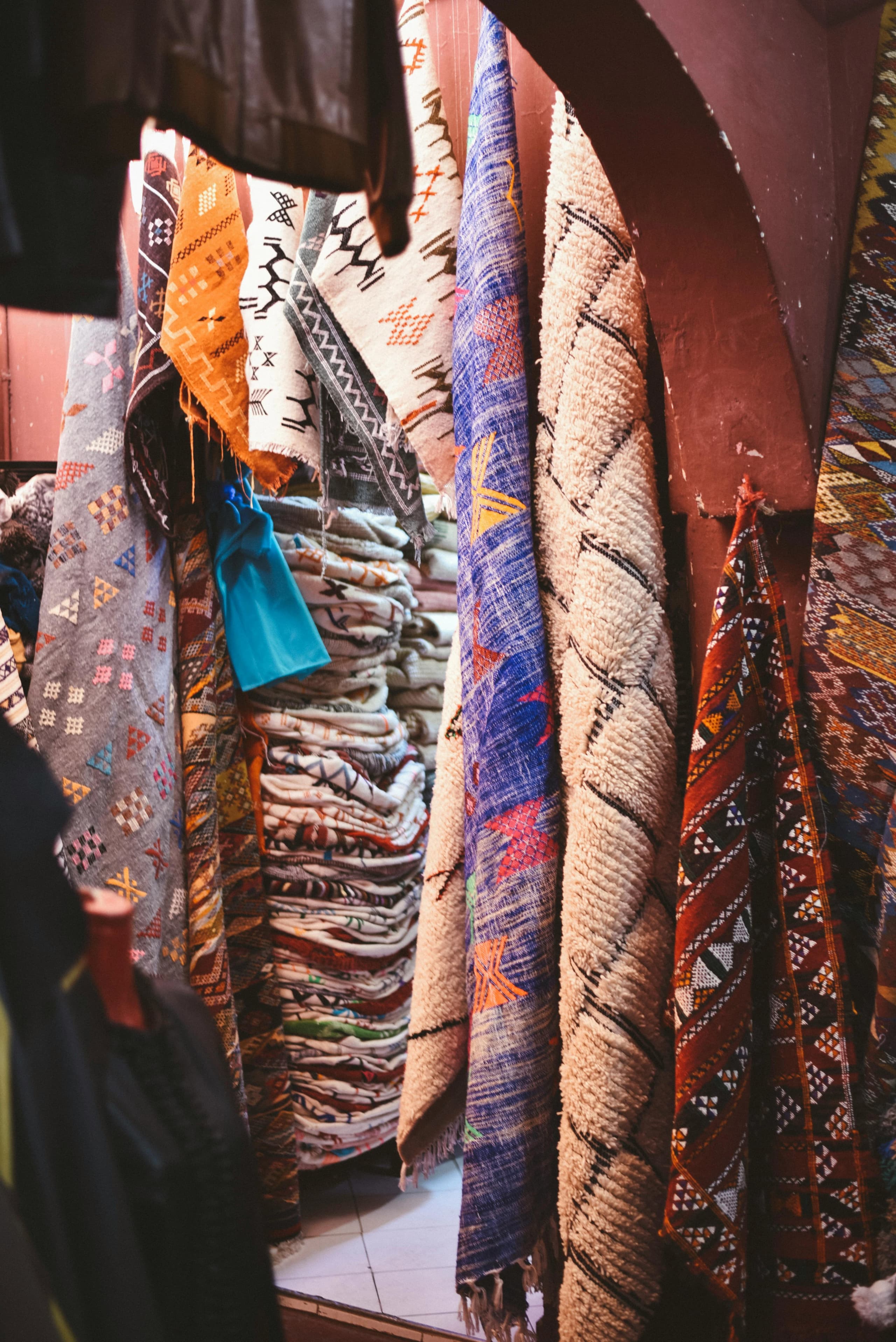
> Did you know? The Boucherouite style emerged in the 1950s and 1960s when severe droughts in Morocco decimated sheep herds, forcing weavers to innovate with recycled materials. Today, authentic vintage Boucherouite rugs from this era sell for $2,000-$10,000+ at auction — a testament to their status as pioneering works of sustainable abstract art. Each rug uses 10-20 kg of recycled fabric, diverting textile waste from landfills while creating vibrant, one-of-a-kind compositions.
In the lexicon of high-end interior design, the word “luxury” is traditionally synonymous with scarcity and pristine raw materials. We prize the un-dyed, lanolin-rich wool of the high mountains and the flawless silk of imperial cities. But what happens when the raw materials vanish? What happens when a deeply ingrained artistic tradition is forced to adapt to a rapidly changing world?
In the rural villages of Morocco, necessity birthed a revolution.
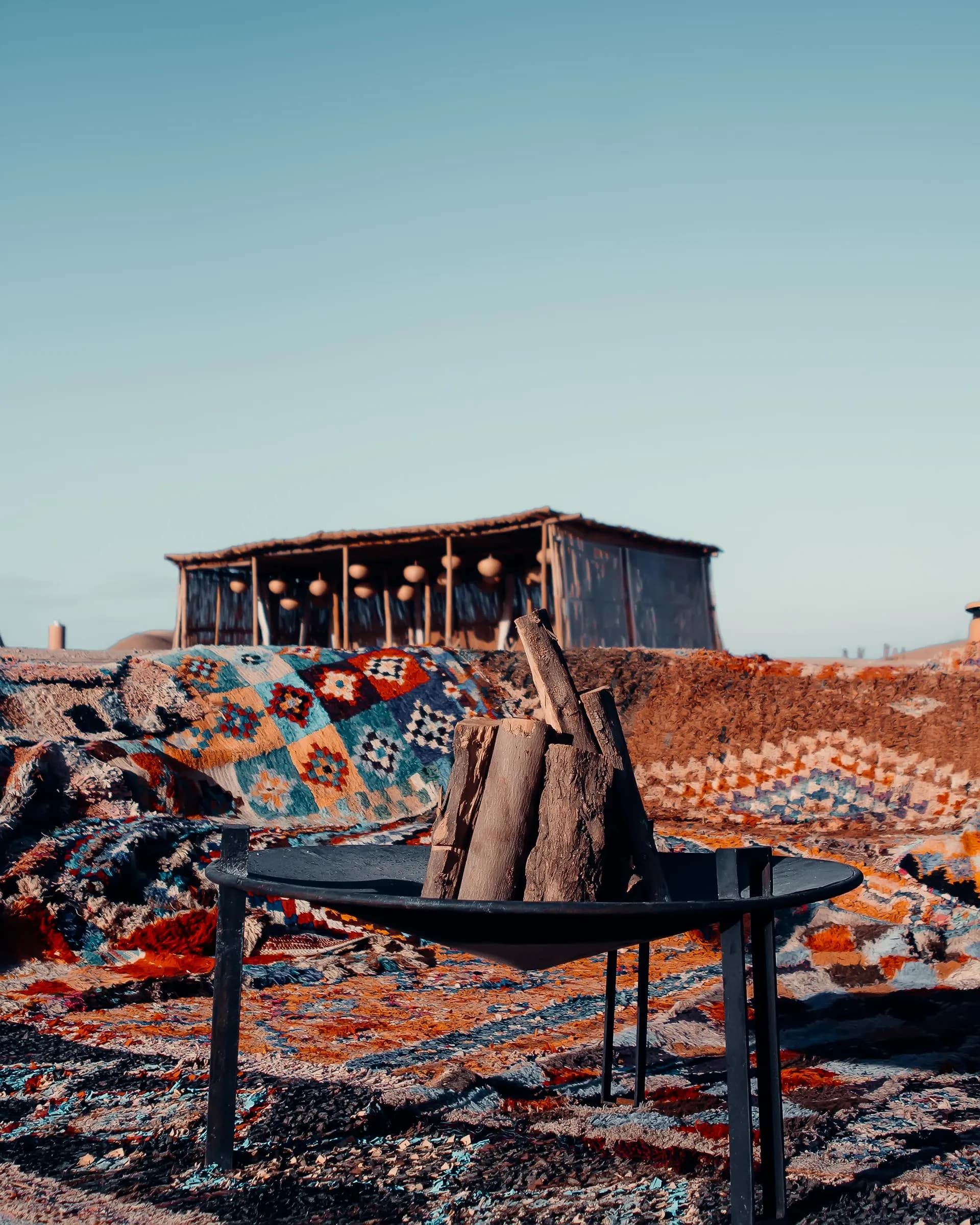
Enter the Boucherouite (pronounced boo-shay-reet)—a style of rug that shattered the rules of traditional Amazigh weaving. Woven entirely from recycled remnants of fabric, these textiles abandoned the muted, earthy tones of traditional wool in favor of euphoric, unbridled color. At Nomadinas, we view the Boucherouite not just as a sustainable decor choice, but as a triumph of female ingenuity. It is a woven rebellion against the elements, and it has fundamentally reshaped the landscape of contemporary tribal art.
The Decline of the Flocks and the Birth of an Era
To understand the explosive creativity of the Boucherouite, we must look to the shifting sands of the 20th century. For centuries, the Amazigh (Berber) tribes lived a nomadic or semi-nomadic existence, relying heavily on their herds of sheep and goats for both sustenance and the wool necessary for their legendary carpets.
However, as political borders shifted and devastating droughts swept across the Moroccan landscape, many nomadic herders were forced to abandon their ancestral way of life. The transition from a roaming existence to a sedentary lifestyle in villages resulted in a severe decline in livestock. Natural wool, which was once abundant and freely harvested from the family's own flocks, became an increasingly rare and expensive commodity.
Faced with bare looms, the women of the rural regions refused to stop creating. Instead of looking to the sheep, they looked to their own homes and local markets. They began crafting rugs from recycled pieces of fabric, utilizing whatever materials they could find: discarded cotton garments, scraps of wool, and even synthetic nylon. In eastern Morocco, tribes like the Aït Khebbach pioneered a brilliant technique of purchasing cheap, second-hand sweaters from local markets, meticulously “deknitting” them to harvest the vibrantly dyed yarn.
A Canvas Unchained: The Aesthetics of the Scraps
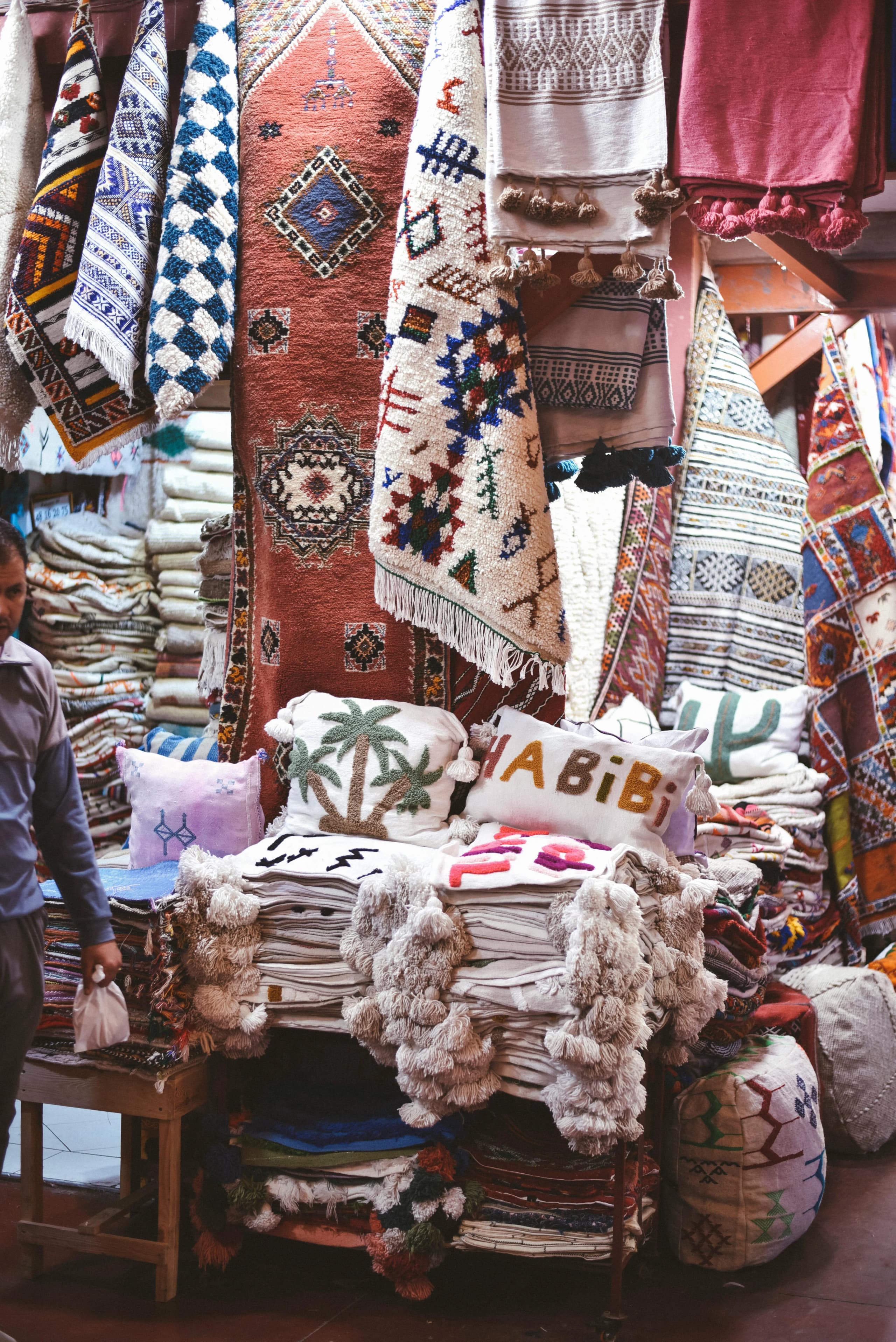
The shift from natural wool to recycled fabric sparked a period of unprecedented, explosive creativity. For generations, traditional rug design was governed by specific tribal rules, utilizing the natural ivory, brown, and black tones of the sheep, or dyes extracted slowly from local botanicals.
The introduction of pre-dyed, synthetic, and commercial fabrics completely unchained the weavers. Without the stylistic constraints of the past, the women experienced a rare freedom of expression, leading to the creation of truly unforeseen rugs. They became avant-garde designers, expertly blending impossible color palettes and textures.
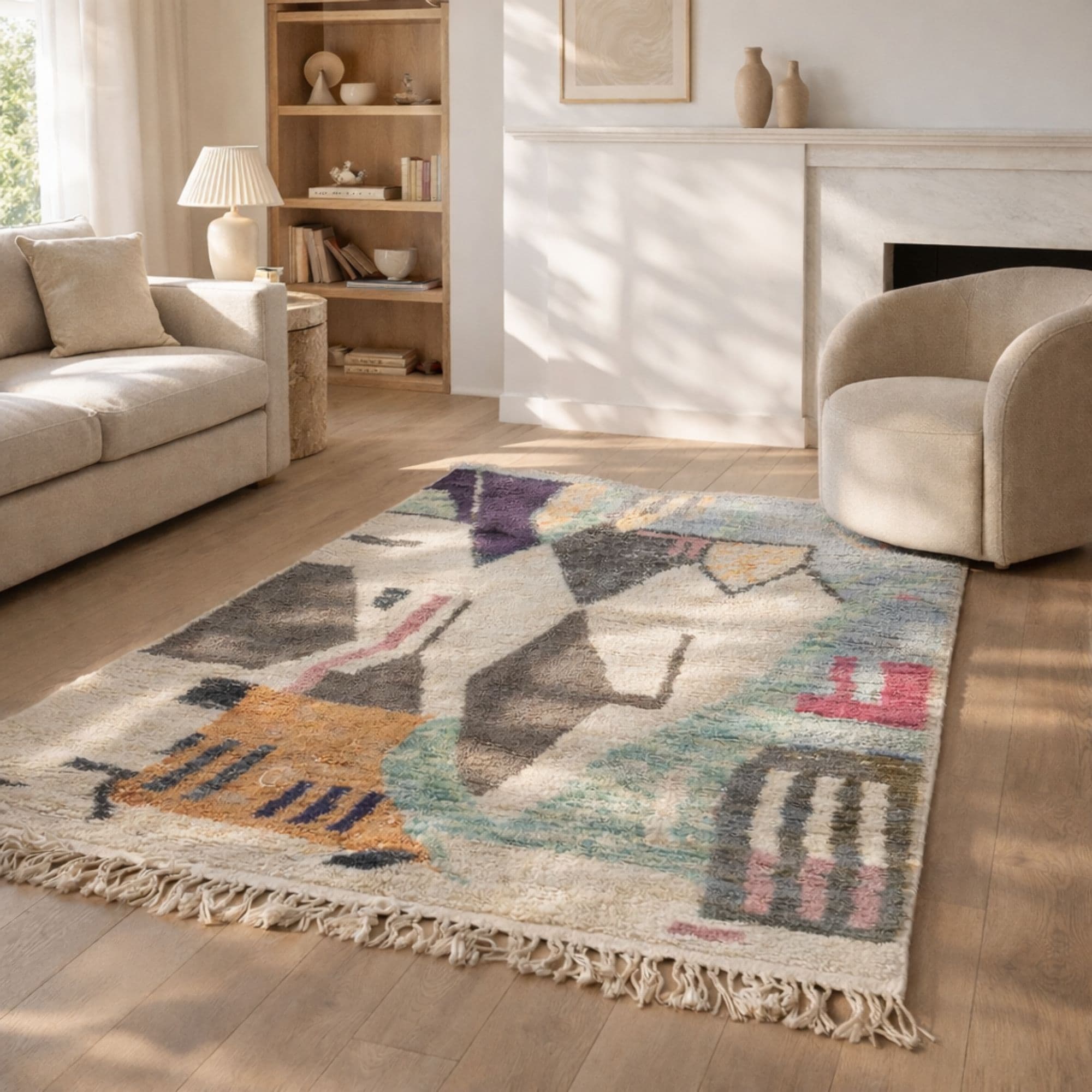
Boucherouite carpets are characterized by their deeply abstract and intensely colorful patterns, which often appear random and brilliantly spontaneous. While traditional Moroccan rugs often rely on strict geometric symmetry, the Boucherouite is a celebration of joyous asymmetry. Neon pinks collide with deep purples; bright, synthetic blues are interwoven with muted, patterned cotton scraps.
Because the materials used vary so wildly in thickness and texture, the surface of a Boucherouite rug is incredibly dynamic. The pile is often softer and remarkably less regular than other traditional carpets, creating a deeply tactile, multi-dimensional landscape underfoot.
The Emotional Weight of the Upcycled
There is a profound, poetic beauty in the Boucherouite. It is a textile built entirely from discarded memories. A single rug might contain the unraveled threads of a child's outgrown sweater, the torn cotton of a worn-out dress, and the nylon remnants of a market stall.
When the weaver ties these disparate scraps into the warp of her loom, she is elevating the mundane into the sacred. She is proving that beauty is not inherently tied to expensive raw materials, but to the vision and the hands of the artist. In a globalized world obsessed with mass consumption and rapid disposal, the Boucherouite stands as the ultimate statement of sustainable, emotional luxury. It is the original eco-chic design.
Styling the Boucherouite in the Modern Home
The integration of a Boucherouite rug into a luxury interior is a masterclass in establishing visual tension. Because these rugs possess such a saturated intensity and chaotic, abstract energy, they act as the undisputed focal point of any room they inhabit.
They are the perfect antidote to sterile, overly minimalist spaces. Dropping a wildly colorful, irregular Boucherouite into a room defined by sharp modern architecture, neutral walls, and sleek furniture instantly humanizes the environment. It injects a sense of playfulness, history, and raw artistic joy. Furthermore, because of their softer, varied textures, they are exceptional pieces for layering, or even for hanging on the wall as striking, large-scale works of contemporary abstract art.
At Nomadinas, we curate our Boucherouite collection with an eye for the extraordinary. We seek out the pieces that sing with spontaneous energy and authentic history. When you bring one of these recycled masterpieces into your home, you are not just making a bold design statement; you are honoring the resilience, the survival, and the unyielding creative spirit of the Moroccan matriarch.