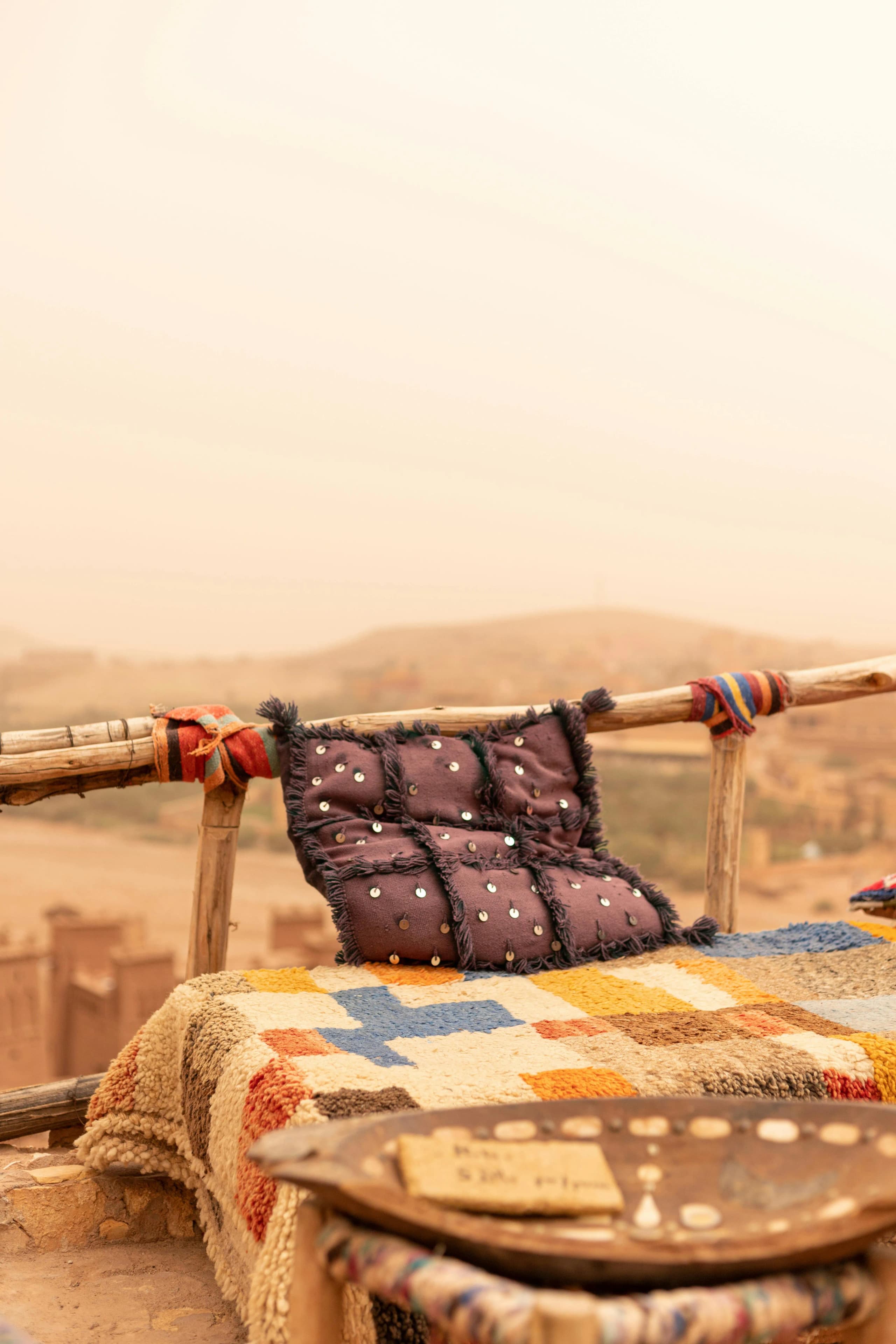
When we envision the Sahara, our minds conjure a landscape of profound monochromatic beauty—endless waves of ochre sand, stark shadows, and the bleached vastness of the sun. Yet, out of this desolate environment emerged one of the most vibrant, color-saturated artistic movements in contemporary Moroccan weaving.
At Nomadinas, we believe that true luxury is born of resilience. The story of the Aït Khebbach tribe and their revolutionary "Desert Design" is a testament to human ingenuity. It is a narrative that challenges the boundaries of traditional tribal art, proving that true craftsmanship is not frozen in the past, but is a living, breathing response to the changing world.
The End of the Nomadic Trail
The Aït Khebbach, a fierce Berber tribe belonging to the Aït Atta confederacy, historically led a vast nomadic existence across the Saharan plains, stretching from the Tafilalet oasis in Morocco into Algeria. For centuries, their lives were dictated by the movement of their herds and the search for grazing land.
However, the 20th century brought insurmountable challenges. In 1956, newly drawn borders severed them from two-thirds of their ancestral territory, forcing them to regroup in the harsh Kem-Kem Hamada region. By the early 1970s, a devastating drought decimated their livestock, forcing the last of the nomadic herders to abandon their tents and settle in rudimentary earthen villages.
With the decline of their flocks, the women of the Aït Khebbach faced a profound artistic crisis. Natural wool, the lifeblood of Amazigh weaving, became increasingly rare and expensive. But a true artist does not stop creating when her medium vanishes; she innovates.
The Alchemy of the Second-Hand Sweater
Without the means to acquire natural wool, the women turned their gaze to the bustling second-hand clothing markets of Rissani. They began to purchase cheap, commercially manufactured sweaters made of synthetic fibers and cotton.
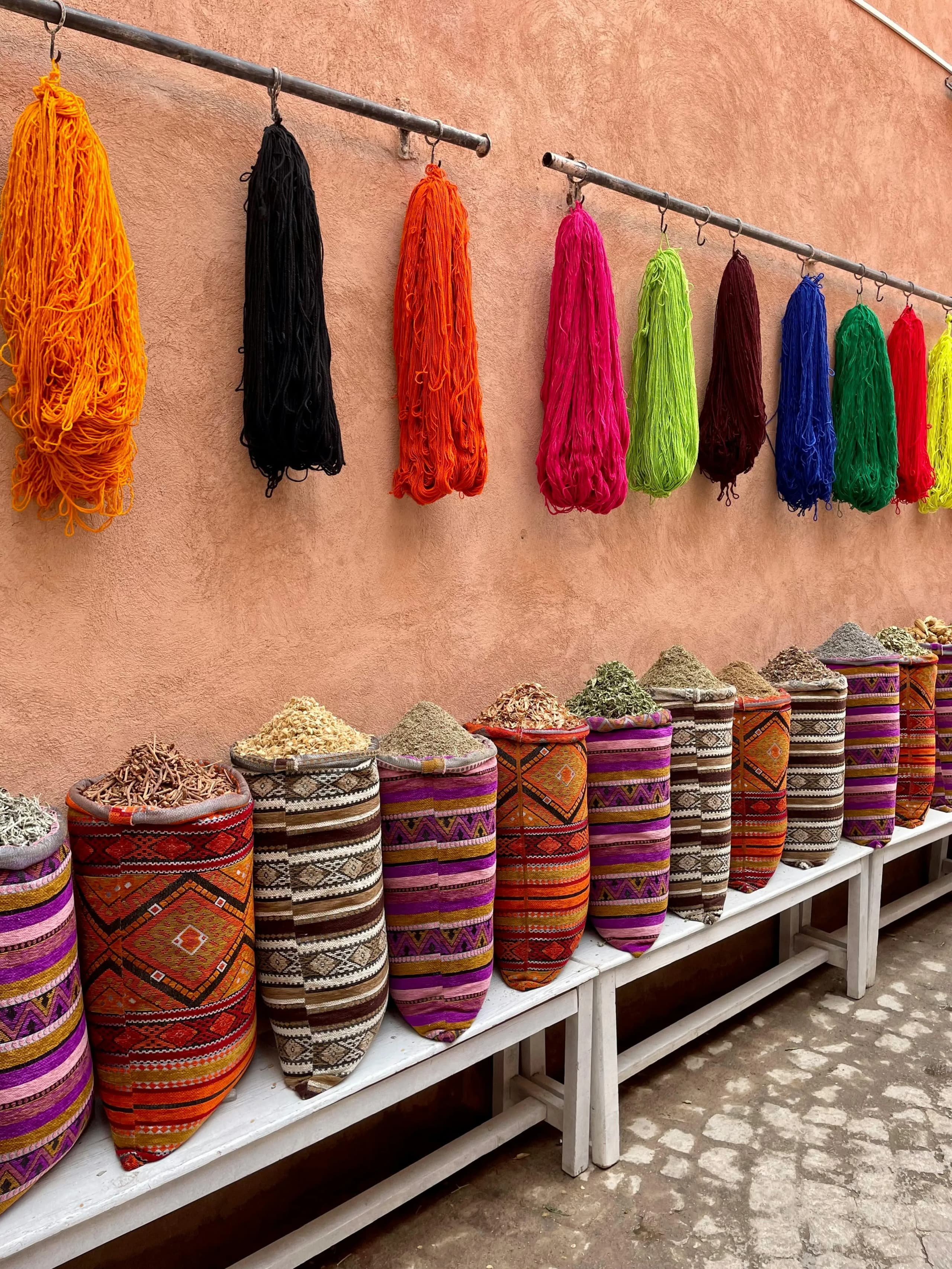
In a breathtaking act of creative recycling, the weavers meticulously "deknitted" these garments, unraveling them to harvest the vibrantly dyed yarn. At first, they incorporated their own old clothing to introduce subtle colored patterns into their remaining natural wool rugs. But soon, their compositions became entirely polychromatic.
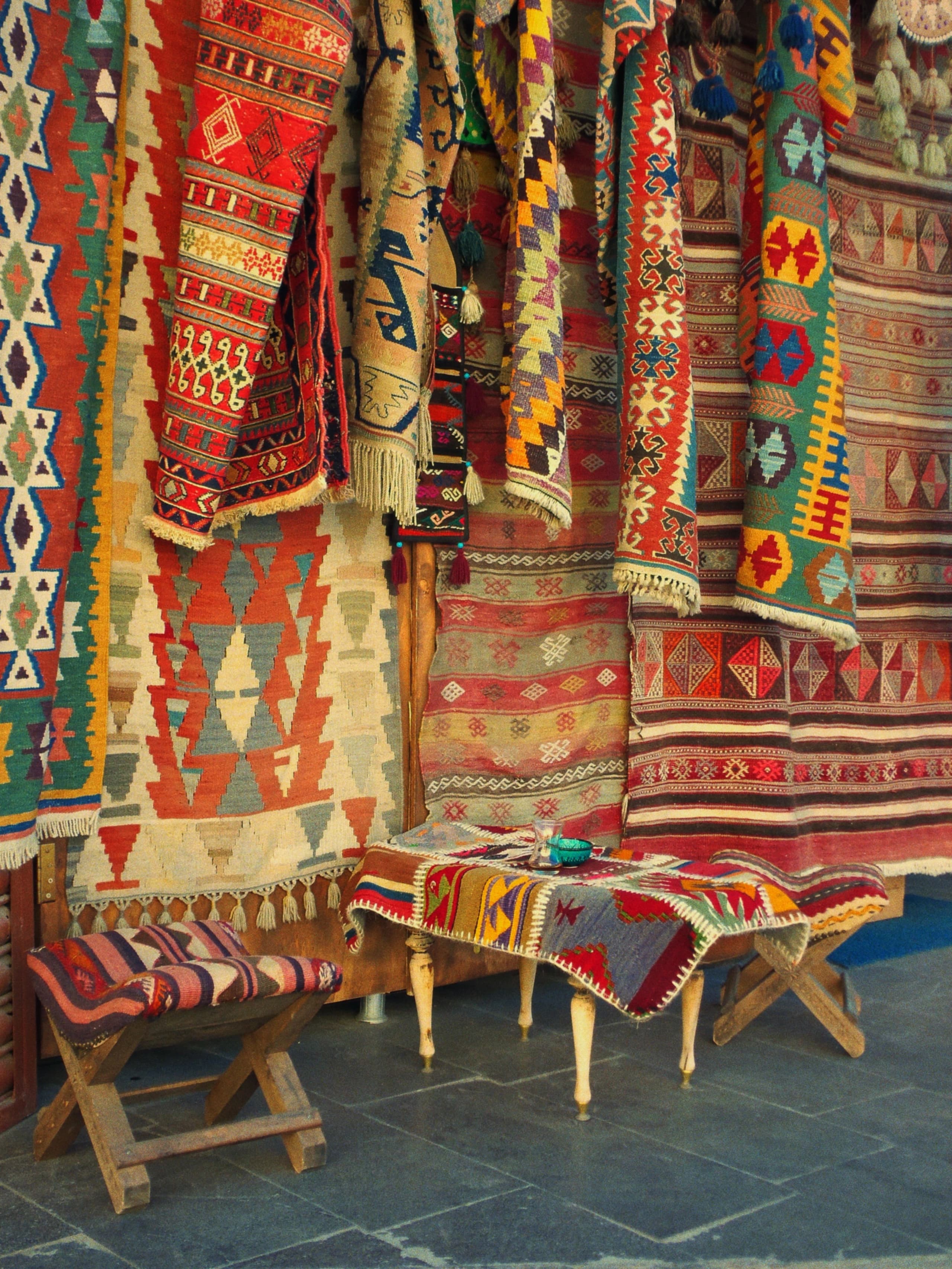
Free from the traditional stylistic constraints of ancestral wool weaving, the Aït Khebbach women experienced a period of unprecedented creative explosion between 1980 and 2010. They became true designers, mixing impossible colors—neon greens against deep burgundies, electric blues cutting through stark blacks—and weaving abstract, asymmetrical grid patterns that mirror the most avant-garde contemporary art.
Erasing the Myth of Anonymity
For decades, the Western art world has romanticized tribal art as the product of "anonymous" craftspeople. The Aït Khebbach rugs dismantle this myth entirely.
These striking textiles are not the result of a collective, nameless tradition; they are the highly individualized masterworks of specific, visionary women. Artists like Rquiah Aït Khouya, Adjo Hamchichi, and Touda Afounas pioneered this movement, using their looms to express their personal aesthetic freedom and emotional humanity. When we curate an Aït Khebbach rug for Nomadinas, we are not just sourcing a beautiful object. We are honoring a specific matriarch who looked at a barren desert and decided to weave it full of color.
Desert Design in the Modern Home
The integration of an Aït Khebbach rug into a contemporary luxury interior is a masterstroke of design tension. Because these rugs utilize recycled, factory-dyed fibers, their colors possess a saturated intensity that natural botanical dyes cannot achieve.
Dropping one of these euphoric, wildly geometric carpets into a sleek, minimalist space—perhaps a room clad in cool concrete and steel—instantly electrifies the environment. It introduces a narrative of sustainability, survival, and unabashed joy. Embrace the colors of the Kem-Kem, and let the desert's most unexpected design movement redefine your sanctuary. Browse our ivory minimalist and cream neutral rugs for a quieter counterpoint.