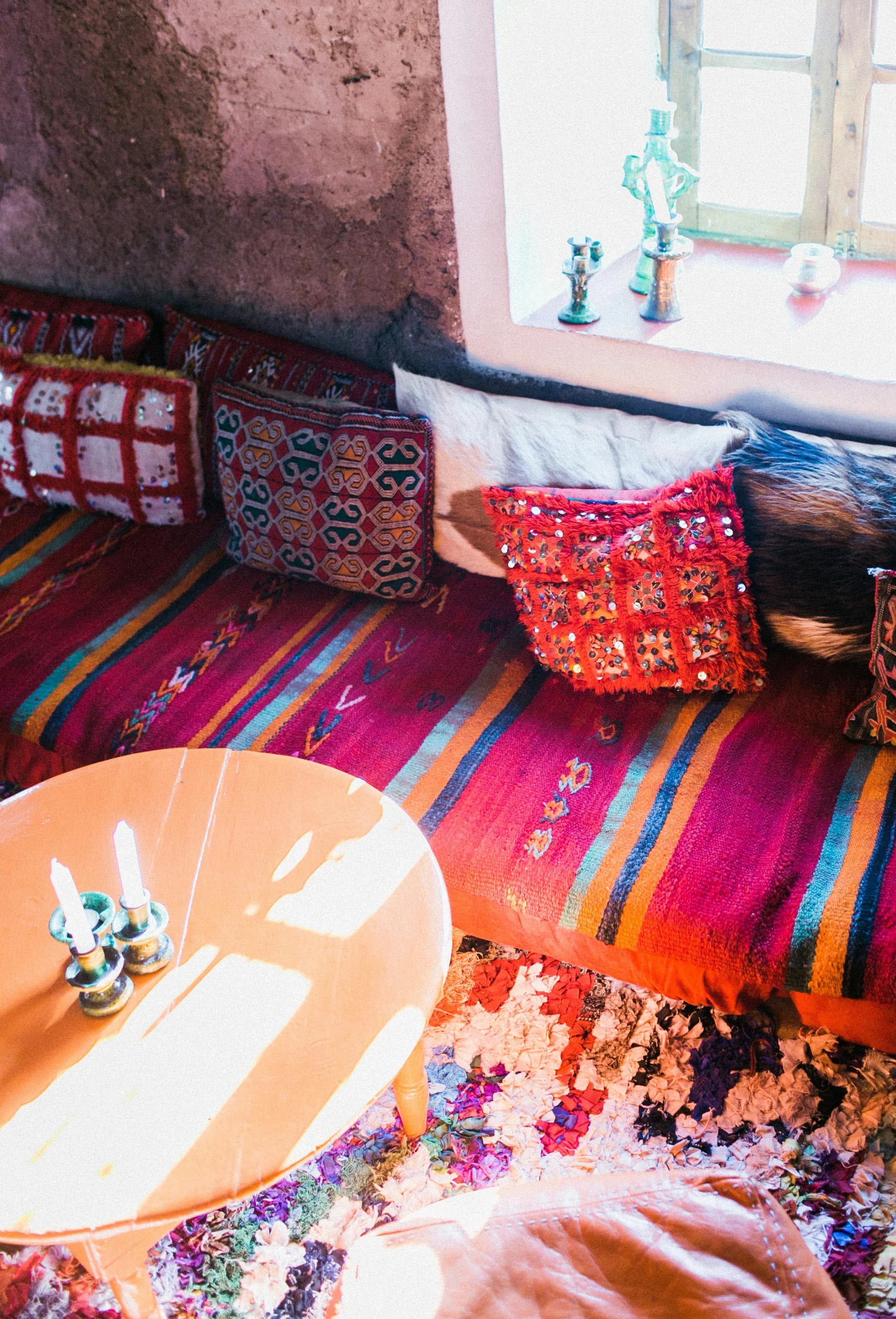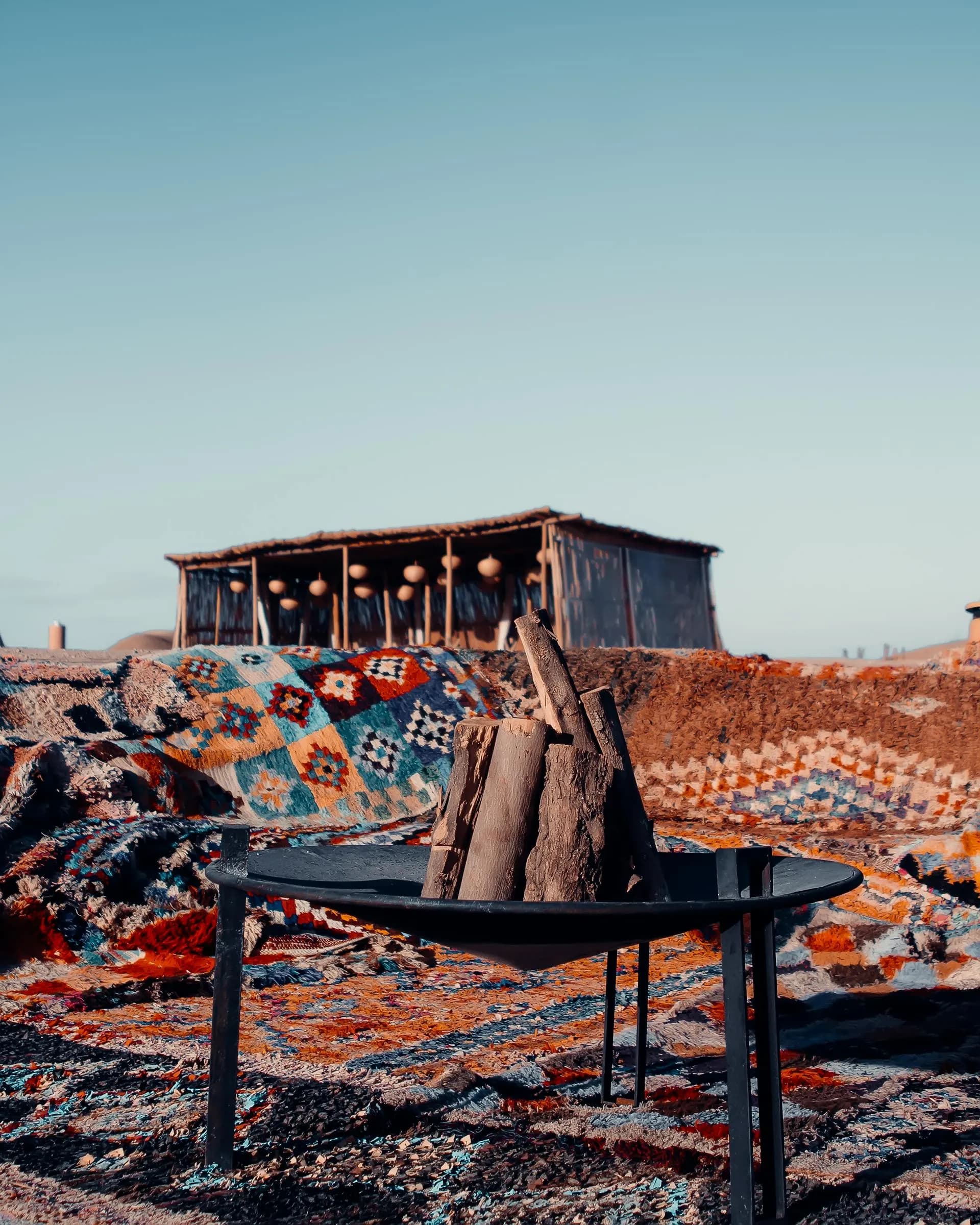
To truly understand the soul of a Beni Ouarain rug, you must first strip away the sleek, sun-drenched living rooms and minimalist galleries where it resides today. Instead, you must travel upward. You must ascend into the jagged, wind-carved peaks of the northeastern Middle Atlas mountains of Morocco. Here, the air is thin, the winters are brutal, and survival is not a given—it is an art form.
For the Zenata Berber tribes who have called these high-altitude landscapes home for over a millennium, weaving was never an exercise in mere decoration. It was a vital architecture of warmth. Today, the world knows their creations as the pinnacle of luxury interior design, celebrated for their avant-garde minimalism. Yet, the story of these white giants is rooted in a fierce, raw, and beautiful struggle against the elements.
At Nomadinas, we believe that true luxury lies in authenticity. To run your hands through the heavy, un-dyed wool of an authentic Beni Ouarain is to touch a lineage of resilience. It is an invitation into a striking visual paradox: how an ancient, utilitarian object designed to defy freezing mountain winds became the ultimate symbol of contemporary design purity.
Born from the Frost: An Architecture of Warmth
In the Western world, we instinctively categorize carpets as floor coverings—textiles meant to be walked upon and admired from above. But for the Beni Ouarain and neighboring tribal confederations, the carpet served a profoundly different purpose. They did not weave floor covers; they wove beds and bedding.
When the brutal mountain winter descended, the nomadic tent transformed into a sanctuary against the ice. The structure of these carpets was ingeniously engineered for human comfort. Woven with a noticeably loose tension, the rugs were designed to physically yield and adjust to the shape of the body, creating a cocoon of unparalleled insulation against the cold. The pile of these textiles was extraordinarily thick, sometimes reaching a staggering height of seven centimeters, transforming the woven surface into a dense, pelt-like shield.
The weavers—the women of the tribes—were effectively engineering soft architecture. Every Berber knot tied over the warp was a calculated defense against the frost. This is the raw, authentic reality of the Beni Ouarain: their legendary softness was not born of leisure, but of absolute, life-preserving necessity.
The Ancient Breed and the Rhythm of the Land
A masterpiece of craftsmanship cannot exist without extraordinary raw materials. The foundation of the Beni Ouarain’s striking aesthetic and tactile luxury lies entirely in the wool. Deep in these mountainous regions, the tribes have historically raised an ancient breed of small sheep.
The wool yielded by this specific breed is legendary—a thick, lustrous, heavily lanolin-rich fiber that possesses a distinctive silky shine, particularly evident in the earliest, most revered pieces. This wool was not a static commodity; it was harvested through a life in constant motion. For generations, the rhythm of tribal life was dictated by migratory pastoralism. Families would guide their flocks high into the mountain pastures during the brief, vibrant summers, only to descend toward the valleys and the hill country around Tahala as the winter snows threatened.
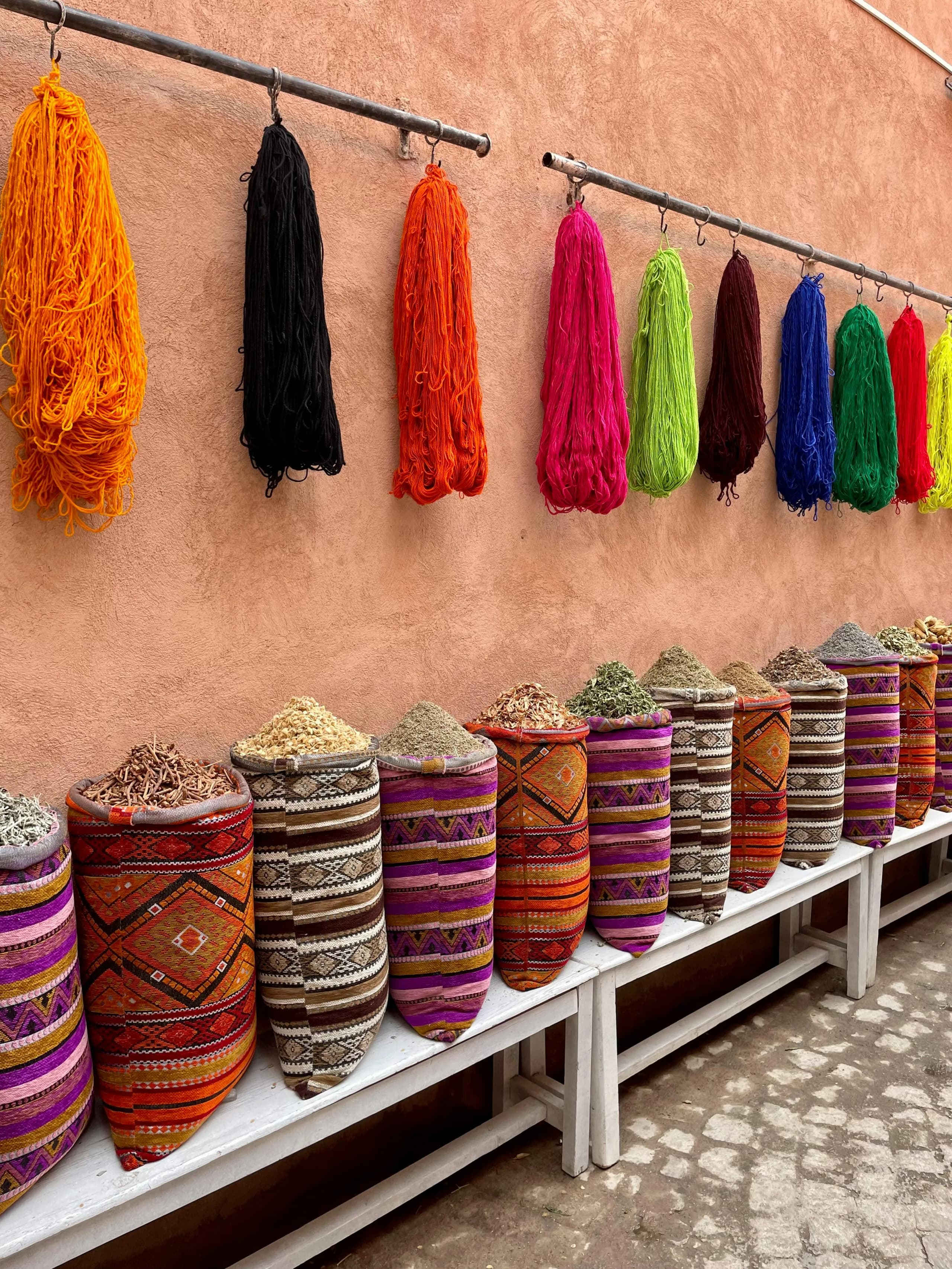
This nomadic lifestyle infused the wool with the very essence of the Atlas environment. The sun, the altitude, and the mineral-rich grazing lands all contributed to the strength and ivory purity of the fleece. It is this exact, un-dyed white wool, spun with meticulous care, that serves as the canvas for the iconic Beni Ouarain aesthetic.
A Striking Visual Paradox: Neolithic Roots Meet Modernist Purity
Perhaps the most captivating aspect of the Beni Ouarain rug is its aesthetic paradox. How did an isolated, nomadic people create textiles that look as though they were conceptualized by a 20th-century modernist master?
The answer lies in their isolation. By voluntarily retreating into the remote sanctuaries of the Middle Atlas, the Beni Ouarain remained largely untouched by the urban, Arab-influenced designs of the coastal cities until well into the 20th century. Free from the rigid, highly ornate, and symmetrical expectations of urban commercial weaving, the women of the mountains preserved a design language that is staggeringly ancient.
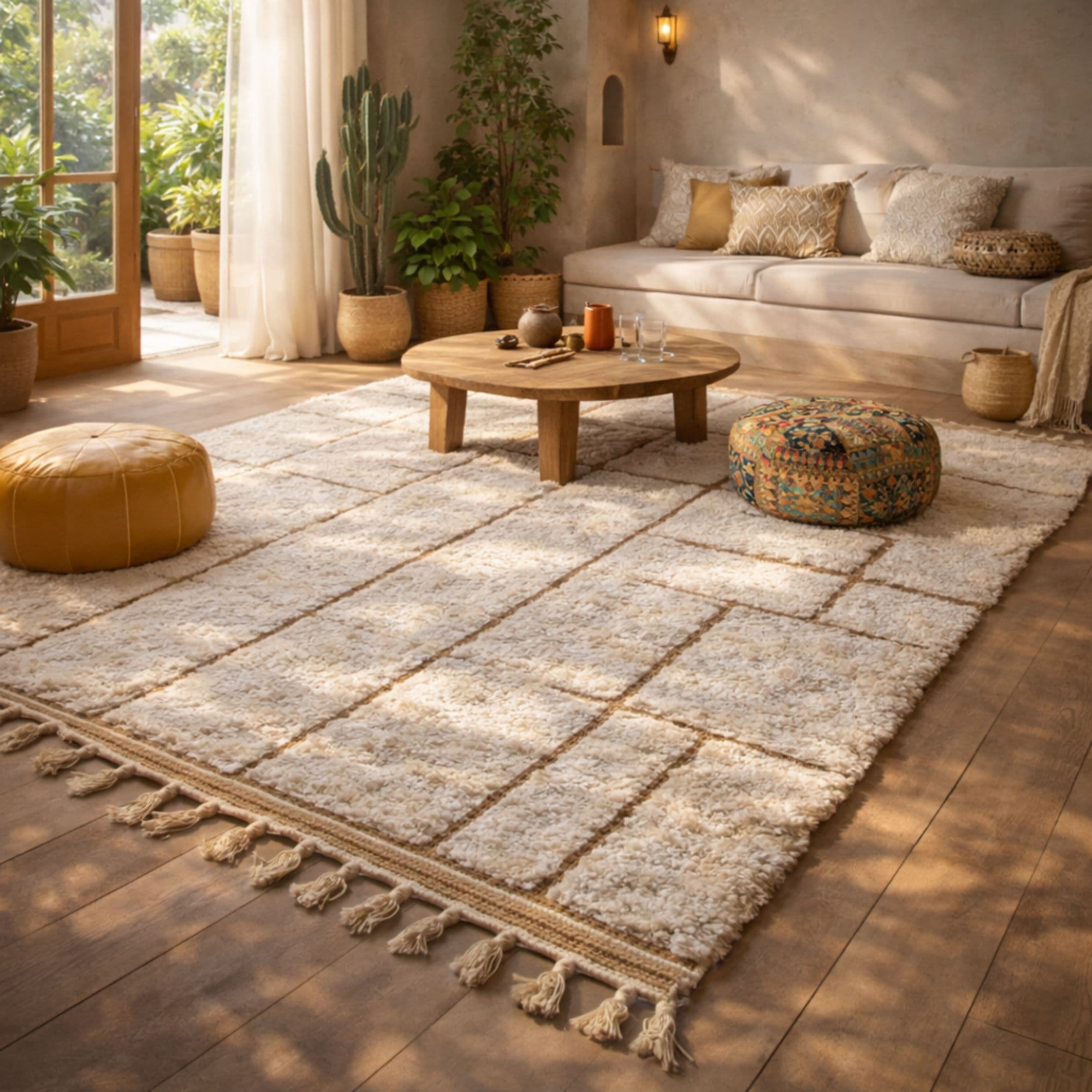
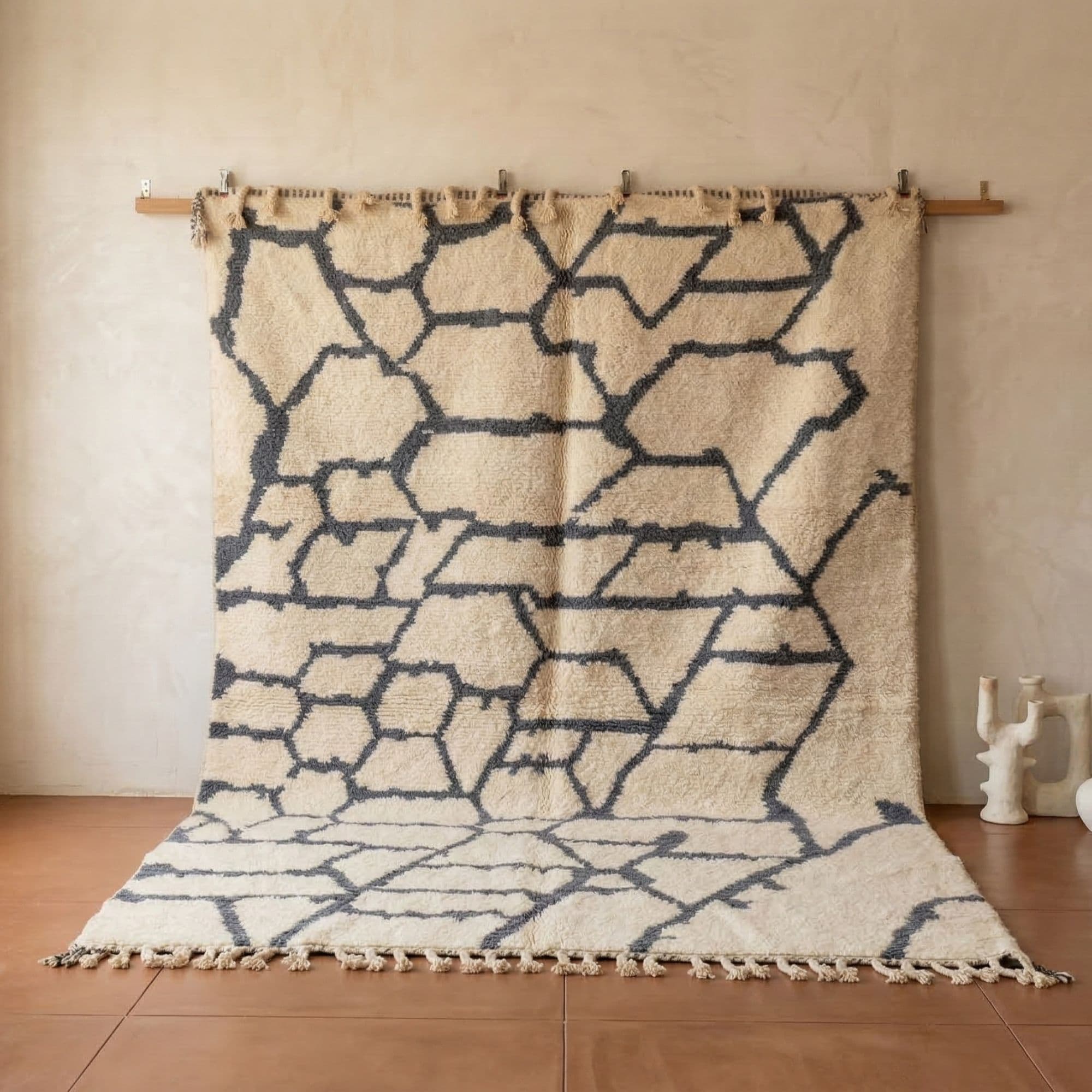
The classic Beni Ouarain design is an exercise in profound restraint: a sprawling network of diamonds, articulated through relatively fine black lines, floating on an expansive sea of white ground. Unlike almost all other oriental and traditional rugs, borders are remarkably uncommon here. The design simply bleeds off the edge of the textile, implying an infinite continuation of the pattern—a concept that resonates deeply with contemporary minimalist philosophy.
Historical analysis suggests that the formal origins of this striking palette and design do not trace back to other textiles, but rather to ancient rural ceramics. These ceramics utilized a similarly archaic decorative system of black lines on a white base, utilizing methods that have remained virtually unchanged since Neolithic times.
When we look at a Beni Ouarain, we are looking at a prehistoric aesthetic. Some tribes, such as the Zerarda, pushed this aesthetic even further, abandoning the diamond lattice entirely to weave pure white carpets of breathtaking, calm elegance. It is this absolute reduction of form—the deliberate choice to leave empty space, to let the texture of the material speak louder than the pattern—that makes these rugs the darling of modern architects and high-end designers today. They possess a primitive modernism that cannot be taught, only inherited.
The Soul of the Loom in the Modern World
Today, the true, archaic white giants are becoming increasingly rare. The rapid socio-cultural shifts of the late 20th and early 21st centuries have fundamentally altered the nomadic lifestyle. Since the 1970s, there has been a strong movement toward permanent settlement, with pastoralists building permanent stone and clay homes higher up in the mountains. Furthermore, shifts in agriculture and a tendency to breed sheep primarily for meat rather than their fleece have threatened the availability of that exceptional, silky wool.
As commercial demand for these minimalist masterpieces exploded globally, the market was flooded with reproductions. Yet, to those who understand the heritage, there is no substitute for the authentic weight, the irregular, deeply human lines, and the vital energy of a rug woven within the tribal tradition. The survival of this ancient textile art depends on a market that values true quality and historical integrity over mass production.
Bringing the Atlas Home
When you place an authentic Beni Ouarain rug in your home, you are doing much more than finalizing a room’s decor. You are laying down a piece of history. You are inviting the raw, survivalist spirit of the Amazigh mountains into a dialogue with your contemporary life.
The stark black diamonds on ivory wool work harmoniously with mid-century teak, modern concrete, and the clean lines of luxury architecture because true design transcends time. At Nomadinas, we honor the women who turned the harshness of winter into an enduring legacy of beauty. We invite you to experience the tactile poetry of the white giants—not just as beautiful objects, but as the woven soul of the Moroccan mountains.