Close your eyes and envision a luxury estate. Chances are, your mind immediately builds a structure of permanence: soaring walls of poured concrete, cold slabs of Italian marble, and rigid beams of steel. We have been conditioned to believe that true architectural luxury is rigid, heavy, and immovable.
But journey into the high altitudes of the Moroccan Atlas or the sweeping expanses of the Saharan plains, and a radically different philosophy emerges. Here, luxury is not built out of stone; it is woven from wool.
For the Amazigh (Berber) nomads and semi-nomads, survival and comfort depended entirely on mobility. They did not construct houses to leave behind; they carried their sanctuaries with them. Their textiles were not mere decorations added to a room after the fact—they were the room. At Nomadinas, we believe that modern interior design is currently experiencing a massive shift, moving away from cold, rigid spaces toward the warmth and flexibility of this ancient “soft architecture.”
It is time to rethink how we build our sanctuaries.
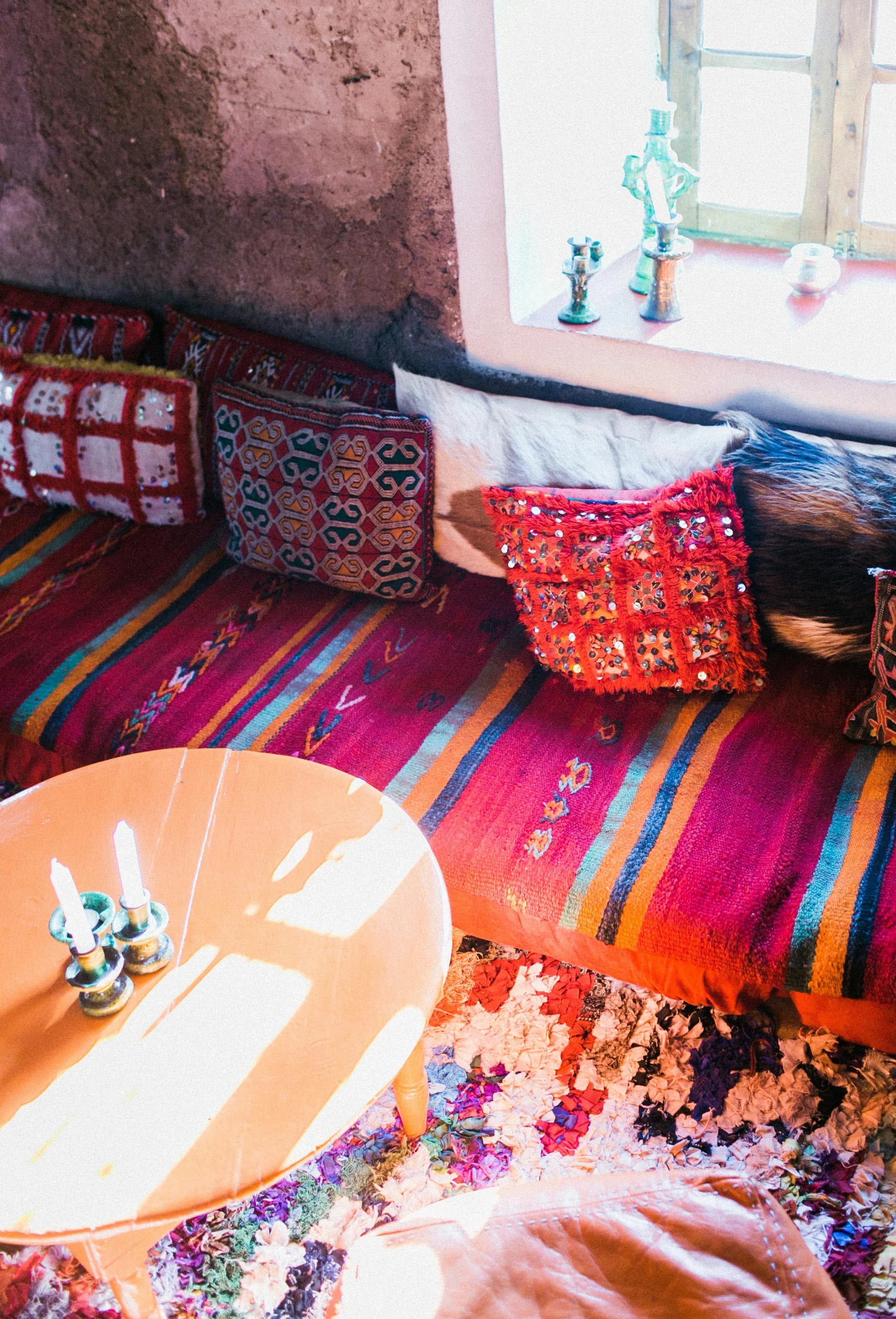
The Walls That Breathe
To understand the nomadic aesthetic, you must strip away the modern concept of interior decoration. In a traditional Amazigh tent, every woven object served a vital, dual purpose of profound utility and striking beauty.
When establishing a camp, the architecture of the space was defined entirely by textiles. Long, incredibly durable flatwoven strips of goat hair and wool were sewn together to create the roof and exterior walls of the tent, designed to expand in the rain to keep water out, and contract in the heat to allow the desert breeze to flow through.
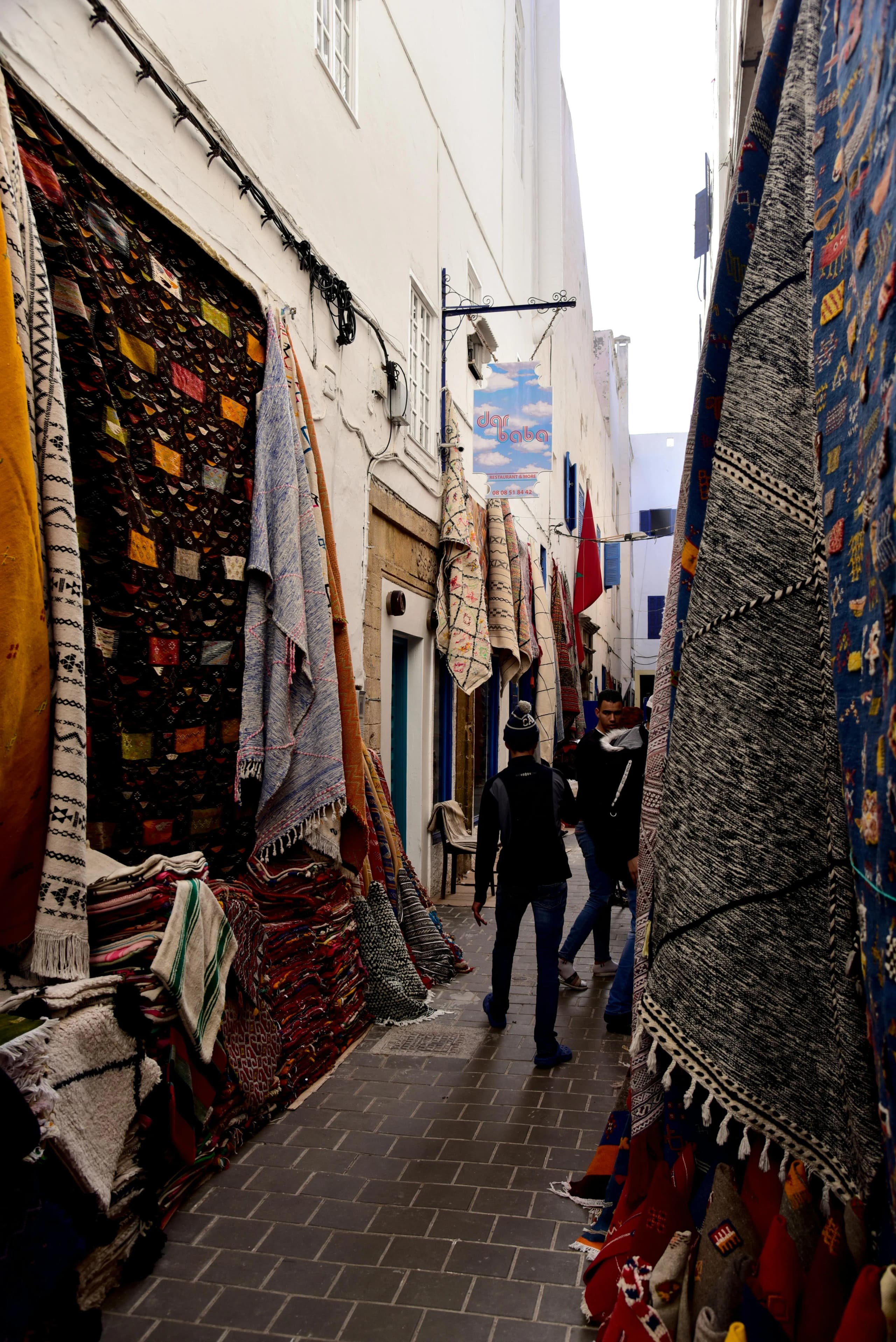
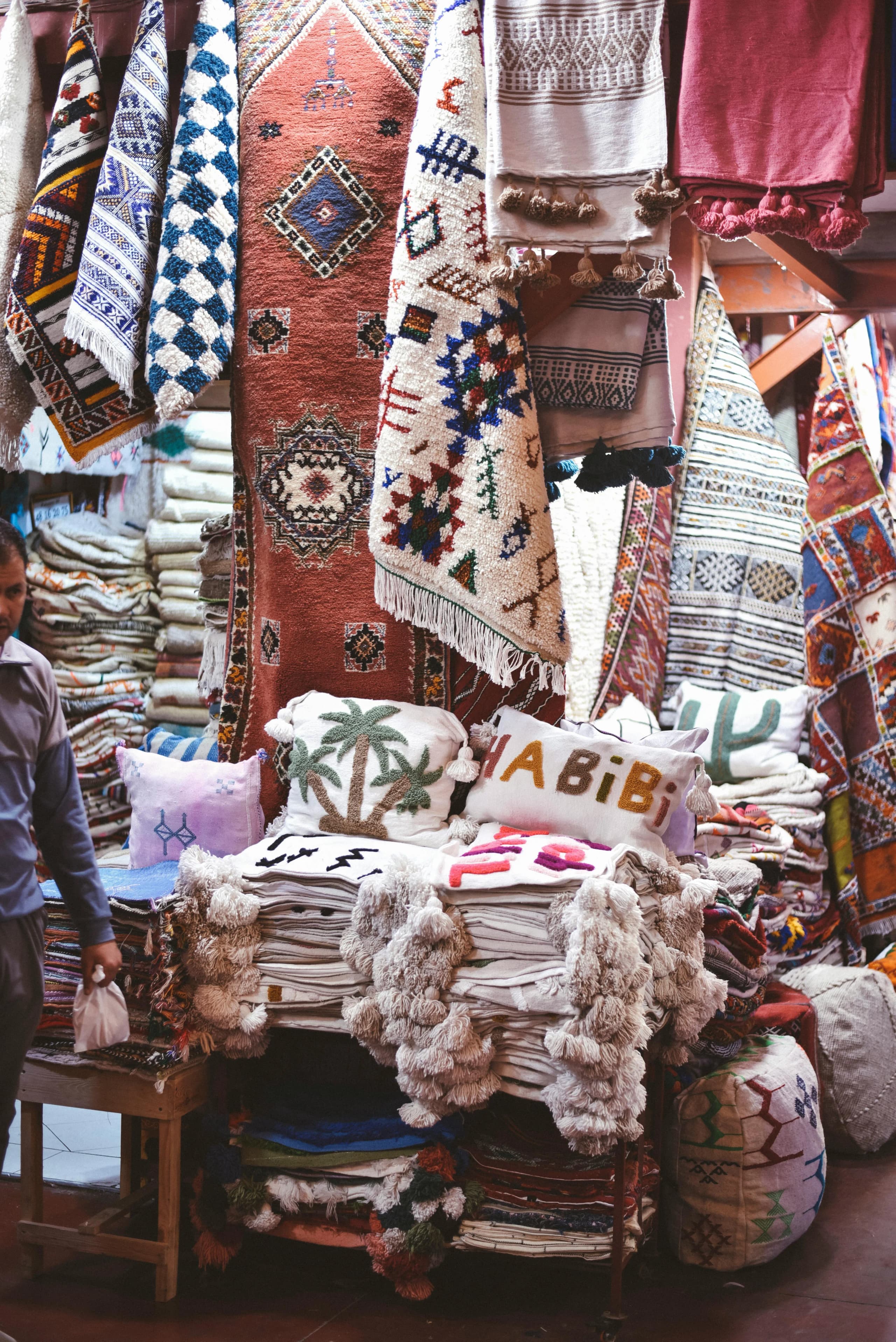
Inside, the space was partitioned not by drywall, but by vibrant, hand-woven dividers. These vertical textiles designated public areas for receiving guests and private quarters for the family. They were the original open-concept floor plans, completely fluid and adaptable to the needs of the day. The visual impact of these hanging textiles—often featuring intricate geometric patterns and deep, natural dyes—created a surrounding gallery of tribal art that moved gently with the wind.
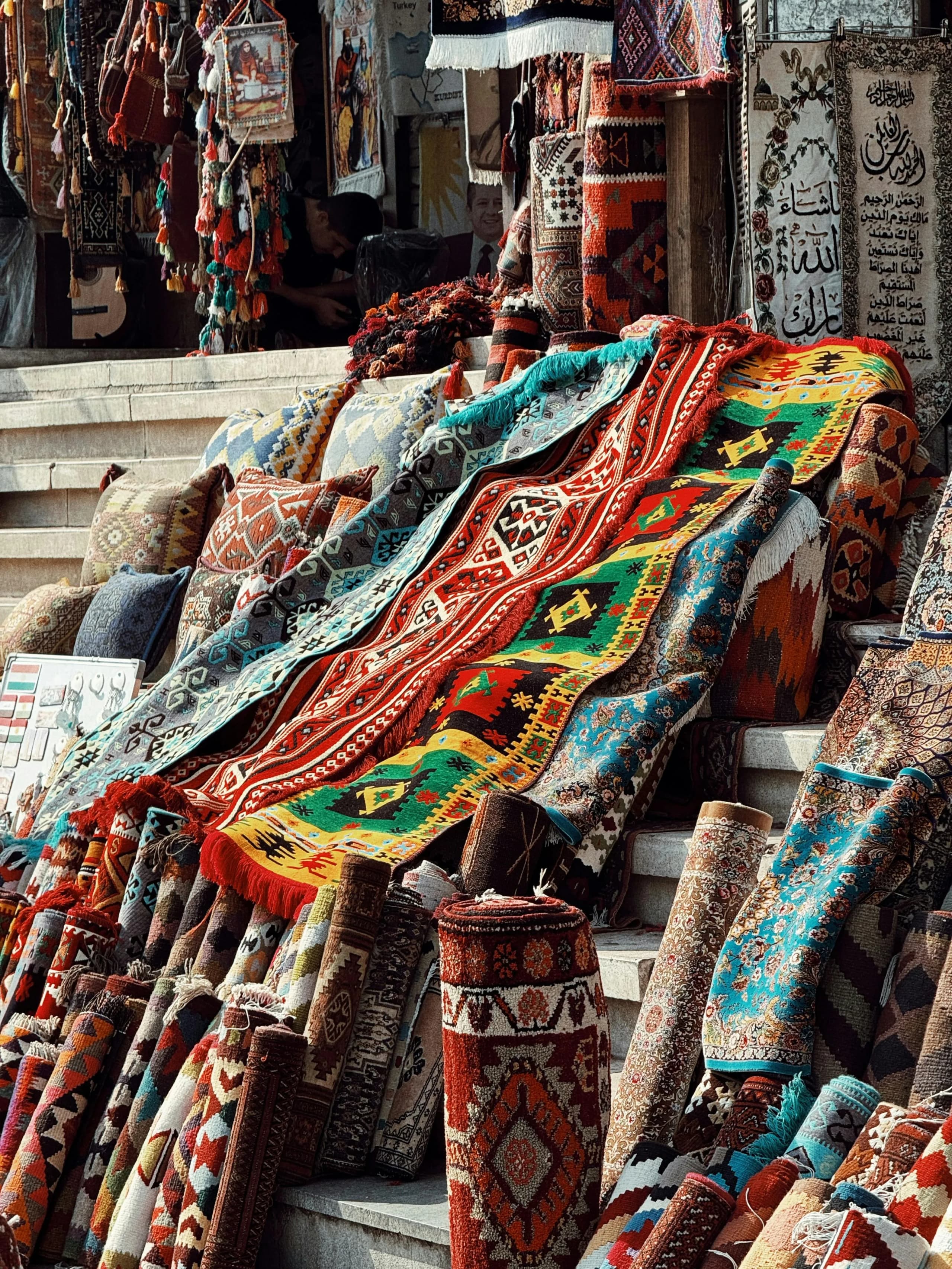
Floor Culture: The Carpet as a Bed
In the West, we instinctively categorize carpets as floor coverings—textiles meant to be walked upon with shoes and admired from above. But as historical analyses of the Middle Atlas tribes reveal, this was not the original function of the legendary Moroccan pile rug.
Tribes like the Beni Ouarain, living in the freezing, snow-capped altitudes of the mountains, did not use their thick, heavy carpets to decorate the ground. They used them as beds and bedding. The architecture of these specific rugs—woven with a noticeably loose tension and a staggering pile height that sometimes reached seven centimeters—was ingeniously engineered for human comfort. The loose structure allowed the heavy wool to physically yield and adjust to the shape of the sleeping body, creating a cocoon of unparalleled insulation against the brutal cold.
When you place a vintage Beni Ouarain in your modern living room, you are not just placing a rug; you are placing an object originally engineered to be wrapped around the human form. This is why these specific rugs possess a gravitational pull in a room, inviting you to take off your shoes, sit on the floor, and physically engage with the textile.
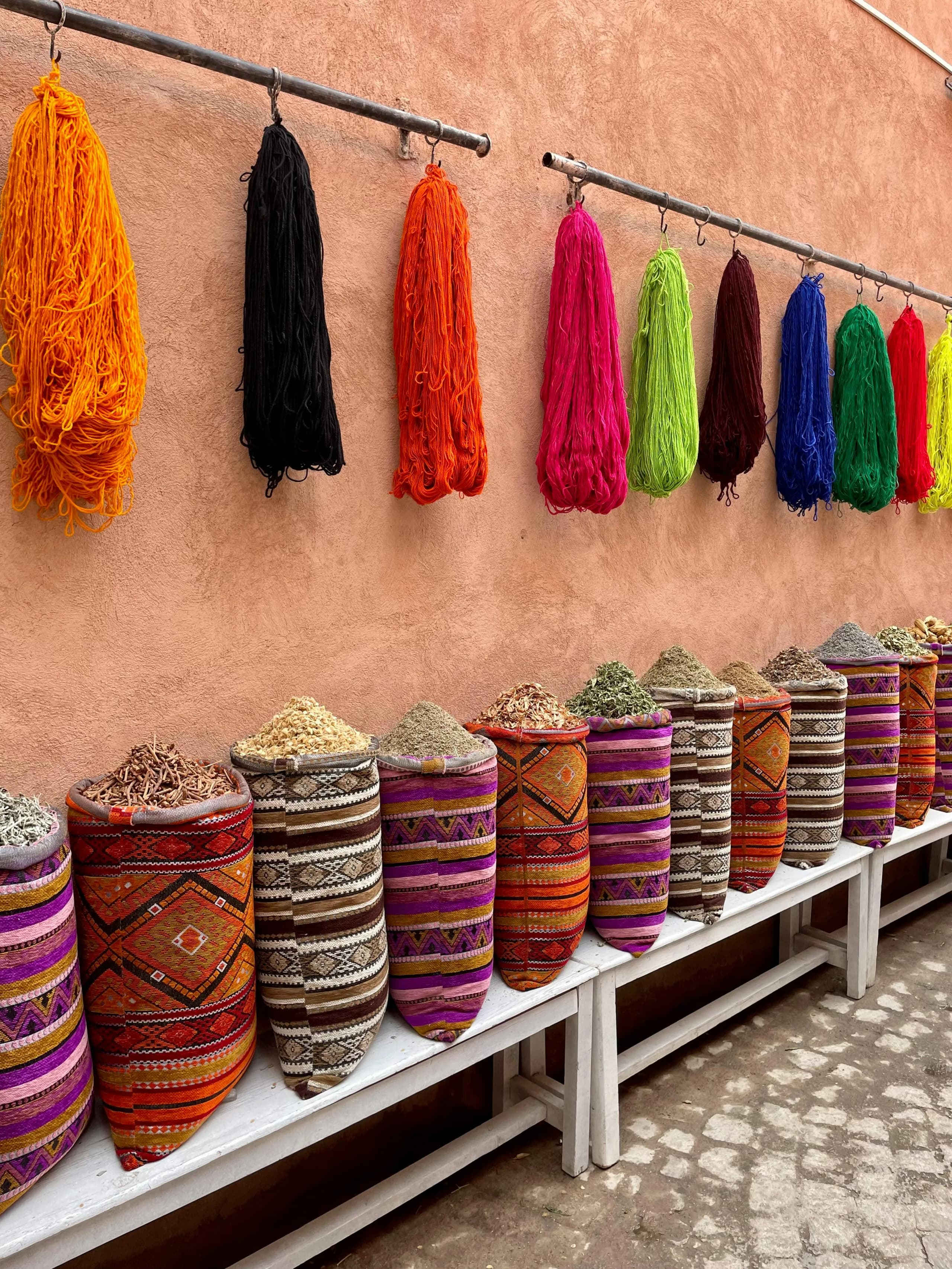
The Art of the Everyday: Sachou and Tabrdouhte
The nomadic commitment to woven architecture extended to the smallest details of daily life. Because wooden furniture—like armoires or dressers—was too heavy and impractical for a life in constant motion, storage was also a textile art.
The women of the tribes wove large, spectacular bags known as sachou. These were not simple sacks; they were highly decorated pieces of utilitarian art, often featuring complex flatwoven designs on the front. Filled with grain, clothing, or belongings, these bags were lined up against the interior walls of the tent, simultaneously serving as storage, colorful insulation against drafts, and comfortable backrests for lounging on the floor.
Even personal clothing was approached with architectural precision. The tabrdouhte—the finest, most technically demanding flatwoven ceremonial shawls produced by the Beni Ouarain—were masterclasses in complex weaving. With up to seventy closely packed decorative rows utilizing sophisticated weft-wrapping techniques, these textiles were wearable architecture, signifying the wealth, status, and artistic mastery of the woman wearing it.
Bringing the Tent into the Modern Home
Why is this nomadic approach to space suddenly dominating the highest echelons of modern interior design? Because we are craving flexibility, warmth, and a deeper connection to the ground.
The rigid, formal living rooms of the past—where stiff sofas faced a television or a fireplace in a strict, unchangeable grid—feel increasingly outdated. Today’s luxury spaces are fluid. Designers are lowering the sightlines, opting for low-profile, modular seating that mimics the relaxed, communal posture of a desert encampment.
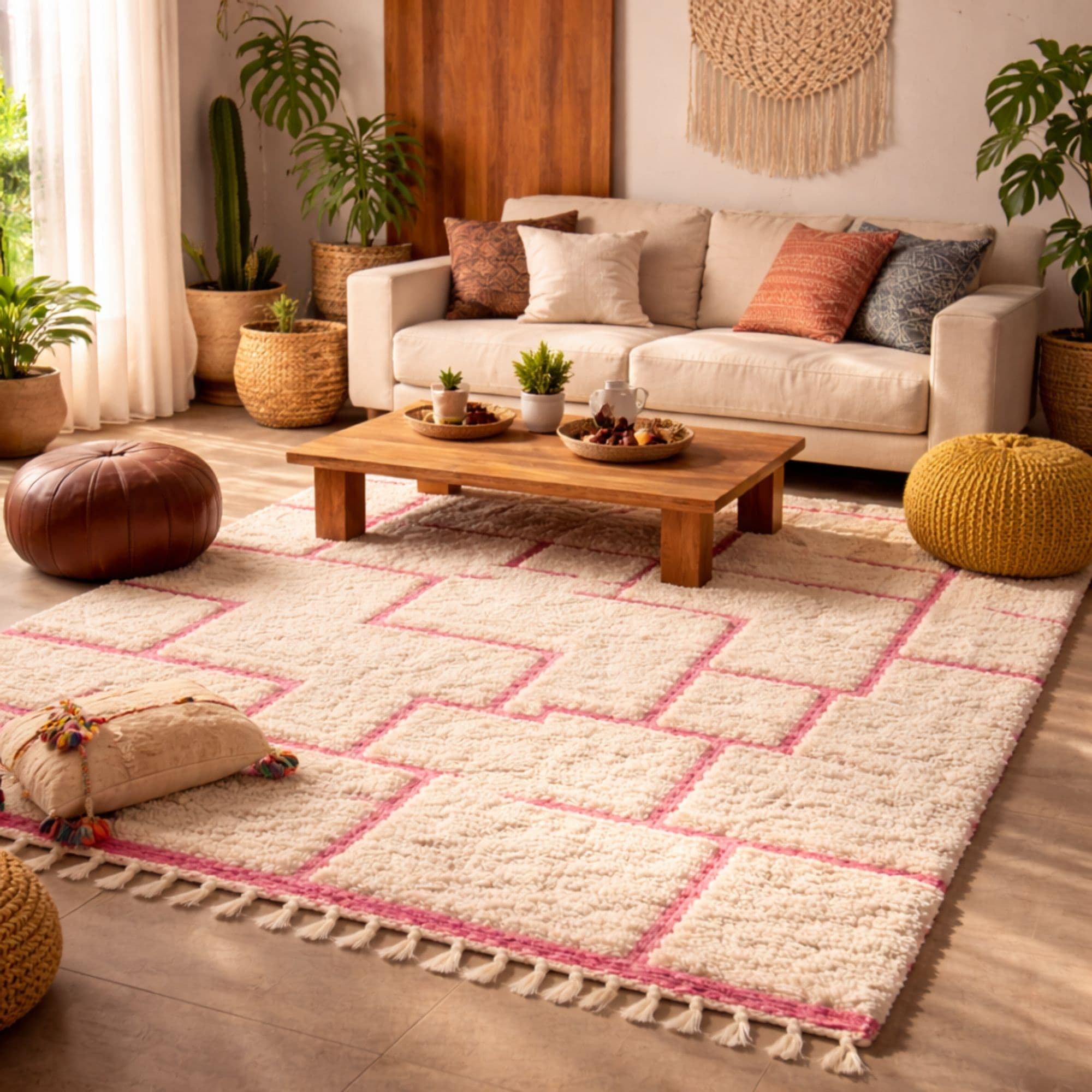
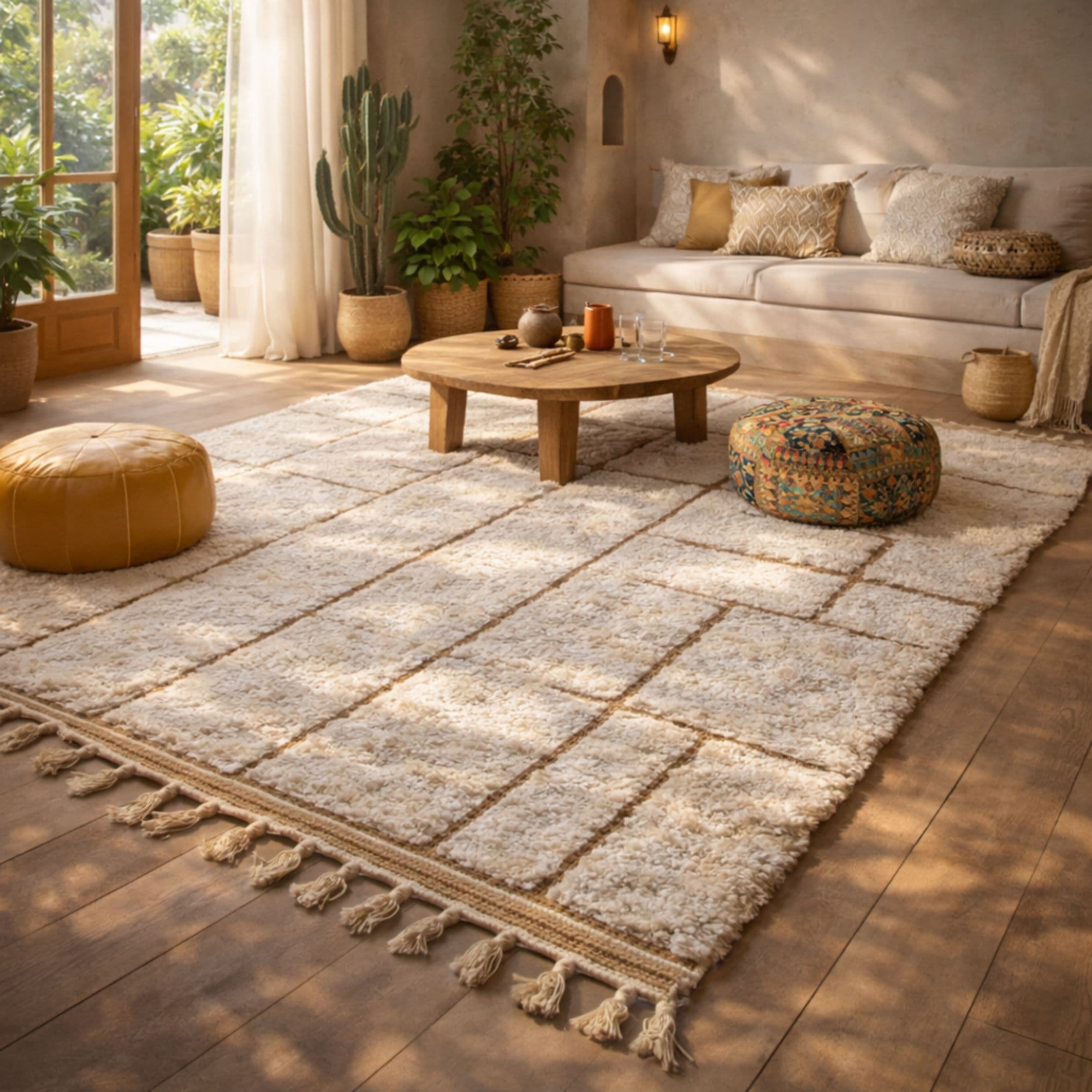
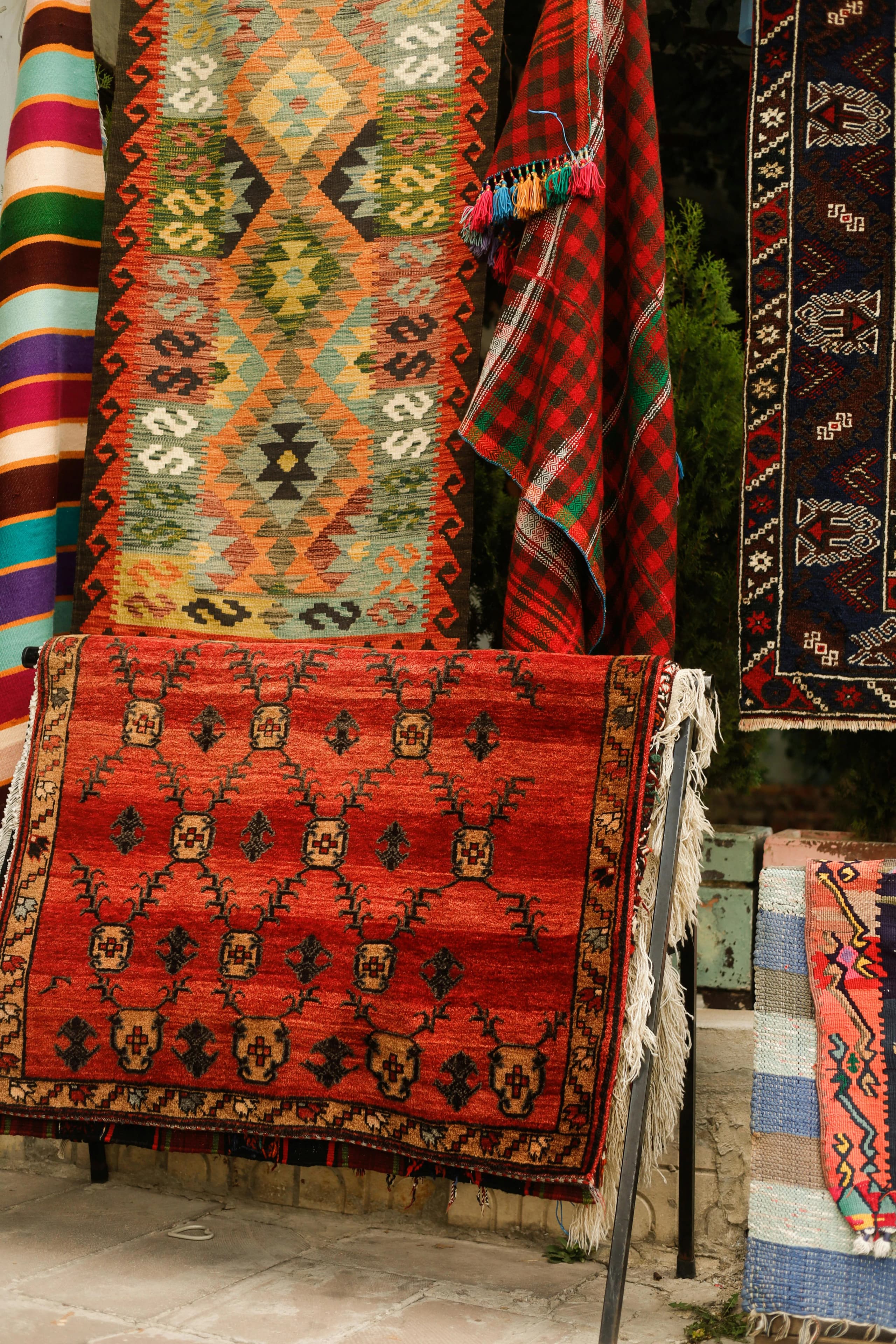
The strategic use of Moroccan rugs is the foundation of this aesthetic. By layering a plush Beni Ouarain over a larger, tighter flatweave, you instantly create a “room within a room”—a designated zone of comfort in a large, open-concept home. Draping a vintage hanbel (blanket) over the back of a sofa or hanging a deeply patterned tribal textile on the wall softens the acoustics of the room and introduces a profound sense of human touch.
The Nomadinas Philosophy
Luxury is no longer defined by how rigidly you can construct a room, but by how beautifully a room can hold you.
The nomadic tribes of Morocco perfected the art of the portable sanctuary. They understood that home is not a fixed coordinate on a map, but a feeling of warmth, safety, and beauty that you can wrap around yourself wherever you go.
When you source an authentic Moroccan rug from Nomadinas, you are bringing the intelligence of the loom into your architecture. You are inviting the fluid, grounded, and deeply human luxury of the Saharan tent into your modern life. Build your sanctuary softly.