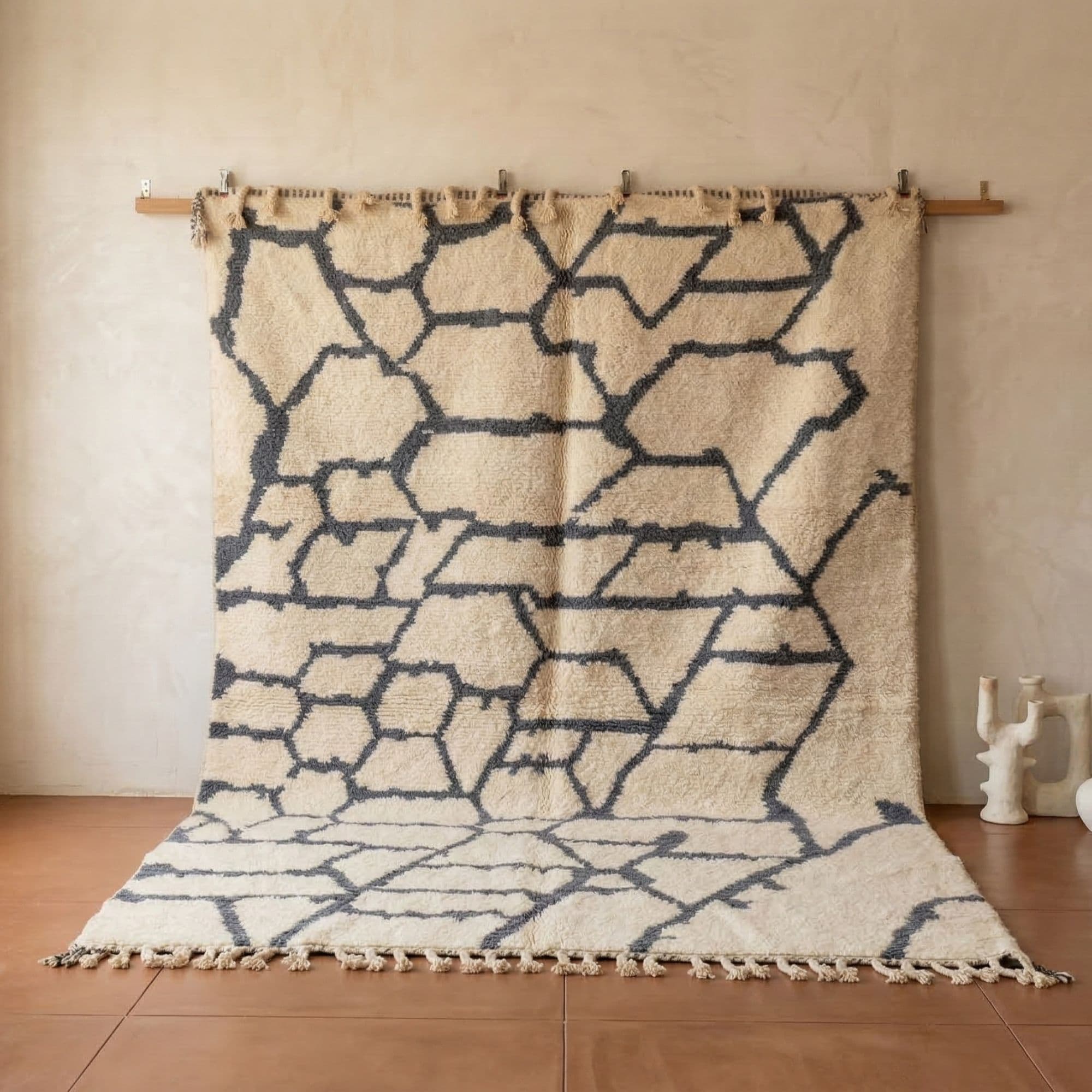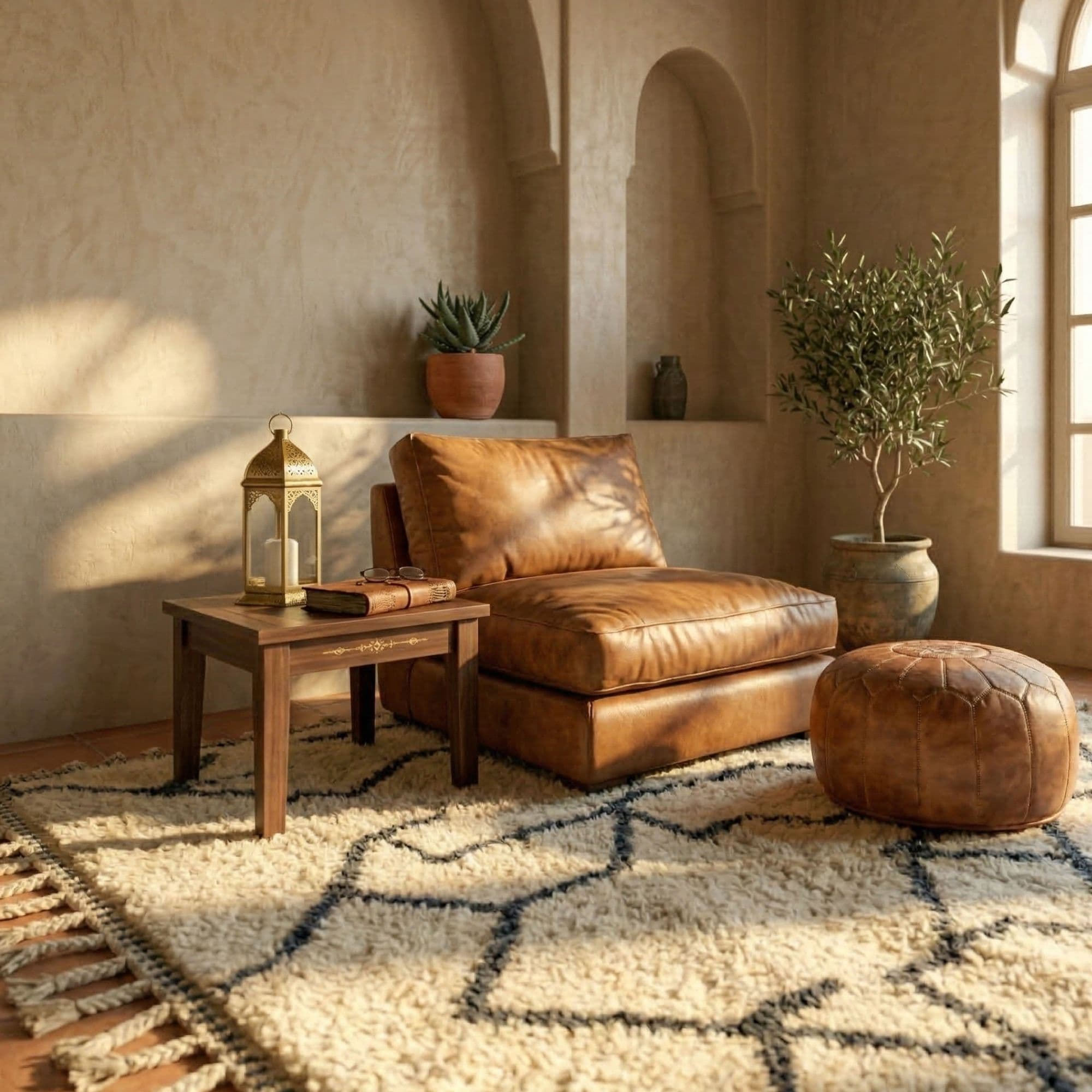
There has been a profound paradigm shift in the world of high-end interior architecture and art collecting. For decades, the conversation around fine art was restricted to canvas, bronze, and marble. Rugs, no matter how exquisite, were relegated to the realm of the functional—beautiful objects destined to be walked upon.
Today, that boundary has dissolved. Top tier interior designers, gallery curators, and seasoned art collectors are recognizing vintage Moroccan tribal rugs for what they truly are: singular, non-reproducible works of abstract expressionist art. At Nomadinas, we curate our vintage collections not merely as luxury decor, but as woven masterworks worthy of preservation and investment.
The Adam Collection and the Elevation of the Loom
The elevation of Moroccan tribal weaving into the stratosphere of fine art owes much to dedicated connoisseurs and landmark exhibitions. Collections like the legendary Adam Collection, celebrated in prestigious textile publications such as HALI, played a pivotal role in changing the global perspective.
When these early-to-mid 20th-century Amazigh rugs were hung on gallery walls, removed from the context of furniture and flooring, their sheer graphic power became undeniable. Observers were struck by the realization that rural women in the Atlas Mountains were executing complex, asymmetrical, abstract compositions long before the modern art movements of Europe and America had coined the terminology for them.
Scarcity and the End of an Era
What makes a vintage Moroccan rug a sound investment? The fundamental economic principle of scarcity.
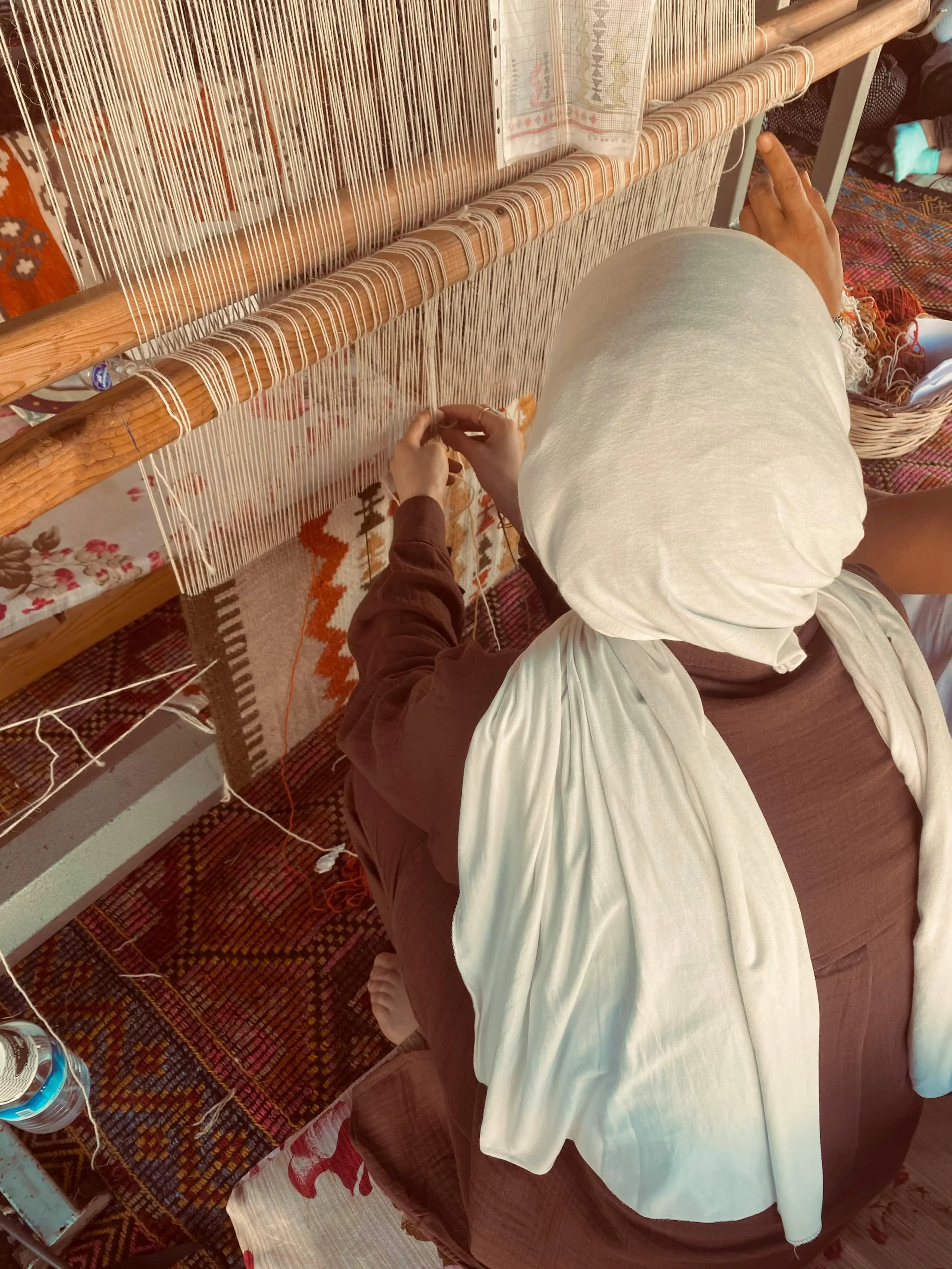
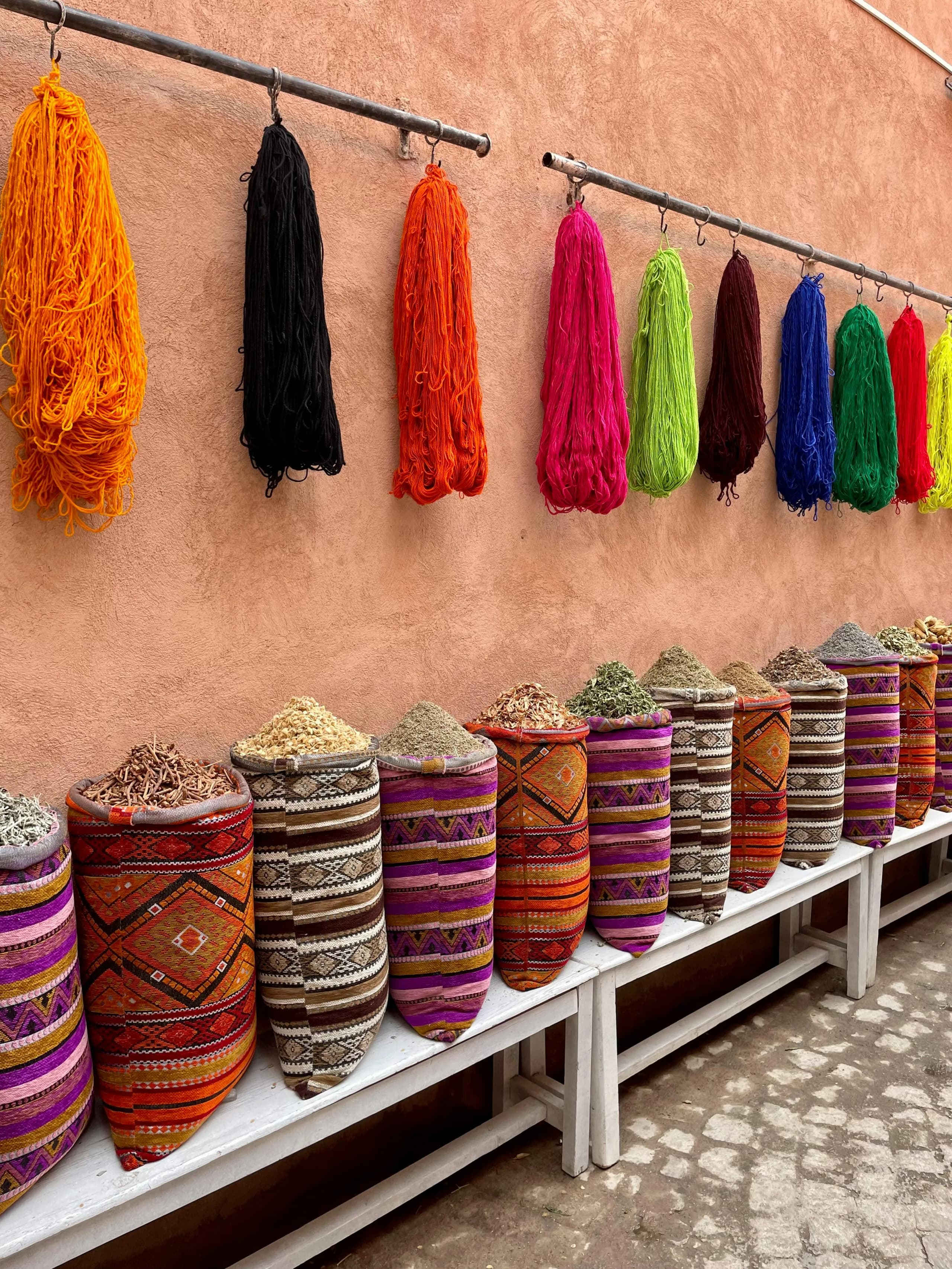
The truly magnificent vintage pieces—those woven between the 1920s and the 1970s—represent an era of tribal life that is rapidly vanishing. These rugs were woven for personal domestic use, not for export or commercial sale. They were created using the highest quality live wool, spun by hand, and dyed using local, painstakingly harvested botanicals. The weaver had complete creative autonomy, answering only to her own intuition and her tribe’s ancestral visual language.
Today, the nomadic and semi-nomadic lifestyles that birthed these textiles have largely transitioned into settled, modern living. While contemporary rug production in Morocco remains a vibrant and beautiful industry, the specific socioeconomic conditions, the pristine isolation, and the unadulterated raw materials that defined the mid-century masterpieces can never be replicated. Every authentic vintage rug that is secured in a private collection removes one more masterpiece from a permanently fixed supply.

The Aesthetic Dividend
Unlike stocks or traditional commodities, investing in a vintage Moroccan rug pays an immediate, daily aesthetic dividend. These textiles possess an extraordinary ability to completely transform the architecture of a room.
A stark, minimalist concrete loft is instantly imbued with warmth and historical weight when anchored by the heavy, architectural black-and-white geometry of an old Beni Ouarain. A muted, neutral living space is brought vividly to life by the fearless, painterly splashes of faded pinks and saffron yellows in a 1960s Boujad.
Furthermore, the versatility of these pieces is part of their value. Collectors are increasingly choosing to mount smaller, highly graphic Azilal or flatwoven kilim pieces directly onto their walls, treating them exactly as they would a Rothko or a Klee painting.
How to Collect with Confidence
As the value and desirability of vintage Moroccan rugs have skyrocketed, the market has naturally seen an influx of reproductions, chemically “aged” new rugs, and mass-produced imitations. Collecting as an investment requires a discerning eye and a trusted source.
When evaluating a piece, true collectors look for the human element: the natural, slightly uneven tension of a hand-spun warp, the presence of abrash (the beautiful, subtle variations in natural dye batches), and the idiosyncratic, improvisational shifts in the geometric pattern that indicate a weaver working from memory rather than a commercial blueprint.
At Nomadinas, provenance and authenticity are our guiding principles. We meticulously source and verify our vintage pieces, ensuring that our clients are investing in genuine Moroccan heritage. A vintage rug from Nomadinas is not just a foundation for your furniture; it is a foundational piece for your art collection—a woven legacy ready to appreciate in beauty and value for generations to come.