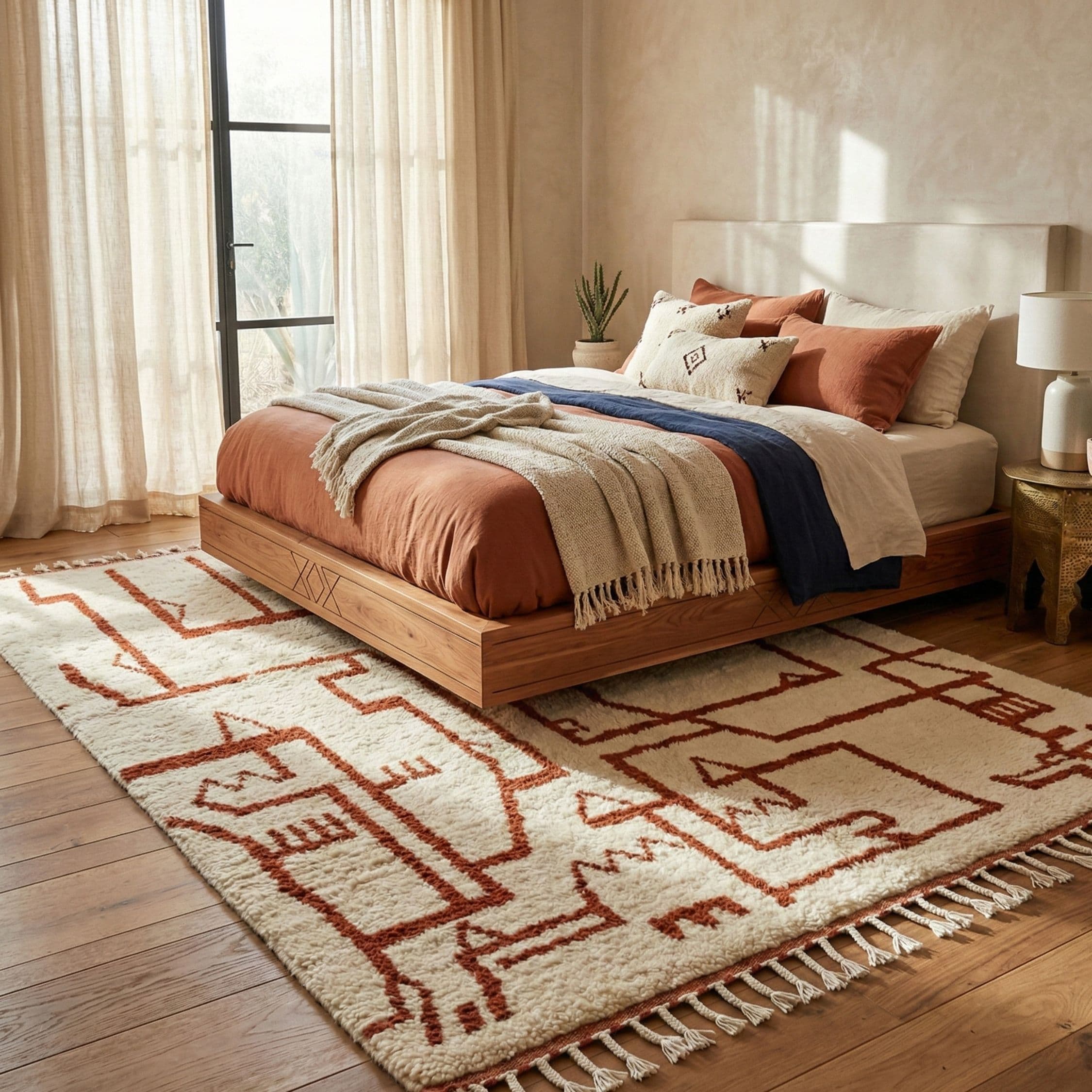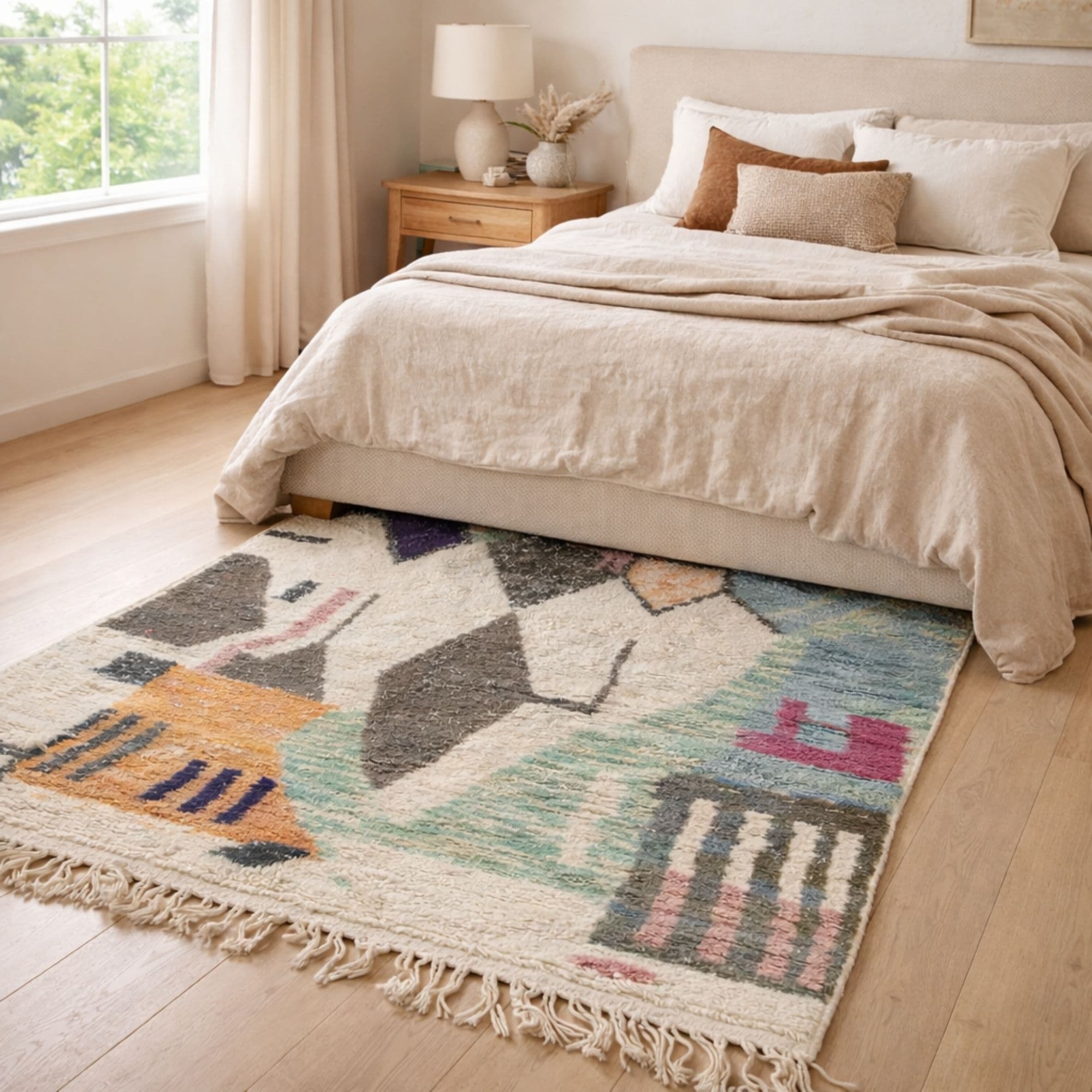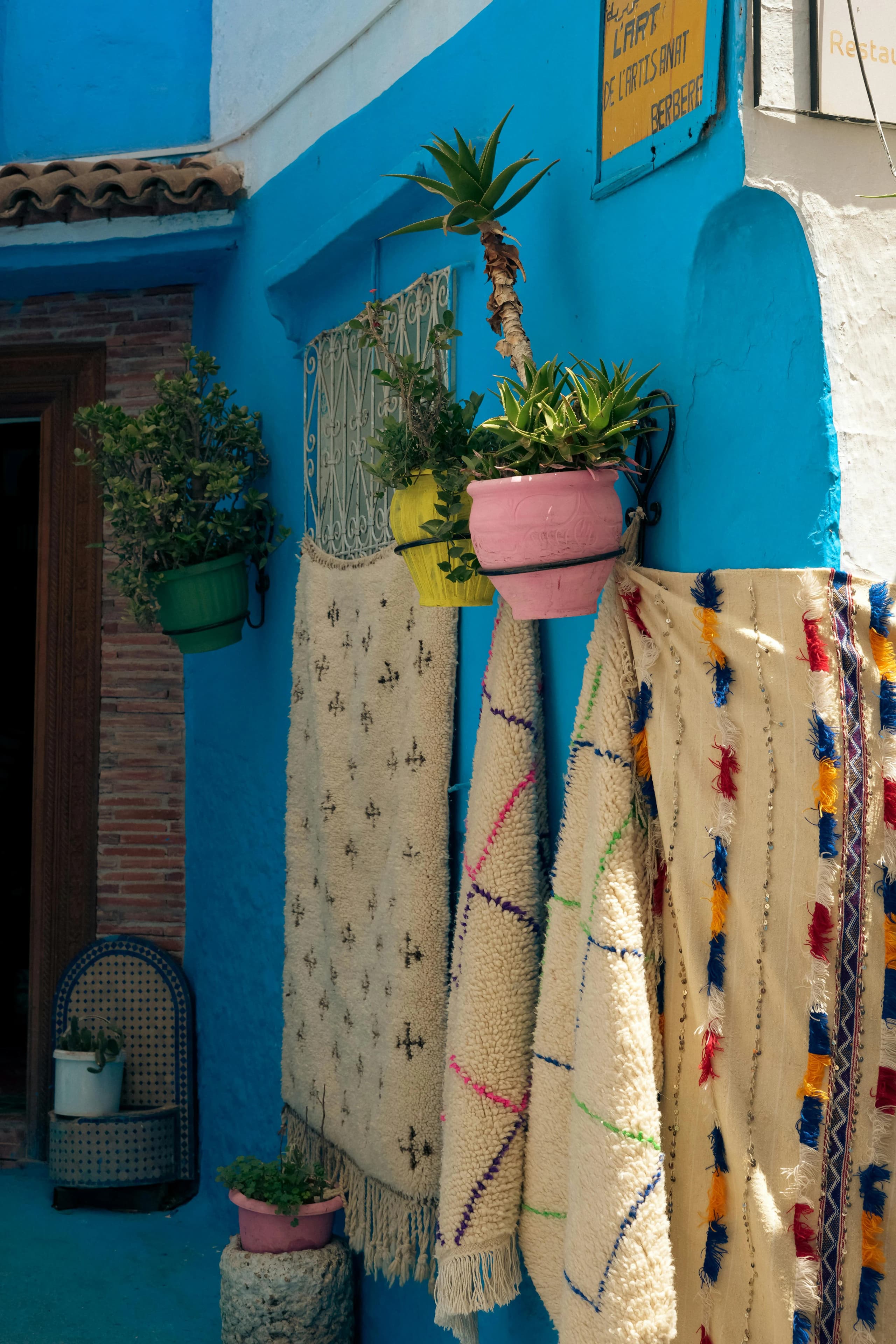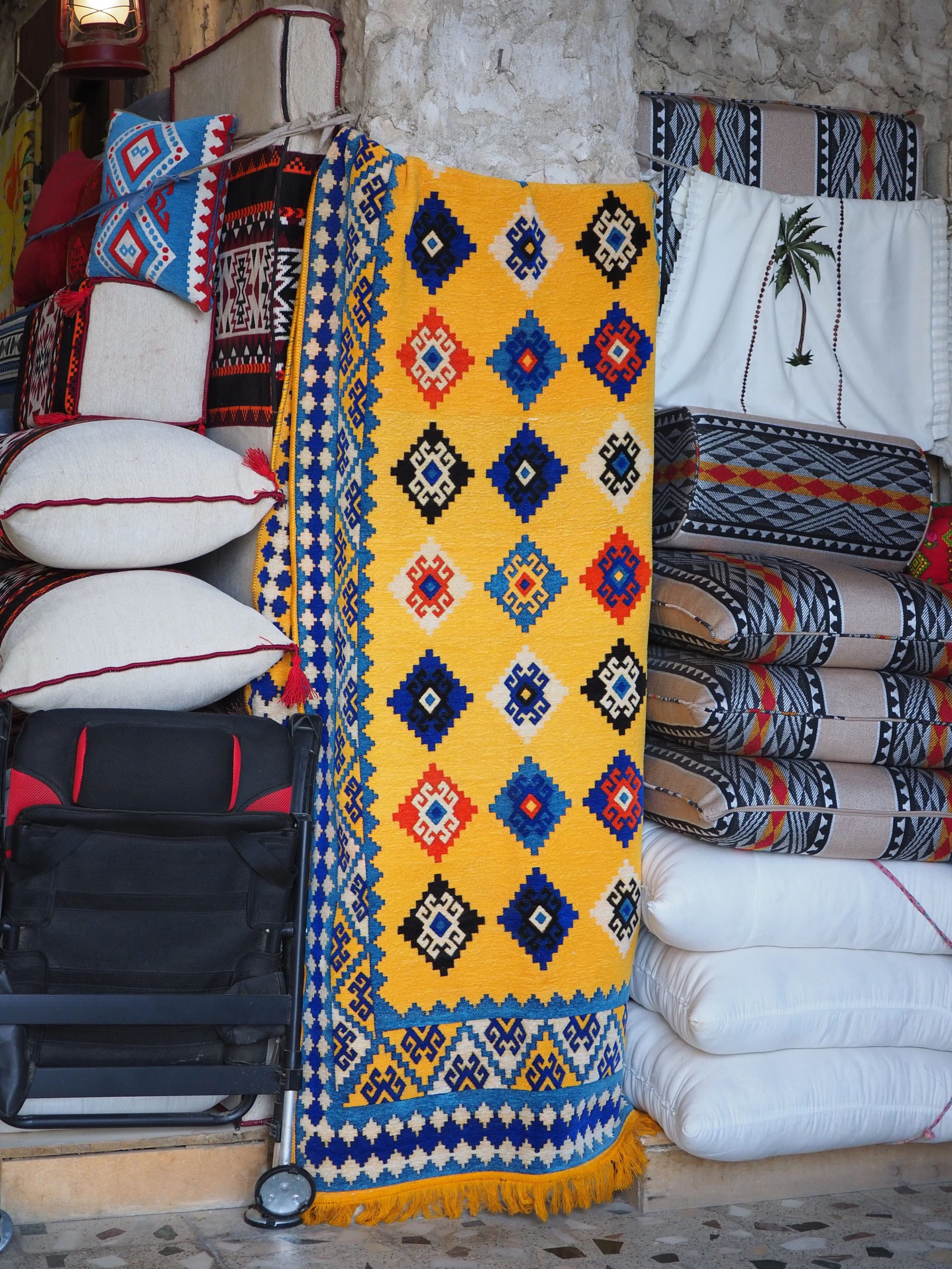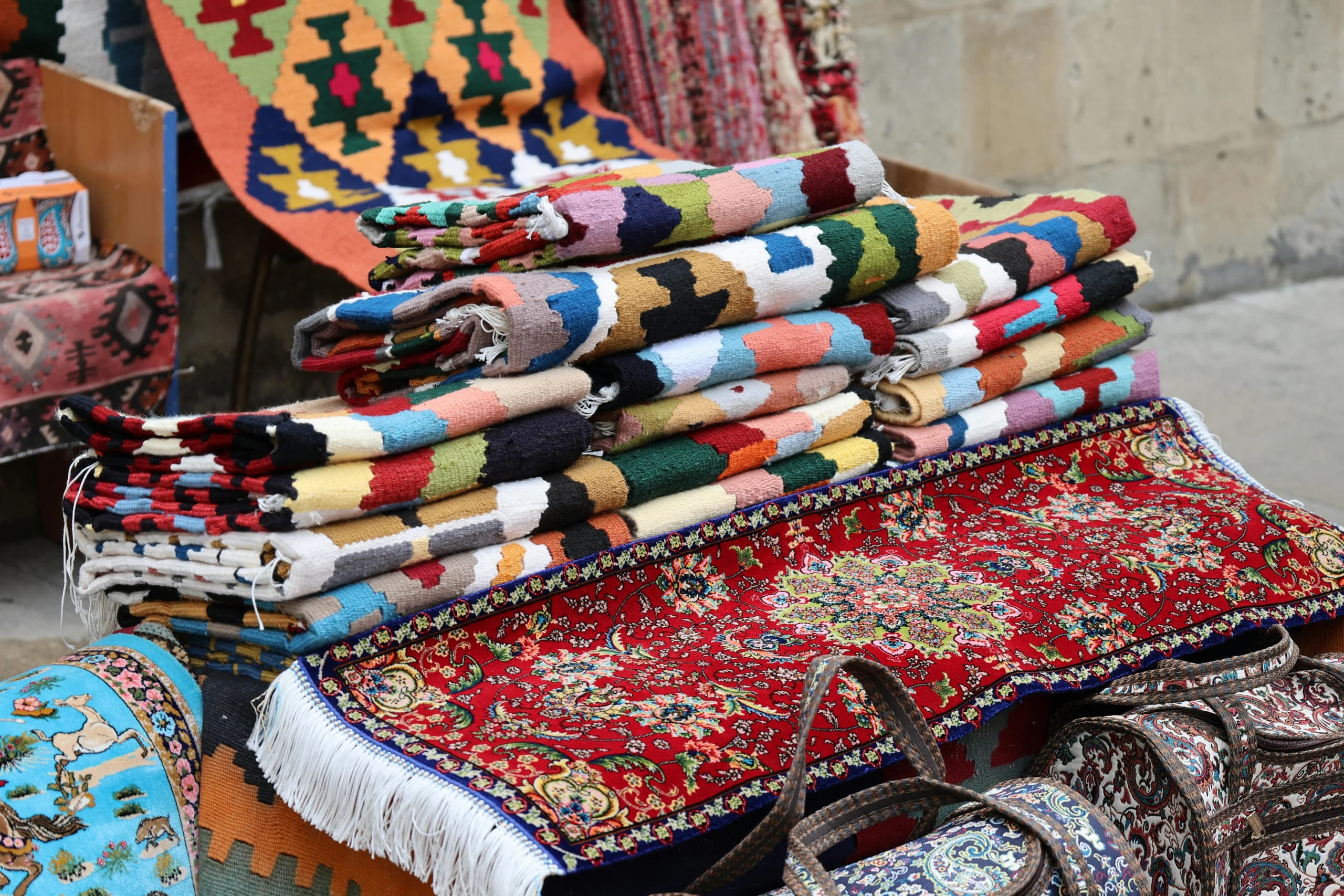
Every Berber rug is a story. Long before written language was common among Amazigh (Berber) tribes, women wove their histories, beliefs, and hopes into the rugs they created on vertical looms. Explore our collection of tribal Berber rugs to see these symbols woven into living art.
Understanding these symbols transforms a beautiful rug into a deeply meaningful piece of art.
The Language of Symbols
Berber rug symbols are not decorative — they are a visual language. Each motif carries meaning passed down through generations of weavers.
Common Symbols and Their Meanings
Diamond shapes
Protection and fertility. The diamond represents the eye — watching over the home and its inhabitants.
Triangle pointing up
Masculine energy, fire, and strength. Often woven into rugs for newlywed couples.
Triangle pointing down
Feminine energy, water, and the earth. Represents the womb and creation.
Zigzag lines
Water, the source of life. In the arid Atlas Mountains, water is sacred.
X shapes
Evil eye protection. One of the most common symbols, woven to guard the home.
Cross or plus sign
The four cardinal directions, or the unity of earth, water, fire, and air.
Chevron patterns
Movement and journey. Often found in rugs made by weavers who have traveled or married into a new tribe.
Parallel lines
Fields and agriculture. Representing the land and its bounty.
Dots and small circles
Stars, guidance, and the cosmos. A connection to something larger than oneself.
Regional Variations
Different Berber tribes have developed their own symbolic vocabularies:
Beni Ourain Tribe
Minimalist geometric patterns on cream backgrounds. Symbols tend to be sparse and large — protection and simplicity are valued over decoration.
Azilal Tribe
Playful and colorful. Symbols are smaller, more numerous, and often tell a specific narrative about the weaver's life.
Boujaad Tribe
Bold and abstract. Patterns are less about specific symbols and more about emotional expression — joy, grief, celebration.
Mrirt Tribe
Highly structured and symmetrical. Symbols are precise and often relate to tribal identity and lineage.
The Weaver's Voice
What makes Berber rugs extraordinary is that they are entirely personal. No weaver follows a pattern or template. Each rug is created from memory, emotion, and the stories the weaver wants to tell.
Some rugs celebrate marriage and fertility. Others mourn loss. Some document drought or harvest. Many are simply expressions of beauty — a weaver's response to the landscape she lives in.
When you own a Berber rug, you own a story. The woman who made it chose every symbol, every color, every knot. She encoded her world into wool.
Modern Interpretations
Today's Berber weavers continue the tradition while adapting to contemporary life. You'll find rugs that blend ancient symbols with modern palettes, or incorporate new motifs that reflect current experiences.
The language is alive. It evolves while staying rooted in thousands of years of Amazigh culture.
Reading Your Rug
Next time you look at your Berber rug, look closely. Trace the patterns. Notice the repetitions and variations. What story is the weaver telling?
There's no single "correct" interpretation — these symbols are meant to be felt, not decoded. But knowing their origins deepens the connection between you, the rug, and the hands that made it.
At Nomadinas, every rug comes with information about its origin and tribal style. We believe that understanding the story behind a rug is part of what makes it special.