Loading
(70 sales)
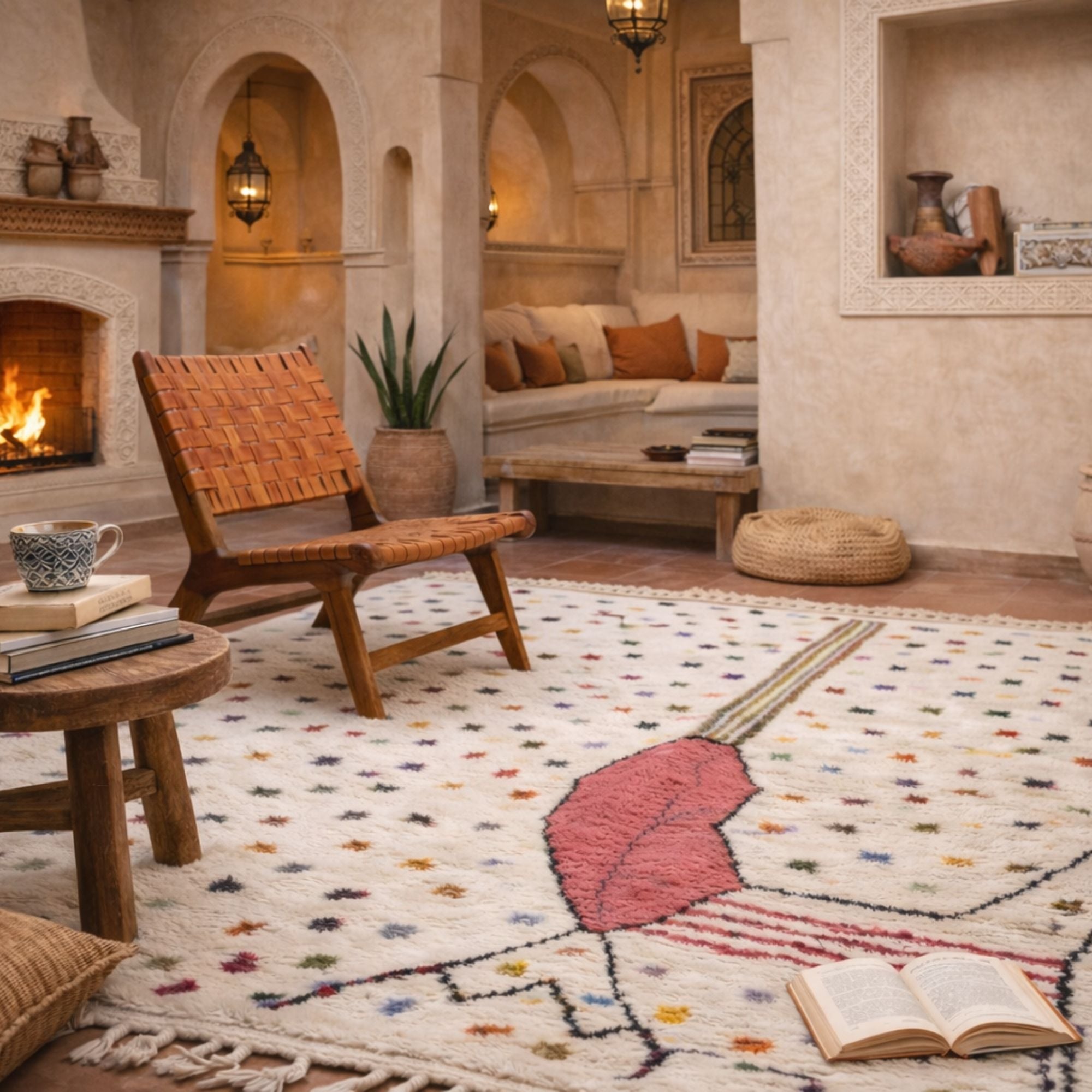
Moroccan Azilal Rug — Large Ivory — Hand-Knotted Wool
Azilal · Handmade in Morocco
$79.00$15853% off
Star Seller · Typically responds within a few hours
Highlights
- Handmade in Morocco
- 100% Wool
- Ivory color palette
- Free DHL Express worldwide shipping
- 30-day returns accepted
Moroccan rug takes form in this hand-knotted Azilal piece from Morocco, where an ivory field supports a layered composition of tribal symbolic motifs. Hand-spun wool carries the design from edge to edge, and the natural variations in the yarn introduce a subtle texture that a flat digital image cannot fully convey. This rug belongs to a tradition where the weaver makes decisions in the moment — adjusting motif placement, responding to the wool as it runs through their hands. Geometric tribal symbolic forms are arranged across the ivory wool surface with a sense of purpose. Some motifs echo ancestral Berber symbols, while others introduce asymmetry that keeps the design from feeling rigid. The interplay between repetition and variation gives the rug its visual energy. In traditional Azilal weaving, the pattern is not planned on paper first — it develops organically as the weaver works, responding to the wool, the tension, and the proportions of the growing textile. This working method produces a composition that has a living quality, as if the rug decided its own pattern as it was being made. Working within an ivory spectrum, this rug uses tonal variation rather than contrast to create interest. The hand-dyed wool retains subtle shifts — lighter in some areas, deeper in others — that give the surface a natural, unstudied quality. This restrained approach to color makes the rug adaptable across different interior palettes. It will hold its own beside a white wall without looking stark, and it will hold its shape beside a deeply colored sofa without disappearing. The ivory field acts as a visual neutral that organizes whatever surrounds it. The wool pile rises to a medium height, offering enough cushion to soften footsteps while keeping the tribal symbolic motifs crisp underfoot. Over time, the wool develops a natural patina — a softness that comes from use without losing the rug's structural integrity. Each knot contributes to a surface that feels both durable and welcoming. The density of the hand-knotting means the rug can handle daily life — furniture legs, foot traffic, children, pets — while continuing to look better as it settles. Unlike a tufted rug, where the surface can loosen over time, a hand-knotted Azilal rug gains cohesion as the wool fibers lock together with use. Living Room and Bedroom benefit from the grounding presence of this Azilal rug. Its ivory palette keeps the space feeling open and light, while the tribal symbolic motifs add just enough activity to prevent the room from feeling sterile. This is a rug that works with existing furniture rather than demanding the room be built around it. Place it under a dining table, and it anchors the meal without competing with the tabletop. Layer it in a sitting area, and it defines the zone without enclosing it. The rug's versatility lies in its refusal to insist on a single reading — it is equally at home in a formal living room and a relaxed studio. Woven in Morocco using 100% wool and natural dye methods, this Azilal rug represents a craft that predates mechanized production by centuries. Each knot was tied by hand, each motif chosen by the weaver. The result is a functional textile with the character of an artwork — made to be walked on, lived with, and passed down. The life span of a hand-knotted wool rug, with reasonable care, is measured in decades, not years. It can be moved from apartment to house, from one room to another, from one generation to the next. Unlike fast furniture or mass-produced floor coverings, it does not depreciate in character. It accumulates it.
Free worldwide shipping
30-day returns
- Size
- All sizes available
- Material
- 100% Wool
- Origin
- Morocco
- Color
- Ivory
- Best for
- Living Room, Bedroom, Studio
You may also like
View all

From the blog
View all
Amazigh Culture·6 min read
Silver, Amber, and Silk: The Sacred Adornment of the Amazigh Bride
Explore the profound symbolism behind Amazigh jewelry. Discover how Moroccan brides use silver fibulae, amber necklaces, and wool belts as spiritual armor.
Care Guide·6 min read
Berber Rug Care: How to Keep Your Rug Beautiful for Generations
Essential tips for cleaning, maintaining, and preserving your handmade Berber rug so it stays beautiful for decades.

Nomadinas
Managed by Mustapha Hnan
Ouarzazate, Drâa-Tafilalet
5.0(10)
70 sales
Member since 11 mois sur Etsy
Usually responds within quelques heures